
Looking for advice on low compression

Disclaimer: Links on this page pointing to Amazon, eBay and other sites may include affiliate code. If you click them and make a purchase, we may earn a small commission.

T100T

Active Member
Joined
May 13, 2005
Posts
37
Reaction score
26
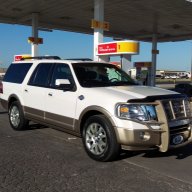
Car in question is a 2008 5.4 3V Expedition, it had a misfire, garage said it had zero compression on cylinder 5, I figured it wasn't worth replacing the engine so decided to bring it home and take a look myself. Performed compression test (cyl/press) 1/180, 2/200, 3/120, 4/150, 5/210, 6/210, 7,185, 8/200. This vehicle has been roundly abused, including overheating at around 175k miles (today it has 200k). Next was a leak test on cylinders 3 and 4, both showed zero leak; I'm scratching my head at this. I was thinking with low compression on adjacent cylinders maybe it was a head gasket issue but the leak test ruled that out. I reperformed the compression test on cylinders 3 and 4 and saw no change on cylinder 3 but cylinder 4 improved to 175 psi.

Two things to add, firstly this is a spare vehicle that we keep around because its size makes it useful for hauling stuff, it's probably going to do less than 3k miles/year; having siad that it has new struct, tyres are good, new TPMS, new chassis mounts, etc. Secondly, I'm thinking a weak valve spring might explain the low compression with zero leak - it's quick for me to pull the valve cover and check.

What would you do? I can pull the head if need be but given the plan for the vehicle can I hobble by with it as is?

All advice appreciated,

Peter
 
Last edited:

OP
OP
T

T100T

Active Member
Joined
May 13, 2005
Posts
37
Reaction score
26
I've a basic OBII scanner and will try to read the codes, the misfire happened when the car was out of town, my wife stopped at a nearby Ford garage.
 

sjwelds

Full Access Members
Joined
Feb 19, 2016
Posts
838
Reaction score
383
Location
Kansas
Good on you for checking it out yourself. Dealerships aren't exactly known for honesty and integrity.

Could be as simple as a coil or spark plug. A common one is coolant leaking from the heater hose connector and causing a misfire.

The lower compression on a couple cylinders is concerning though. Keep us posted.
 
OP
OP
T

T100T

Active Member
Joined
May 13, 2005
Posts
37
Reaction score
26
Re CEL codes, I didn't say but since getting the car home I've removed the parts to get the valve covers off, so lots of wiring is disconnect. When I connect the scanner, it's really basic, it tells me a bunch of things about throttle pedal position circuit low, throttle actuator control motor range, etc - nothing about compression. The battery has been disconnected for a few days so I'm thinking the codes relating to the original CEL are lost, the throttle related messages probably come from when I was doing the compression tests.

I'll be out of town for a few days but will be back to this thread when I figure out what to do next.

Top of my list are...
(i) inspect the valve springs on cylinders 3 and 4 - I've convinced myself that would explain a low compression with good leak test
(ii) remove the throttle body and inspect the back of the intake valves, I've a cheap borescope

BTW I did the leak test at high pressure (close to 100 psi), is there a case for doing it at low pressure (say 30 psi) where it might not force a weak valve shut?

This is all pretty new to me, so all advice appreciated.

Peter
 

Yupster Dog

Staff member
Moderator
Joined
Dec 7, 2018
Posts
1,535
Reaction score
1,064
Location
Virginia
inspect the valve springs on cylinders 3 and 4
Whenever it is the 3rd and 4th cylinders the first thing i look at is the heater hoses and the plastic T connectors leaking down on to 3 and 4. Pull coil pack and look for signs of antifreeze down the wells.
 
OP
OP
T

T100T

Active Member
Joined
May 13, 2005
Posts
37
Reaction score
26
Re the hoses. There is more to this story than I let on. The dealer claimed to have replaced plugs, coil packs and hoses when troubleshooting the car only to say there was a compression issue, I really doubt they did replace those parts but that's a different story. I'm familiar with the hose issue (having changed them twice in the past - that quick connect at the firewall can be a real pain).

My dilemma is with the compression, I guess I'm prepared to pull the head but this vehicle is in its twilight years and I don't want to disturb a bunch of stuff on an old car if I don't need to.

Thank you for replying,

Peter
 

mjp2

Full Access Members
Joined
Apr 19, 2017
Posts
484
Reaction score
307
Location
Howell, NJ
Cylinder 3 is prone to roller follower failure. Not sure if you heard any ticking from that side of the engine ahead of the most recent issues but it's something to check while you have the valve cover off.
 

purevw

Full Access Members
Joined
Dec 26, 2016
Posts
148
Reaction score
88
Location
Texas
Cylinder 3 is prone to roller follower failure. Not sure if you heard any ticking from that side of the engine ahead of the most recent issues but it's something to check while you have the valve cover off.
I agree it's something to look at. On number 7 failures, it seems an intake rocker often gets tossed. If number 3 is the same, then you might have a single intake opening on the number 3 cylinder and two intakes opening on the others. Could possibly explain compression differences. As far as your earlier question, the valve springs should be holding the valves very securely into the seats. I don't see 100psi adding much to that, so lowering to 30 pounds probably wouldn't produce a change.
 
OP
OP
T

T100T

Active Member
Joined
May 13, 2005
Posts
37
Reaction score
26
Sorry for the delay in getting back to this...

First off, some time ago I reported that cylinders 3 and 4 showed zero leak off pressure, well that was because there was an extra Schrader valve in the line and no pressure was getting to the cylinder - DUH! With that taken care of I got the following data with 50 psi applied (piston was at TDC, any more pressure than that rotated the crank), #1 - 22, #2 - 34, #3 - 13, #4 -15, #5 - 45, #6 - 41, #7 - 22, #8 - 38 - which sort of correlates with the compression test results of before (1/180, 2/200, 3/120, 4/150, 5/210, 6/210, 7,185, 8/200). On all tests the only place I could detect air leaking was from the inlet manifold - but I might go back and repeat that.

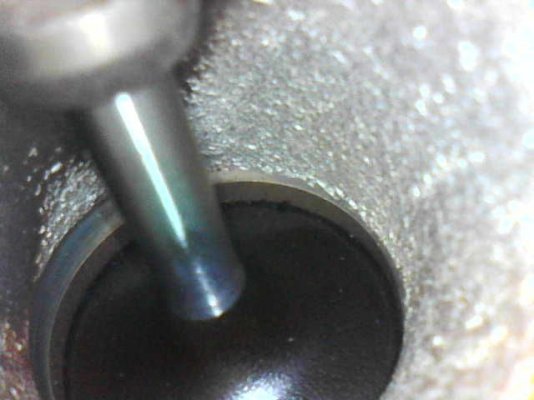
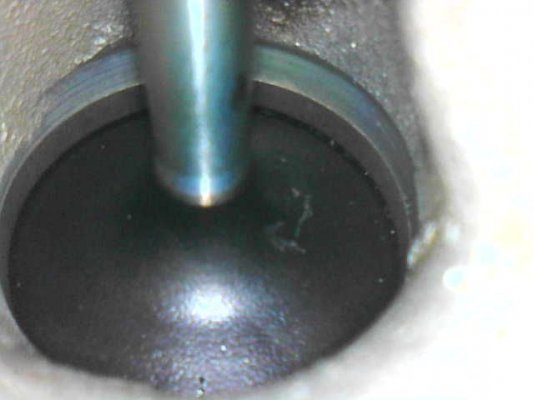
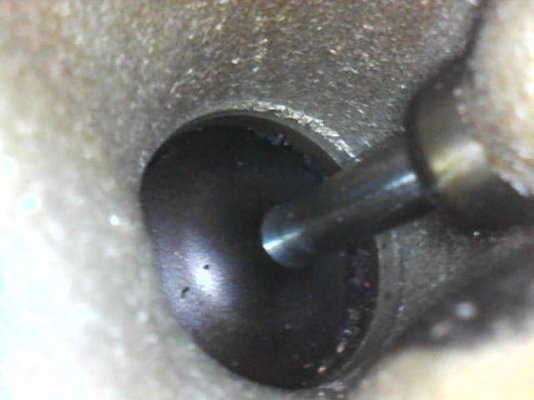
I also pulled the intake manifold and put my cheap boroscope into the inlet, all looked remarkably clean (car has ~ 200k miles).

20220529091147.jpg20220529084217.jpg20220529084513.jpg

Lastly, I remove the cam followers on cylinder #3, all cam followers and the springs appeared fine.

I'm going to put some penetrating fluid on the exhaust bolts (manifold to downpipe) for the passenger side and give the above some more thought before pulling the head. It would have been nice to have a smoking gun to explain the low compression in cylinder #3. I'm leaning towards leaving the driver's side head alone - cylinder #7 leak off is concerning but the compression is OK.

Peter
 
OP
OP
T

T100T

Active Member
Joined
May 13, 2005
Posts
37
Reaction score
26
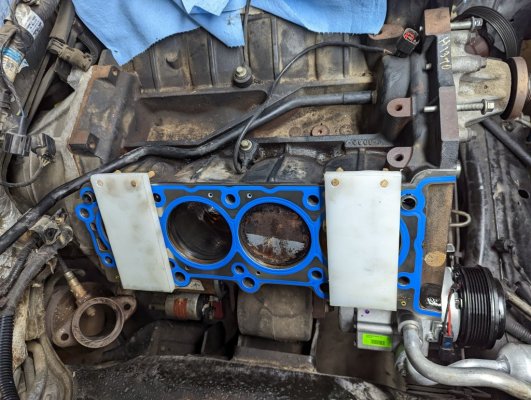
Finally got around to reassembling the car and it's back running again. I'll try to keep this brief, ended up removing the passenger side head, but never found a clear cause for the low compression, quite a few of the lifters were bad and I did lap the valves but nothing obvious. Reinstalled head and low compression was gone; haven't repeated the leak off test.

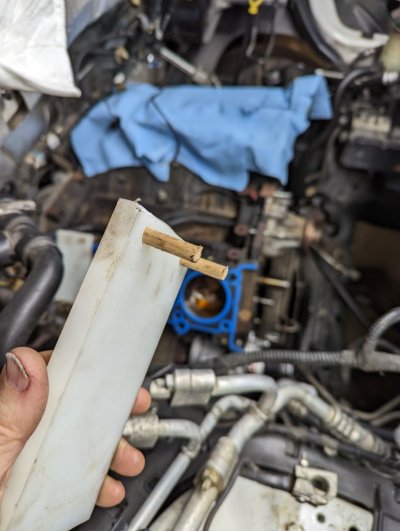
Besides not trusting what the dealer said here are the key things that either worked well or I'd do differently... (i) get a good OBD reader and get what info you can before disassembling (got Forscan only after disassembling), (ii) clean the engine before starting the job (didn't), (iii) take plenty of pictures of wiring harness routing (didn't), (iv) remove radiators (did but only when part way through job), (iv) remove camshaft before pulling head (head + exhaust manifold is heavy enough), (v) made bumpers that allowed aligning the head without damaging the gasket (did- see pictures, high density polythene with some wooden dowels) (vi) in many areas the tape on the wiring harness was in poor shape, looked but never found a really good tape, (vii) you'll need a good impact wrench to torque the pulley bolt on the front of the camshaft, (viii) I used a deep swivel impact socket and a few extensions on the upper of the two large nuts on the exhaust manifold to cat connection, it wasn't particularly tight but difficult to access, (ix) I used a few dozen sandwich sized poly bags to organize fasteners, etc, (x) I numbered the caps that hold the camshafts but didn't allow for them being reversible, (xi) used cardboard boxes to organize items such as timing cover bolts, valve gear (just stab holes in the cardboard to hold items).

Although the car has a lot of miles the engine was not worn, I didn't change the phasers as I wasn't sure I'd found the problem and didn't want to spend an extra $400 on what might turn into spare parts; after running the engine I can hear they're worn so will go ahead and replace while it's all still clean.

It's difficult to justify this job given the age and value of the vehicle however besides the odd bit of cursing I enjoyed the work and if it's reliable for the few years it will have been worth it.

Best wishes for the New Year,

Peter
 

Attachments

  • PXL_20221113_200139878.jpg
    PXL_20221113_200139878.jpg
    104.5 KB · Views: 5
  • PXL_20221113_200127595.jpg
    PXL_20221113_200127595.jpg
    205.2 KB · Views: 5

71Rcode

Full Access Members
Joined
Aug 30, 2012
Posts
258
Reaction score
69
Location
DFW Texas
Peter, very impressive sir. Did you replace any of the timing components, or roller followers when you were in there? How is she running now?
 
OP
OP
T

T100T

Active Member
Joined
May 13, 2005
Posts
37
Reaction score
26
Thank you, below what was replaced with some additional notes...

(i) On the valve train, the exhaust valves on cylinders 3 and 4 - they had more buildup than the rest but don't think it was needed, the inlet and exhaust springs on cylinders 3 and 4, again doubt it would make a difference but was there, I did carefully inspect the cam followers and all were good, replaced all the hydraulic lifters and all the valve seals, the timing chains, the guides were replaced a couple of years ago, both tensioners (as I nicked the seal surfaces when removing (keep the little retainer things they ship with incase you need to remove in the future), solenoids that control oil flow to the phasers.
(ii) Various single use items, such as head bolts, gaskets, exhaust studs and fasteners, seals for inlet manifold/injectors, etc.
(iii) Oil pump (don't think it was necessary), spark plugs.
(iv) Unrelated work, a hose for the AC had a slow leak so replaced that and the compressor (it was getting weak), the engine radiator (it was beat up)
(v) I thought about replacing the water pump and phasers but they were expensive and straightforward jobs.

I've only put 50 miles on it and the engine feels fine, no obvious leaks, etc. There is the light tick at idle when hot, sounds as though it's the phasers - will check and if confirmed will replace. Beyond that I need to check the transmission fluid level (lost some when replacing radiator) and put oil/refrigerant in the AC system.

While this was a long job, and at times frustrating (trying to understand compression readings) it was generally straightforward.

Peter
 
Top