EXPY Tunes

Disclaimer: Links on this page pointing to Amazon, eBay and other sites may include affiliate code. If you click them and make a purchase, we may earn a small commission.

Blackscreen67

Born to spool
Joined
Aug 16, 2018
Posts
379
Reaction score
85
Location
TEXAS
For reference a 2011 gen 1 6.7L powerstroke Turbo Diesel puts out 735 lb ft of torque.....the notion of a stock ecoboost of half it’s displacement coming close is not attainable. By no means am I saying higher numbers aren’t achieveable, you need to tune and alter from stock.

Am I the only one that would switch to a small platform powerstroke like the new F150 has is they put it in a Expedition?
 

Blackscreen67

Born to spool
Joined
Aug 16, 2018
Posts
379
Reaction score
85
Location
TEXAS
I'm all for goon behavior at the proper venue. That said, I do plan to hit the strip, this weekend.

0-60 with a 3.73 rear end @5.5 is totally believable if you drink the same kool-aid I've been drinking. My estimated weight of a small expy 4x4 full of fuel is 5865lbs from what I've been able to find.
Number next, Ford has OAR built in to their PCM/ecu strategy.
Number after that, ethanol has lower btu than pure gasoline.
It is reasonable to believe pure gas vs 10% ethanol -90% gasoline the non ethanol gas will have 10% more btu's than the 90/10 mix that is prevalent all over USA.
I've been running 93 octane with zero ethanol for a couple of weeks now, there is no doubt there is more power on tap than when 87 with 10% ethanol was in there, it is in fact, that noticeable. If I had an arduous commute to and from work, like when I lived in Dallas, I'd be an 87+10% ethanol goon. Gratefully, I'm not, and I enjoy the difference from simply good quality fuel.

What I'm most curious about, is once I do get timing light certified numbers, if they are anywhere within 2-tenths of what this little device has registered, I see zero value (at least at the current prices) for a tune, before upgrading to a massive CAC replacement, for almost the same money. Longevity in mind, the bigger CAC will do wonders for this little V6 than a $650 tune.
I'm not bashing these companies offering a tune, OR those who've ponied up the money for a tune. I'm simply not convinced it is as fantastic as those companies' are touting for the price. There's a lot that can be done, for pennies on the dollar, in comparison without worrying about your warranty. Sure some would say going to the strip, with or without a tune is reason enough for Ford to void the warranty.
To that I say, bahhh humbug, as long as it's a test and tune, and I'm not actively competing for prizes or money, there's no issue.
Several motorcycles, as well as a 1992 z-28 25th anniversary were never excluded from warranty coverage, and they all spent a lot of time at the dragstrip. The z-28 got a new transmission that had the higher stall converter of the Corvette, at 42,000 miles...in 1995

This is incredibly accurate.

Turbo charged motors of today are excessively baffled to suppress that God awful(just kidding) turbo sound. This requires significant interference in the volume and quality of air the turbos will need.

Before a tune would touch mine, I'd throw on a CAI dry filter kit and a sensor piggy back which will ramp factory numbers by modifying the signals the ECM sees and in return increases boost through the entire RPM band. Voiding the warranty with a true tune isn't something I would personally do on these things, too much to go wrong. Hell and I tune everything. I'd custom tune my wife and kids if I could. Wife got some customizations, but prefer to keep the miles low!lol

In regards to old school muscle cars..... not a very good comparison considering the expedition will hook better than any 70s build.
 

5150 pops

Full Access Members
Joined
Jul 30, 2018
Posts
296
Reaction score
81
Location
Virginia
No stock ecoboost will put down close to 600 lb ft of torque. You need to understand compression ratios and variable cam timing to get why 93 octane adds zero power to a stock ecoboost engine over 91 octane. Ford rates the ecoboosts output on premium 91 octane fuel already. Gen 1 425 lb ft, Gen 2 470 lb ft. The 3.5 is made for 91 octane fuel and when octane of lesser grade is used knock sensors sense and timing is retarded to avoid predetonation. AKA power is lost. Now when you put in 91 octane power is increased as the ECU is not commanding the engine to retard timing as much. It is made for 91 and when it is used it is retarding detonation the least. Using 93 octane will yield zero gain on power over 91 octane because to do so you would need to raise the compression ratio to use the power. Best way to add juice is add boost. Best way to do so is via A/M tune like Mike Wolfe is using. Then higher numbers are achievable. Without AM alterations you will not see anything higher than stock numbers.


Hi,
You've obviously a vast knowledge of something.
Not sure what.
If you bother to read Ford's literature it does in fact state max power achieved with 93 octane, for all it's "performance output ratings" whether it is gen II 3.5 Eco, in Expy, or 5.0 in Mustang since it's reintroduction as the all new 4valve version, NOT 91 octane

There is loads of information published online from respected tuners who also validate this concerning Ford's recent tuning tuning strategies on their stock vehicles.

Now if you want to go off topic, and talking about Ford's strategies from the eighties, ORRR any other oem of current times, your assertion may well be valid.

Instead of being angry, or eager to disprove what has already been proven as true (no - I don't mean proven by me, it hasn't yet) by numerous folks both hobbyists and professionals, do some reading/research before speaking out of turn.

Stock programmed ECU from Ford for 3.5, 2.7 and other Ecoboost models do advance timing once sensors validate the increase in octane from 87 to 89 then to 91 and yet again to 93...Fact.
Same holds true with the ECU in mustang since the intro of 5.0 ~2011, possibly even before the 5.0???

Peace be with you!
 

5150 pops

Full Access Members
Joined
Jul 30, 2018
Posts
296
Reaction score
81
Location
Virginia
The measure of Torque I referred to is at the crank, not rear wheel, and it was supposed to be a 5 not a 6.

My bad.

I'll show meeself out now, lol.
 

JExpedition07

That One Member
Joined
Mar 30, 2017
Posts
6,530
Reaction score
3,140
Location
New York
Hi,
You've obviously a vast knowledge of something.
Not sure what.
If you bother to read Ford's literature it does in fact state max power achieved with 93 octane, for all it's "performance output ratings" whether it is gen II 3.5 Eco, in Expy, or 5.0 in Mustang since it's reintroduction as the all new 4valve version, NOT 91 octane

There is loads of information published online from respected tuners who also validate this concerning Ford's recent tuning tuning strategies on their stock vehicles.

Now if you want to go off topic, and talking about Ford's strategies from the eighties, ORRR any other oem of current times, your assertion may well be valid.

Instead of being angry, or eager to disprove what has already been proven as true (no - I don't mean proven by me, it hasn't yet) by numerous folks both hobbyists and professionals, do some reading/research before speaking out of turn.

Stock programmed ECU from Ford for 3.5, 2.7 and other Ecoboost models do advance timing once sensors validate the increase in octane from 87 to 89 then to 91 and yet again to 93...Fact.
Same holds true with the ECU in mustang since the intro of 5.0 ~2011, possibly even before the 5.0???

Peace be with you!

Well curious I went and did some reading and you are semi correct on the octane performance. Ford claims the 5.0L, ecoboost engines, and 6.2L V8 have a LOR (learned octane ratio) and can both advance and retard timing based on the octane fuel used. Normally knock sensors are used and timing is backed off when pinging occurs with too low octane fuel.....it appears some now can also advance until knock and back off again optimizing power from higher octane fuels. Seems ford programs them to run on either 91 or 93 to begin with as timing an only be advanced so much. Most of these power ratings for these engines are done already on premium fuel though as I stated through quick research. Before to do this you normally had to reprogram via “tune”. Learn something every day.
 
Last edited:
OP
OP
M

Mike Wolfe

Full Access Members
Joined
Jul 9, 2017
Posts
479
Reaction score
174
Location
Tonopah AZ
Good morning everyone
FYI
Up until I believe the late 70's the mfg's published gross hp & torque ratings for automotive engine
SAE published a ruling in the late 70's dictating that engine hp & torque should be published as a net hp rating with all accessories attached to the engine when dyno tests were performed
Therefore the hp & torque ratings of the engines used in muscle cars were somewhat optimistic in prior years
Also I have always recalibrated my eco boost engines starting with my 2011 F150
Always achieved excellent performance increases
did not replace any parts including air filters & housings & exhaust systems
Never found it necessary to do so
I have a problem with many of the aftermarket air filter kits because most of them eliminate the outside air feature & therefore heated underhood air is ingested by the engine
Heated air is not as dense as cooler outside air & therefore not as much power is produced
In this case I believe FORD has done a good job with the filter design implemented in the 2018 EXPY
Despite all the negativity on this thread I am very happy with the 5 Star software
Our EXPY runs demonstrably better & I still contend that 0-60 mph Times are well into the 4's with this calibration & I have not replaced any parts:33:
 

Blackscreen67

Born to spool
Joined
Aug 16, 2018
Posts
379
Reaction score
85
Location
TEXAS
Good morning everyone
FYI
Up until I believe the late 70's the mfg's published gross hp & torque ratings for automotive engine
SAE published a ruling in the late 70's dictating that engine hp & torque should be published as a net hp rating with all accessories attached to the engine when dyno tests were performed
Therefore the hp & torque ratings of the engines used in muscle cars were somewhat optimistic in prior years
Also I have always recalibrated my eco boost engines starting with my 2011 F150
Always achieved excellent performance increases
did not replace any parts including air filters & housings & exhaust systems
Never found it necessary to do so
I have a problem with many of the aftermarket air filter kits because most of them eliminate the outside air feature & therefore heated underhood air is ingested by the engine
Heated air is not as dense as cooler outside air & therefore not as much power is produced
In this case I believe FORD has done a good job with the filter design implemented in the 2018 EXPY
Despite all the negativity on this thread I am very happy with the 5 Star software
Our EXPY runs demonstrably better & I still contend that 0-60 mph Times are well into the 4's with this calibration & I have not replaced any parts:33:

Just curious regarding what negativity your referring to?
 
OP
OP
M

Mike Wolfe

Full Access Members
Joined
Jul 9, 2017
Posts
479
Reaction score
174
Location
Tonopah AZ
Comments how it must be impossible to get good performance from the eco boost engines
 

Blackscreen67

Born to spool
Joined
Aug 16, 2018
Posts
379
Reaction score
85
Location
TEXAS
Comments how it must be impossible to get good performance from the eco boost engines

I'm not thinking that's what' being said. In fact I think the opposite is being said.

Many wouldn't think 8klb diesels can out run most production cars with the right tweaks and make 650hp at the rear, but many just don't believe what they don't see or understand.
 
OP
OP
M

Mike Wolfe

Full Access Members
Joined
Jul 9, 2017
Posts
479
Reaction score
174
Location
Tonopah AZ
Ok
I can accept that consensus
Wish someone else would try the 5 Star calibrations so they could realize the demonstrable difference I have experienced:burnout::burnout:
 
OP
OP
M

Mike Wolfe

Full Access Members
Joined
Jul 9, 2017
Posts
479
Reaction score
174
Location
Tonopah AZ
Just read an article on another thread about 2018 Lincoln NAVI
went 0-60in 5.4 seconds, weighed nearly 6200 lbs
I am pretty sure that was with a 3:31 axle as well
Think my EXPY is about 400 lbs lighter & has a 3:73 axle
 

JohnT

Full Access Members
Joined
Jul 30, 2018
Posts
215
Reaction score
94
Location
Canada
Comments how it must be impossible to get good performance from the eco boost engines
I think most here agree you can get good performance, we may just be questioning how good. And what is the risk/benefit of same, am I getting ludicrous performance for little to no risk? then maybe I am interested.

Am I getting moderate performance with a large risk, then not so much. And we all have our own tolerances for risk.

Do I want a multi ton machine that can out drag a mustang, damm right I do, can I afford the risk/benefit ratio vs cost vs warranty vs wife slapping me around the back of the head if it blows up???????, emmm I'll let you know.


Great thread by the way.

John
 

rumline

Full Access Members
Joined
Nov 25, 2017
Posts
156
Reaction score
48
Location
Colorado
When I got my EcoDiesel tuned it wasn't so I could take it to the drag strip, it was to improve drivability, MPG, and reliability. It closed off the EGR so no more s***ing where it eats, added throttle response, shifted more cleanly, made regens less frequent but longer, and resolved the cylinder head carbon buildup issue that I was having previously. My highway mileage had been slowly dropping off from 28 to 27, and in the 35,000+ miles since the tune I reliably get 29 hand-calc'd, 30 if I slow down a bit. Oh, and it just passed smog again, so there tree-huggers!

If I buy an Expedition, I would want a tune for those same things. I'm not sure if these EcoBoosts would benefit from closing off the EGR. I need to do a lot more research. Does anybody know of reliability-related things that this or other EcoBoost tunes do?
 
OP
OP
M

Mike Wolfe

Full Access Members
Joined
Jul 9, 2017
Posts
479
Reaction score
174
Location
Tonopah AZ
When I got my EcoDiesel tuned it wasn't so I could take it to the drag strip, it was to improve drivability, MPG, and reliability. It closed off the EGR so no more s***ing where it eats, added throttle response, shifted more cleanly, made regens less frequent but longer, and resolved the cylinder head carbon buildup issue that I was having previously. My highway mileage had been slowly dropping off from 28 to 27, and in the 35,000+ miles since the tune I reliably get 29 hand-calc'd, 30 if I slow down a bit. Oh, and it just passed smog again, so there tree-huggers!

If I buy an Expedition, I would want a tune for those same things. I'm not sure if these EcoBoosts would benefit from closing off the EGR. I need to do a lot more research. Does anybody know of reliability-related things that this or other EcoBoost tunes do?


Ok All
I have had 5 eco boost vehicles
First one was a 2011 F150 with Livernois software Had it for over 100k miles with no problems
Second one was a 2013 Taurus SHO with PP used Livernois calibration, runs 0-60 in about 3.9 seconds & quarter in about 11.9
Still have it with 35k miles, no problems & passed state inspection twice with tune installed
Third one was 2013 Flex with 3.5L ecoboost with Livernois software drove it 80k miles with no issues
Traded Flex for 2016 Explorer Sport, installed Livernois software the day I got it, drove it 86k miles with no issues & traded it for 2018 EXPY I have now
Installed 5 star calibration 93 octane performance/tow
Do not program my vehicles to go to the drag strip
Just like rumline I want better throttle response, better fuel mileage & improved transmission shifting
Calibration upgrades DO NOT SHORTEN ENGINE OR TRANS LIFE
That is a complete misconception & honestly a big load of old wives tales CRAP!!!!!


Rumline
No egr on eco boost vehicles
With variable cam phasing on both the intake & exhaust cams, Pent roof 4 valve combustion chambers & GDI it is not needed
 

mquick5

Full Access Members
Joined
Aug 27, 2018
Posts
589
Reaction score
154
Location
Buckeye Country
This thread is FUNNY!!! There is a lot of mis-information here.
Yeah I live in central Ohio and would be willing to put my little 281 motor mustang up against any factory 6k lb Expedition. I can't imigine it would even be close, let alone what a 5.0 Shelby would do to the 3.5 monster.

Sent from my SAMSUNG-SM-G870A using Tapatalk
 
OP
OP
M

Mike Wolfe

Full Access Members
Joined
Jul 9, 2017
Posts
479
Reaction score
174
Location
Tonopah AZ
Yeah I live in central Ohio and would be willing to put my little 281 motor mustang up against any factory 6k lb Expedition. I can't imigine it would even be close, let alone what a 5.0 Shelby would do to the 3.5 monster.

Sent from my SAMSUNG-SM-G870A using Tapatalk

Think you mean 289 Motor in your mustang
That would do about 0-60 mph in about 8 seconds stock
Do not know what year Shelby you have or how it is equipped
You would probably lose in a drag race
My EXPY is almost as quick as my Taurus & I know my Taurus would match or beat your 5.0L Shelby if it is stock
Taurus will do 0-60 in 3.8-3.9 seconds & quarter mile in high 11's
Unless your Shelby has been modified with a supercharger or other upgrades
 

JExpedition07

That One Member
Joined
Mar 30, 2017
Posts
6,530
Reaction score
3,140
Location
New York
Think you mean 289 Motor in your mustang
That would do about 0-60 mph in about 8 seconds stock
Do not know what year Shelby you have or how it is equipped
You would probably lose in a drag race
My EXPY is almost as quick as my Taurus & I know my Taurus would match or beat your 5.0L Shelby if it is stock
Taurus will do 0-60 in 3.8-3.9 seconds & quarter mile in high 11's
Unless your Shelby has been modified with a supercharger or other upgrades

A 3rd gen 5.4L Standard Length Expedition is rated at 7.5-8 seconds stock depending on curb weight(my truck). MotorTrend clocked the heavier King Ranch 4x4 at 8 seconds even (not bad). I don’t think there is any way a 289 Mustang would be slower or equal to a 5.4L Expedition of the same years lol. Probably in the 6 second range is more realistic.
 
Last edited:
OP
OP
M

Mike Wolfe

Full Access Members
Joined
Jul 9, 2017
Posts
479
Reaction score
174
Location
Tonopah AZ
Motor trend tested 2018 NAVI stock with 3:31 axles & did 0-60 in 5.4 seconds
My recalibrated 2018 EXPY will do 0-60 in the low 4 second range
Has HD tow with 3:73 gears
Has 5 Star 93 octane performance/tow software installed
ECO Boost engines much more powerful than the 5.4l V8
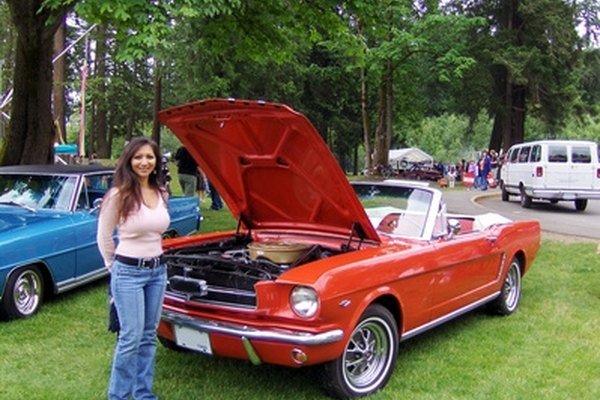
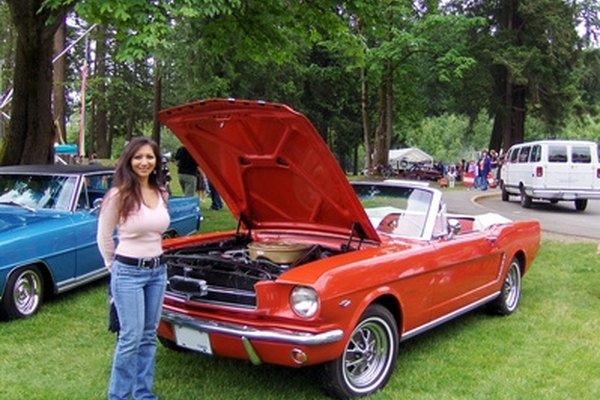
Here is data on 67 Mustang with 289
1967 Mustang 289 Specifications for 0-60

by Irving Oala
1967-mustang-289-specifications-060-1.1-800x800.jpg


In 1967, the already popular Mustang 289, or GT, sports car had its first redesign. It became longer and wider, with rear tail scoops that are now a classic Mustang body style. There was also a revamped engine with more power, which greatly increased the Mustang's acceleration ability from zero to 60 miles per hour. A number of different specifications on the 1967 Mustang 289 affected its swift zero to 60 acceleration time.


Acceleration Specifications


The actual zero to 60 mile per hour acceleration time for the 1967 Ford Mustang 289 was 7.3 seconds, which was one of the fastest cars on the road sold to consumers at that time, according to the Auto Channel. It went from zero to 30 miles per hour in 2.6 seconds and zero to 100 miles per hour in 18.9 seconds. Its standing quarter mile was 15.2 seconds at 91 miles per hour and the top speed was 124 miles per hour
 
Last edited:

JExpedition07

That One Member
Joined
Mar 30, 2017
Posts
6,530
Reaction score
3,140
Location
New York
Motor trend tested 2018 NAVI stock with 3:31 axles & did 0-60 in 5.4 seconds
ECO Boost engines much more powerful than the 5.4l V8
Here is data on 67 Mustang with 289
1967 Mustang 289 Specifications for 0-60

by Irving Oala
1967-mustang-289-specifications-060-1.1-800x800.jpg


In 1967, the already popular Mustang 289, or GT, sports car had its first redesign. It became longer and wider, with rear tail scoops that are now a classic Mustang body style. There was also a revamped engine with more power, which greatly increased the Mustang's acceleration ability from zero to 60 miles per hour. A number of different specifications on the 1967 Mustang 289 affected its swift zero to 60 acceleration time.


Acceleration Specifications


The actual zero to 60 mile per hour acceleration time for the 1967 Ford Mustang 289 was 7.3 seconds, which was one of the fastest cars on the road sold to consumers at that time, according to the Auto Channel. It went from zero to 30 miles per hour in 2.6 seconds and zero to 100 miles per hour in 18.9 seconds. Its standing quarter mile was 15.2 seconds at 91 miles per hour and the top speed was 124 miles per hour

He is referring to a modular 4.6L V8 engine in a newer mustang if I’m not mistaken, not a 70s car. This is why I typed my reply in the matter I did, I was comparing the Expedition with the bigger modular V8 to the Mustang with the smaller one of the same years. All I was saying is I thought your assertion of 8 seconds on a 4.6 Mustang was incorrect. Which it is, a 4.6 stang is 5 sec even. Anyway, good luck and have fun, it’s been real.
 
Last edited:
Top