I got a 24 expedition limited without CCD and 22” wheels. The 23’ f150 I drive I feel like is so much quieter and rides better than the expedition. In the expedition there is so much road noise and you feel every bump. I have read that switching to smaller wheels 18” would make a big difference, thoughts?

You are using an out of date browser. It may not display this or other websites correctly.
You should upgrade or use an alternative browser.
You should upgrade or use an alternative browser.
24’ expedition ride quality
- Thread starter joedirt08
- Start date
Disclaimer: Links on this page pointing to Amazon, eBay and other sites may include affiliate code. If you click them and make a purchase, we may earn a small commission.

You can put smaller wheels, or lower your air pressure in your tires. Unfortunately, this gen of truck rides pretty stiff, so there's not much you can do in terms of ride, and there's not much aftermarket support for this car as well. My 18 expy rode pretty stiff on the base springs and 20s, and though it was tolerable and comfortable, I would never want the 22s on it without ccd. Ccd does help in most instances.
CDNRabbit
Full Access Members
@joedirt08 sounds a bit like my experience. I have a 22 and it's been rough since day 1. Lots of road noise, vibrations, and unstable handling. I blamed the grabber tires, the large rims, and even assumed it was a lack frame/body rigidity. Turns out it was a factory misalignment and, at least over the last year, progressive failure of the front bearings.
Ugh_J
Full Access Members
Mine has 20s and it rides better than my 2015 F-150 did with 18" Michelins. I'm careful about keeping cold pressures between 33-35, though. Letting the dealer or tire shop inflate them to 40+ is not going to do your lumbar discs any favors.
Parents have a 2022 that came with 22s. We swapped those for 18" Michelins and that truck went from riding like a cheap skateboard to more comfy than mine. Much less road noise, too.
I really don't quite understand the allure of rubber-band tires on vehicles. Also, get off my lawn.
Parents have a 2022 that came with 22s. We swapped those for 18" Michelins and that truck went from riding like a cheap skateboard to more comfy than mine. Much less road noise, too.
I really don't quite understand the allure of rubber-band tires on vehicles. Also, get off my lawn.
Deadman
Full Access Members
Mine has 20s and it rides better than my 2015 F-150 did with 18" Michelins. I'm careful about keeping cold pressures between 33-35, though. Letting the dealer or tire shop inflate them to 40+ is not going to do your lumbar discs any favors.
Parents have a 2022 that came with 22s. We swapped those for 18" Michelins and that truck went from riding like a cheap skateboard to more comfy than mine. Much less road noise, too.
I really don't quite understand the allure of rubber-band tires on vehicles. Also, get off my lawn.
They Handle so poorly stock on 22's, that I guarantee my wife would puke if you put 18" rubber on my expedition on the stock suspension and ****** sway bars. They use the bigger wheels to stop all the sway from the taller sidewalls on the smaller wheel/tires.
Moeman
Full Access Members
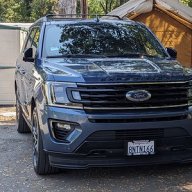
Expeditions ride like crap. We have a 22 Exp and a 16 F150. Completely agree that my F150 rides better. Exp's ability to dampen road impacts is non-existent. We tried to replace the Hankooks with some slightly taller profile Sumitomo's. Maybe a minor improvement to the ride, but minimal. My wife even test drove a Navigator to see if stepping way up would result in a better ride. She had the salesman drive and she got in the back. She thought it wasn't much better than the Expedition. Previous poster was right. The platform is just too stiff and they can't dampen all of the frequencies that get transmitted.
Left Coast Geek
Full Access Members
You can put smaller wheels, or lower your air pressure in your tires. Unfortunately, this gen of truck rides pretty stiff, so there's not much you can do in terms of ride, and there's not much aftermarket support for this car as well. My 18 expy rode pretty stiff on the base springs and 20s, and though it was tolerable and comfortable, I would never want the 22s on it without ccd. Ccd does help in most instances.
low pressure on the /45 series tires that fit on the 22" wheels is a fast track to bent rims and pinch flats. Ford recommended pressure on 22's is 39 PSI, while for 18's with /65 tires, its 35 PSI


I run 35 on my '011 with 20" OEM rims & 275/55/20 Goodyear Steadfast rubber @36psi...a little stiff but way smoother & nicer ride than the crappy SR-A's that were on it when I bought it
I was planning on putting Defenders on it, but all 3 local tire shops that I trust would have had to order them, with a 3 week+ wait, and the heavy rain, snow & ice was quickly headed my way, so I did what I had to do, as I was not about to get caught in a storm with worn tires
I was planning on putting Defenders on it, but all 3 local tire shops that I trust would have had to order them, with a 3 week+ wait, and the heavy rain, snow & ice was quickly headed my way, so I did what I had to do, as I was not about to get caught in a storm with worn tires
OpticonBill
Active Member
The vehicle manufacturer are the ones that decide how they want a particular vehicle to "ride". They do this with extensive testing, working with tire manufacturers, to get a tire that gives them what they are looking for. Based on this test, they usually choose two tire brands that provide the ride they are looking for. (Full discloser: I am a retired Michelin Employee)
I have a 97 Eddie Bauer Expedition and recently as of last year bought a 2019 LTX MAX. The 2019 came with Cooper tires and the ride was horrible as well as a harmonic shimmy that showed up as I reached 58 MPH. In due time (like soon) I replaced them with Michelin Defenders. With the Defenders the ride became glassy smooth and quiet. I have had a number of passengers comment on this.
The perceived ride is affected by:
1. The distance between the front and rear axles.
2. The suspension.
3. The diameter of the tire.
4. The height of the sidewall.
5. Air pressure
6. And finally, the Princess and the Pea effect. (Japanese auto test drivers are notorious for this.)
The longer the distance between the front and rear axles, the less the angular movement of the chassis as the front and rear of the vehicle independently rise and dip in the road.
The suspension on my 97 is adjusted to give a little more ground clearance. This is apparent when the two vehicles are parked side by side. The front suspension is adjusted by a long torque rod on each side that adds or reduces torque on the suspension arm which in turn rises or lowers the chassis. Increasing the clearance height generally add more stiffness to the ride. The 97 definitely has a stiffer ride. I would trust the four wheel 97 in bad off-road conditions more so than I would the 2019 Expedition even though they both are shod in Defenders.
The diameter of the tire. When you're looking for a good rolling toolbox, a larger diameter castor wheel is always better than a smaller diameter wheel. The smaller wheel snags on every little piece of debris on the floor as well hitting hard when rolling over joints between concrete pads. When rolling a toolbox with small wheels it vibrates and rattles like a 58 chevy truck, whereas a larger diameter wheel rolls much smoother over floor imperfections. Same thing with a vehicle and road imperfections.
Believe or not, most of the road vibrations are absorbed by the sidewall of a tire. The ability of the sidewall to absorb vibration is in the height of the side wall (In a 255/55 size tire, the height of the sidewall is 55% of 255mm or 140.25mm.) and the internal belt package of the sidewall. The belt package changes according to the load rating of the tire. The higher the load rating the stiffer (thus affecting the ride) the sidewalls when comparing two tires of the same size, but each have a different load rating. There is a market identified by tire companies which consist of "young men who spend inordinate amount of money on ordinary vehicles". Whenever I see a vehicle riding on rubber band (extreme low profile and expensive) tires on an older vehicle. I see a vehicle that is going to get the hell beat out of its suspension system, trying to absorb vibrations it was never designed to encounter.
The tire manufacturer sets an air pressure range in which it is safe to operate that model tire. They are only concerned about tire safety and life of tire, not ride comfort. It is the vehicle manufacturer the sets the operating tire pressure for a vehicle that achieves the type of ride marketing is looking for. That pressure is marked on the tag in the door frame and is always within the tire manufacturer pressure range marked on the tire. If you're inclined to search for better ride by changing tire pressure, stay within the pressures given on the sidewall and know that the lower the pressure the more heat is generated in the tire. And heat has an adverse effect on tire life.
Lastly, your butt, the ride comfort monitor. They are a lot like opinions, everyone has one and oft times have different sensitivities.
I have a 97 Eddie Bauer Expedition and recently as of last year bought a 2019 LTX MAX. The 2019 came with Cooper tires and the ride was horrible as well as a harmonic shimmy that showed up as I reached 58 MPH. In due time (like soon) I replaced them with Michelin Defenders. With the Defenders the ride became glassy smooth and quiet. I have had a number of passengers comment on this.
The perceived ride is affected by:
1. The distance between the front and rear axles.
2. The suspension.
3. The diameter of the tire.
4. The height of the sidewall.
5. Air pressure
6. And finally, the Princess and the Pea effect. (Japanese auto test drivers are notorious for this.)
The longer the distance between the front and rear axles, the less the angular movement of the chassis as the front and rear of the vehicle independently rise and dip in the road.
The suspension on my 97 is adjusted to give a little more ground clearance. This is apparent when the two vehicles are parked side by side. The front suspension is adjusted by a long torque rod on each side that adds or reduces torque on the suspension arm which in turn rises or lowers the chassis. Increasing the clearance height generally add more stiffness to the ride. The 97 definitely has a stiffer ride. I would trust the four wheel 97 in bad off-road conditions more so than I would the 2019 Expedition even though they both are shod in Defenders.
The diameter of the tire. When you're looking for a good rolling toolbox, a larger diameter castor wheel is always better than a smaller diameter wheel. The smaller wheel snags on every little piece of debris on the floor as well hitting hard when rolling over joints between concrete pads. When rolling a toolbox with small wheels it vibrates and rattles like a 58 chevy truck, whereas a larger diameter wheel rolls much smoother over floor imperfections. Same thing with a vehicle and road imperfections.
Believe or not, most of the road vibrations are absorbed by the sidewall of a tire. The ability of the sidewall to absorb vibration is in the height of the side wall (In a 255/55 size tire, the height of the sidewall is 55% of 255mm or 140.25mm.) and the internal belt package of the sidewall. The belt package changes according to the load rating of the tire. The higher the load rating the stiffer (thus affecting the ride) the sidewalls when comparing two tires of the same size, but each have a different load rating. There is a market identified by tire companies which consist of "young men who spend inordinate amount of money on ordinary vehicles". Whenever I see a vehicle riding on rubber band (extreme low profile and expensive) tires on an older vehicle. I see a vehicle that is going to get the hell beat out of its suspension system, trying to absorb vibrations it was never designed to encounter.
The tire manufacturer sets an air pressure range in which it is safe to operate that model tire. They are only concerned about tire safety and life of tire, not ride comfort. It is the vehicle manufacturer the sets the operating tire pressure for a vehicle that achieves the type of ride marketing is looking for. That pressure is marked on the tag in the door frame and is always within the tire manufacturer pressure range marked on the tire. If you're inclined to search for better ride by changing tire pressure, stay within the pressures given on the sidewall and know that the lower the pressure the more heat is generated in the tire. And heat has an adverse effect on tire life.
Lastly, your butt, the ride comfort monitor. They are a lot like opinions, everyone has one and oft times have different sensitivities.
CDNRabbit
Full Access Members
Overall the Expy is balanced for it's size, but for the price, Ford should have done better. Better sway bars and tires should have been used. I also find the body to have excessive flex. Lastly butt's opinion is that the 22" on the SSP are for looks. 18" or 19" with a stiff sidewalk tire is a huge improvement.
We all have to remember, At the time of the 2018s release, the ride was totally acceptable and towards top of the class with coils and ccd. Now, all of it's major competitors have been remodeled, with more modern suspensions, so the suvs feels more harsh and lumpy in comparison. I did think the ride on my 18 & 20 was rele good, but especially around town, the harshness is noticeable. It was also very inconsistent, one day they rode smooth as glass, the next on the same road, like a shopping cart. I'm hoping even though they're sticking with coils, the ride on the 25s will be more class competitive or better yet, like some minivans.
ExpySPP
Member
Coming from a 23’ Yukon, I am very happy with my SPP CCD 24’. It is a rocket and insanely better handling. It doesn’t boat or roll, crazy for a vehicle that size. Big difference. That being said, it’s not as cushy as the Yukon, but much more driver confidence, can’t wait to see how that translates to towing the RV.
Also, I immediately swapped to 20s.
Also, I immediately swapped to 20s.
Left Coast Geek
Full Access Members
Overall the Expy is balanced for it's size, but for the price, Ford should have done better. Better sway bars and tires should have been used. I also find the body to have excessive flex. Lastly butt's opinion is that the 22" on the SSP are for looks. 18" or 19" with a stiff sidewalk tire is a huge improvement.
sidewall stiffness is a function of tire pressure. don't believe me? let your air out and see how stiff they are without air pressure.

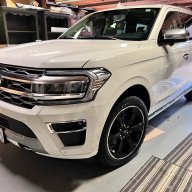
Shocking thread. Got our new '24 Timberline on the 21st and took it on a couple hundred mile Xmas trip and it rode/rides like a dream, and seemed quieter to us than even Wife's Honda Passport. This last is frankly shocking to me since our Goodyear Wrangler tires are so knobby. But zero tire noise.
I had set the tires at 36PSI for the trip and expected to feel road bumps and whatnot but...no. Silky smooth. It's tall and feels tippier than I'm used to in turns, but not a big deal.
Dunno much about Expeditions and even less about the Timberline trim--just saw it and bought it. Maybe the off-road features including the heavy-duty tow package make it improved over others. I dunno but we are happy.
I had set the tires at 36PSI for the trip and expected to feel road bumps and whatnot but...no. Silky smooth. It's tall and feels tippier than I'm used to in turns, but not a big deal.
Dunno much about Expeditions and even less about the Timberline trim--just saw it and bought it. Maybe the off-road features including the heavy-duty tow package make it improved over others. I dunno but we are happy.
Scooter455
Active Member
I feel the same exact way about my 2022 Platinum! My 2019 F150 drives and is quieter on the highway.I got a 24 expedition limited without CCD and 22” wheels. The 23’ f150 I drive I feel like is so much quieter and rides better than the expedition. In the expedition there is so much road noise and you feel every bump. I have read that switching to smaller wheels 18” would make a big difference, thoughts?
Scooter455
Active Member
My 22' rides the same way from day 1. Vibrating, noise, bumpy. I have had it back multiple times. Just recently got a new drive shaft. Switched to Michelins and now Toyo HT's! Nothing helps@joedirt08 sounds a bit like my experience. I have a 22 and it's been rough since day 1. Lots of road noise, vibrations, and unstable handling. I blamed the grabber tires, the large rims, and even assumed it was a lack frame/body rigidity. Turns out it was a factory misalignment and, at least over the last year, progressive failure of the front bearings.
2021 limited here. Rides beautiful. I can indeed compare it to four different 2024 f150's that dealer gave as loaners. Expedition was in for misc warranty work. I'll take the expy ride over any of the f150's. 22" on Michelin Defenders with CCD
I bought a used, 2018 Limited without CCD and 22 inchers but did not like the ride. Was thinking about going with a smaller wheel, but decided just to sell it after 6 months. After reading about the CCD, I then bought a 2018 Platinum Expy, loaded to the hilt, with 22 inchers/ Michelin Defenders. This rides like a dream....smooth as silk in all drive modes and whether in 2H or 4H. Once you go CCD, or at least in my case, you'll never go back.
Similar threads

- Replies
- 0
- Views
- 685

- Replies
- 26
- Views
- 5K
- Replies
- 19
- Views
- 4K
- Replies
- 10
- Views
- 2K


Latest posts
-
-
 2027 Expedition - physical buttons?
- Latest: BigOleFordFan
-
-