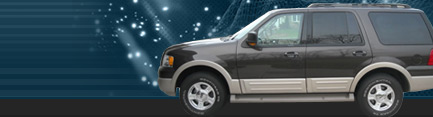

4x4 question. Expedition v Grand Cherokee

Disclaimer: Links on this page pointing to Amazon, eBay and other sites may include affiliate code. If you click them and make a purchase, we may earn a small commission.

spotdog14

Full Access Members
Joined
Feb 27, 2012
Posts
171
Reaction score
32
Location
Haslett, MI
This might seem like an odd question to ask here but I figured I will anyways. So the wife just got a new '14 Grand Cherokee Limited with the Quadra-Trac II 4WD system. I have the opportunity to take it out in some snow last night and was very disappointed in it.

Let me start by giving the specs on the vehicles in question here.

2014 Grand Cherokee Limited
Quadra-Trac II 4WD
P265/60R18 Michelin Latitude Tour Tires

2008 Expedition Limited
AdvancedTrac RSC 4WD
P275/55R20 Goodyear Rugged Terrain T/A


Now that all the important information is out of the way I can start with my examples. I had just driven home in the Expedition so the road conditions where not all that different before getting home and immediately leaving for an appointment in the GC. As most of you know that drive in snow and ice the Expedition is relentless in its use of traction control and attempting to mitigate wheel spin. So this is the system I am use to as well as how it operates ABS on slippery braking.

Example #1.
Pulling into a snow covered side street (the one I live on!). I would say there is about a half inch of fresh powder on top of hard packed icy snow.

The Expedition started to slide the rear end out and TC immediately kicked in and kept me going straight and away I went to my garage.

The GC allowed me to go almost sideways causing me to have to turn the wheel to correct my course and take my foot off of the gas pedal. No indication of TC kicking in or sounds of ABS attempting to stop wheel spin.

Example #2.
Pulling into a slush covered turn lane in the middle of a 4 lane road.

The Expedition, I did not do this maneuver that night with the Expedition but have many times in the past and all that happens is ABS kicks in and it may take me a little longer to stop but thats about it.

The GC, I might add that this is why I am writing this post. I pull into the turn lane at full speed to get out of traffic and slow down. I start to break and immediately all 4 wheels lock up and I begin sliding. No sound or light indication of ABS kicking in I just begin to start sliding at 30 mph. I ended up at about a 15 degree angle in the turn lane (no oncoming traffic or else I would have started to pump the break).


Observations, the GC has no concept of traction control or functioning ABS as I know it. Is it just me being a new driver to the GC or should I take it back to the dealership and have them check the 4WD system? I was able to get TC to kick in once while attempting to do donuts in the Meijer parking lot but thats the only time I have ever had it kick in. Also I know another very large contributing factor is the tires that are on the GC. Obviously I have a mild all terrain tire on my vehicle and the GC came with what Tire Rack considers a fairly crappy all-season tire.

Do you think its just a combination of the good tires on my vehicle combined with AdvancedTrac's hatred of wheel spin or do you think there is actually something wrong with the GC?

**Edit**
I figured I would add some pictures too
1546291_10104513694312234_1802627645_n.jpg


1531790_10104436576536874_1686438102_o.jpg
 
Last edited:

sitruc_btb

Full Access Members
Joined
Dec 2, 2013
Posts
418
Reaction score
87
Location
Chandler, AZ
Maybe weight is a contributing factor. The heavier Ford could feel a bit more planted when in low traction conditions.

Sent from my DROID3 using Tapatalk 2
 
B

bedrck46

for one your comparing a GC to an expy and expecting the GC to act like the expy Try driving another GC and see if it preforms like the wife's GC and you will get a good comparison. always best to compare apples to apples
 
OP
OP
spotdog14

spotdog14

Full Access Members
Joined
Feb 27, 2012
Posts
171
Reaction score
32
Location
Haslett, MI
for one your comparing a GC to an expy and expecting the GC to act like the expy Try driving another GC and see if it preforms like the wife's GC and you will get a good comparison. always best to compare apples to apples
I completely agree! But these were my immediate comparisons. I have driven FWD cars, RWD only trucks (that Ranger taught me how to drive in the winter!) and had never experienced anything like that ABS lockup except for when I was driving our '84 F-150 that didn't have ABS.
 

DetroitDarin

Full Access Members
Joined
Jun 27, 2013
Posts
612
Reaction score
214
Location
.....
It's all in the tires. Tires are the biggest contributing factor in traction.
 

Mangina

Full Access Members
Joined
Jan 4, 2014
Posts
90
Reaction score
17
Location
calgary, alberta
Something's definitely up. It doesn't matter which vehicle it is, ABS is ABS. It should never lock up the brakes. My wife's Acura, my Nissan, and my Expedition all behave the same when braking on slippery surfaces. If I have crappy tires, ABS just kicks on earlier and it takes longer to stop, but you should still get that weird ABS braking sensation and noises.

I have no idea how the traction control stuff works on the Jeep so I won't comment on that. But if your abs isn't working, then it could definitely affect it.
 

Sierra Lima1470

Full Access Members
Joined
Nov 15, 2010
Posts
356
Reaction score
17
Location
USA
I had a Jeep Commander HEMI with the top-tier Quadra-Drive II 4x4 system that I replaced with the Expedition. I can personally validate the experience you just had. I had the jeep out in the mountains when I first bought it about a year ago in similar road conditions. For some reason, my Jeep was very squirrely in the snow. I had standard Goodyear Fortera tires on it with good tread. For some reason, it did not like the snow. Just trying to gently accelerate from a stop light on a snowy/slushy road would have me going sideways towards the car next to me, and the brakes were very touchy on the snow. Half a pound of pressure on the brake pedal was the difference between a civilized stop and crooked wheel lock sliding. Obviously tires are a factor, but even my Pirelli Scorpion tires did well on the snow these last few days with AdvanceTrac.... It may just be the programming, I dont know. It did just fine in the deep sands of NC though. "Its a Jeep thing. You wouldnt understand". Is about as much help I got from the dealership and other hardcore Jeep people. So I said adios fools, and went back to Ford.
 
Last edited:

rayt

Full Access Members
Joined
Dec 4, 2011
Posts
166
Reaction score
21
Location
NY
definitely all in the tires

i have a 2011 expedition
and a 2014 dodge durango r/t (same base as the grand cherokee)

My 2011 expedition with 22" and cooper zeon ltzs works like crap

while my stock tires on my durango r/t work like a champion.

I can put winter tires on a sedan with rwd and it'll work better then both the expedition and jeep in snow.
 

metaldrgn

Full Access Members
Joined
Mar 8, 2011
Posts
452
Reaction score
36
Location
somewhere
this is the only use i have for a jeep.

jeep GC limited, doughnuts in slush - YouTube

Hehe ive got one of those and it does the same thing even though it has awd. It's faulty.

As for the 2014 that seems like a weird issue. My wifes 06 Durango has traction control and will cut the throttle if it starts slipping and from what I can tell the GC is supposed to be more upscale than the durango.
 

tojohnso

Full Access Members
Joined
Mar 11, 2013
Posts
256
Reaction score
26
Location
USA
Though I believe tires are a key component with traction in snow, I don't believe it has a play in the scenario the OP described. It's all in the traction control systems in this scenario. It would appear the ABS isn't tuned to allow for snow conditions and neither is the TCS on the jeep. It will be interesting to see what your comparison is on dry pavement and pebble surfaces.
 
OP
OP
spotdog14

spotdog14

Full Access Members
Joined
Feb 27, 2012
Posts
171
Reaction score
32
Location
Haslett, MI
Do you have it turned off? Did you read your manual?
No, I will say after driving this weekend in more snow/slush I will say that the ABS sensation and operation is 100% completely different from any other vehicle I have driven. While it works, it is very mild and at low speeds I don't think that it does actually engage at all. I was able to get traction control to kick in this time but it was by flooring the GC and having it fish tail from side to side.

Anyways its just a learning curve, but very surprising how it handles in snow. I still give it a poor rating compared to the Expedition.
 

VTfireftr

Full Access Members
Joined
Mar 12, 2011
Posts
161
Reaction score
5
Location
Vermont
Just a thought here, but maybe the traction control/ABS is deactivated at lower temps to allow for wheel lock-up.

ABS sucks on snow and sand. It actually makes stopping distances longer. When wheels lock up on snow and sand, the vehicle will stop faster.

A couple of weeks ago, I was headed to my rescue squad HQ to pick up the ambulance and when I went to stop on my road, the ABS kicked in, and my truck did not stop. I wound up sliding into a snow covered guard rail. Thankfully, I was only going 5mph and the GO RHINO grill guard took the brunt of the impact. No damage to the front bumper or grill. I need to replace the rubber strip on the grill guard.

If I didn't have ABS, the truck would have stopped when I applied the brakes.

on a side note, I always turn the traction control off when I switch to 4 x 4 high. i don't want my brake to be applied when I need traction, and then have the engine depower when the wheels spin.

I HATE all these driving interventions!
 

dave91gt

Well-Known Member
Joined
Jul 28, 2012
Posts
66
Reaction score
43
Location
wv
Great post. My wife will be replacing her 08 Expedition within a year or 2 (waiting to check out the 2015). The only other vehicle we have even considered is the Grand Cherokee. The diesel would be a desirable option for us. But, she is in love with the Expedition. A key reason is it is a tank in snow. She ventures off to work whether there is a foot of snow or an inch. I replaced the tires with F150 size Michelin MS2's 2 years ago. I find it's stability program much less intrusive than my 2012 F150. It just goes and goes in snow. I hope you find the answers you are looking for but my opinion is the tires are a contributing factor but more than likely the engineering in the stability program is the main difference.
 
Last edited:
OP
OP
spotdog14

spotdog14

Full Access Members
Joined
Feb 27, 2012
Posts
171
Reaction score
32
Location
Haslett, MI
After driving this thing in a few more snow storms including the one that is currently going on in Michigan that is dumping 4 inches I have concluded that its 80% tires and 20% sub-par traction control system.

The more I read into AdvanceTrac and the more I relate what I have read to real world conditions I have come to realize that Ford actually has a much more advanced system then Jeep.
 

LocDoc

Full Access Members
Joined
Dec 9, 2012
Posts
64
Reaction score
32
Location
Anywhere
I would have the Grand Cherokee checked-out, just in-case. The electronic stability control (ESC), electronic traction control (ETC), emergency brake assist (EBA), and all other ABS-networked sub-systems need ABS to function properly in order for them to function properly.

It’s sort of like a domino effect, if ABS fails, the other sub-systems will fail too, or at least be crippled.


As far as winter/snow traction goes, weight and tires play a major role in which vehicle gets better traction in snow. Tipping the scales at 3 tons, the Expedition is going to find traction where the Grand Cherokee can’t.

Aside from that, their 4x4 systems are very similar, and equally capable.


The current Grand Cherokee with automatic full-time Quadra-Trac II four-wheel drive uses a two-speed dual range Magna Powertrain MP3023 transfer case.

The current Expedition with automatic full-time ControlTrac four-wheel drive uses a two-speed dual range BorgWarner BW4417 transfer case.

Both systems are capable of "torque biasing" in Auto mode, meaning that in extreme situations, all 100 percent of torque can be sent to the front wheels – for temporary front-wheel drive. The rear wheels receive 0 (zero) torque during this "biasing" behavior.

Both systems also use electronic traction control (engine management and ABS) to control wheelslip and transfer torque where needed.

The Expedition’s four-wheel electronic traction control system is calibrated to be aggressive in braking spinning wheels, but that also allows it to transfer more torque.

It can transfer up to 100 percent of supplied torque at low speeds, by "brake locking" (it holds the wheel and won’t let it spin) the front differential and/or the rear differential. That’s more torque than a limited-slip or even a locker can transfer.
 
Last edited:
OP
OP
spotdog14

spotdog14

Full Access Members
Joined
Feb 27, 2012
Posts
171
Reaction score
32
Location
Haslett, MI
I would have the Grand Cherokee checked-out, just in-case. The electronic stability control (ESC), electronic traction control (ETC), emergency brake assist (EBA), and all other ABS-networked sub-systems need ABS to function properly in order for them to function properly.

It’s sort of like a domino effect, if ABS fails, the other sub-systems will fail too, or at least be crippled.


As far as winter/snow traction goes, weight and tires play a major role in which vehicle gets better traction in snow. Tipping the scales at 3 tons, the Expedition is going to find traction where the Grand Cherokee can’t.

Aside from that, their 4x4 systems are very similar, and equally capable.


The current Grand Cherokee with automatic full-time Quadra-Trac II four-wheel drive uses a two-speed dual range Magna Powertrain MP3023 transfer case.

The current Expedition with automatic full-time ControlTrac four-wheel drive uses a two-speed dual range BorgWarner BW4417 transfer case.

Both systems are capable of "torque biasing" in Auto mode, meaning that in extreme situations, all 100 percent of torque can be sent to the front wheels – for temporary front-wheel drive. The rear wheels receive 0 (zero) torque during this "biasing" behavior.

Both systems also use electronic traction control (engine management and ABS) to control wheelslip and transfer torque where needed.

The Expedition’s four-wheel electronic traction control system is calibrated to be aggressive in braking spinning wheels, but that also allows it to transfer more torque.

It can transfer up to 100 percent of supplied torque at low speeds, by "brake locking" (it holds the wheel and won’t let it spin) the front differential and/or the rear differential. That’s more torque than a limited-slip or even a locker can transfer.
Very informative post, thank you.
 
Top