
Disclaimer: Links on this page pointing to Amazon, eBay and other sites may include affiliate code. If you click them and make a purchase, we may earn a small commission.
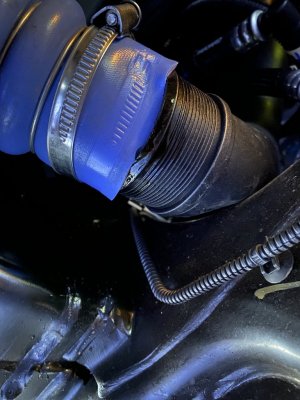
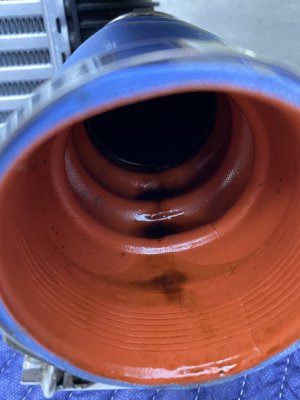
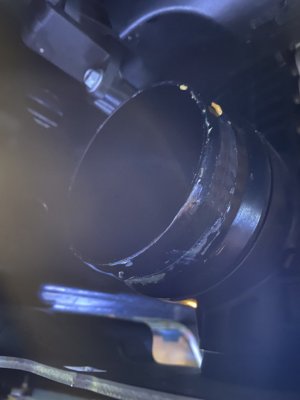
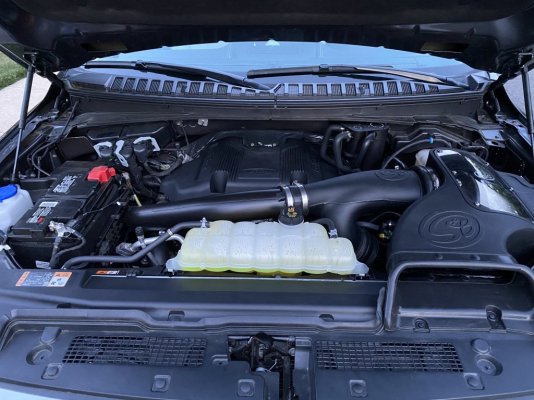
But aren’t those gases recirculated directly into the intake manifold, downstream of the intercooler? I didn’t think the PCV routed the gases back through the intercooler. (Edit: this is in reference to the passenger side. Not sure how the driver’s side is routed, but is likely the source of the oil in the intercooler since the passenger side hot air tube was dry.)I see you have a JLT catch can. You would likely have even more oil in your intercooler if you didn't have a catch can. It's oil vapor mixed in the PCV gases that are being routed back into the intake. Any chance this is residual from before you installed your catch can?
Just had the first oil change done at the Ford dealer a couple of days before I changed the intercooler. Most of the 5k miles are from towing a travel trailer, so definitely driven hard. However, where is the oil being introduced into the intake system ahead of the intercooler?5 k guessing stock oil still? Or did you change early to a more volatile / less stable oil? New engine driven hard will do this also.
It's oil vapor mixed in the PCV gases that are being routed back into the intake.
I went with the CVF Titan as well. Best bang for the buck!@MHay what intercooler
did you go to? I have a CV Fab intercooler and hot and cold side pipes waiting to be installed.
It’s a good question, I’m not sure. Maybe because the driver’s side is a bit more complex with the sensor and it’s more profitable for them just to offer the passenger side PCV catch can? I’m curious to hear how much oil you get out of your IC when you open the drain. For me, the thought of oil getting blown into my IC under boost doesn’t sit well especially since I plan on keeping this truck for many years.I'm curious on the added catch can, given that none of the manufacturers include two cans or the hoses to connect both sides, I'm curious whether it will help. One would think those companies would have thought about that, in fact none of them even tell you to buy two. I haven't cracked my drain plug on my Mishimoto IC since I installed it but I probably will this oil change, just to check on it. I do know that the last time I emptied my catch can after about 6k miles, it only had about 2 ounces in it.


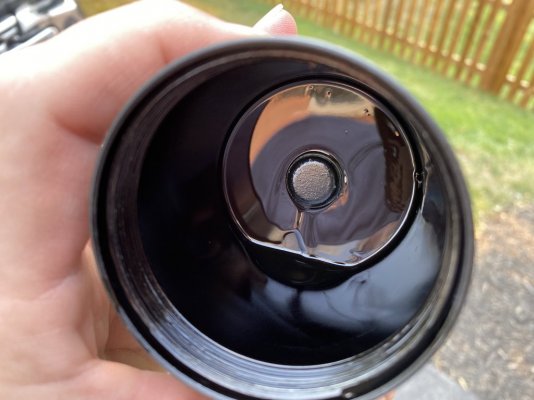
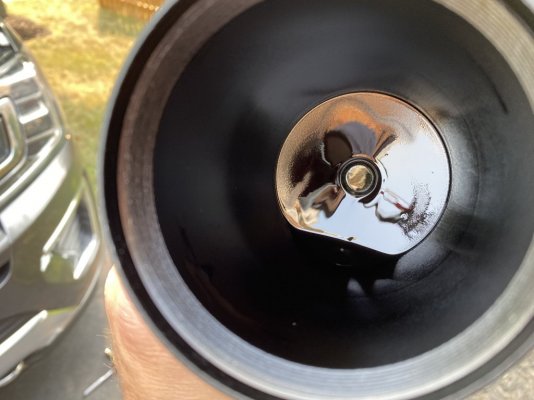
Thanks for the photos on this!So after a little more than 2,000 miles I pulled the catch cans to see how much fluid had been collected. Pics are attached below. I was surprised at how little had accumulated both in the larger PCV (passenger side) can and the smaller CCV (driver side) can. Still, I’m glad to have peace of mind knowing this stuff isn’t getting routed back through the intake, and in the case of the CCV side not going through the turbo and intercooler.
CCV
View attachment 69568
PCV
View attachment 69569
This was only on the 11-14 Ecoboosts F150s. This is not needed on the 2015 and up. Ford changed the design of the CAC, air intake, etc. to accommodate the CAC condensation issues that were going on with the early Ecoboosts. We had to do this on my father in laws 11 Ecoboost. My 16 has been running great and has never had the condensation issue. We live in Mississippi so humidity is an issue here.Thank you HMay for the update. If you add the driver side catch can, that would provide a way to quantify the amount of oil going through the driver side turbo vs not going though it. Obviously, less would be better. I saw the F150 videos where they drill a small hole in the factory Intercooler, near the bottom corner of the plastic inlet manifold, but that does not sound appealing to me.