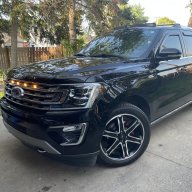

Replacing rear brake pads and rotors

Disclaimer: Links on this page pointing to Amazon, eBay and other sites may include affiliate code. If you click them and make a purchase, we may earn a small commission.

Overtow

Well-Known Member
Joined
Jun 4, 2018
Posts
57
Reaction score
68
Location
CLEVELAND
Didn't see a guide, so I figured I would contribute back to the community since I'm a frequent consumer of information here. Long story short, this is an easy job, by far the easiest brake job I've ever done. Eight total bolts to remove, six of which are lugnuts. Here we go!

1. Put the truck into parking brake maintenance mode - without doing this you won't be able to push the caliper pistons in.


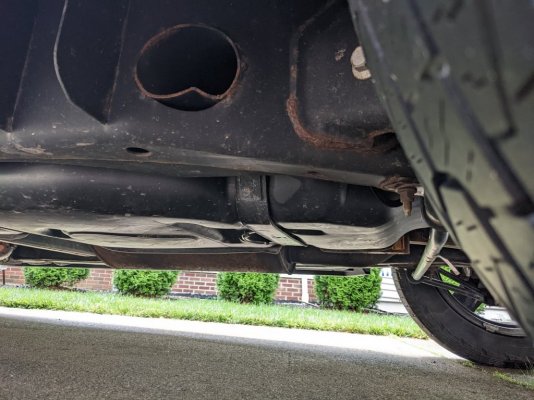
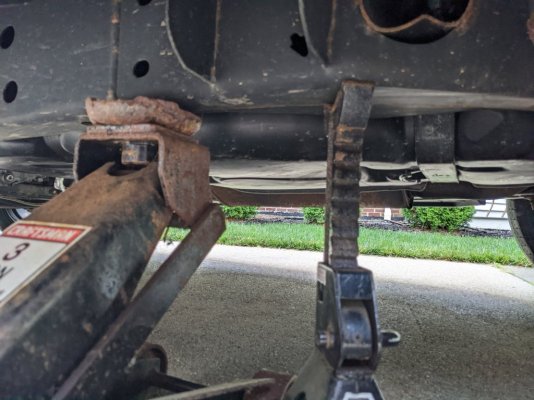
2. Lift the truck and secure it with an appropriate jack stand. Don't go under a car that is only supported by a jack unless you want to hang out with Henry Ford sooner than planned. This is where its great to have an actual frame to lift.
1.jpg
2.jpg


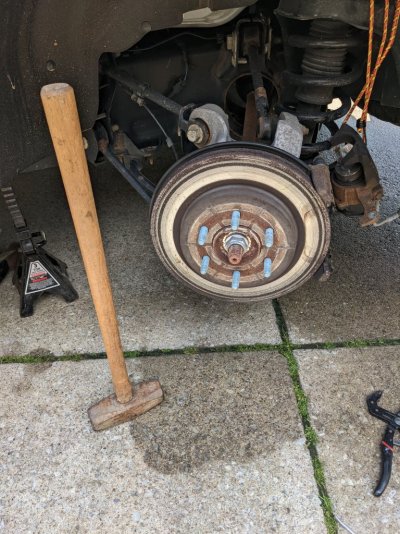
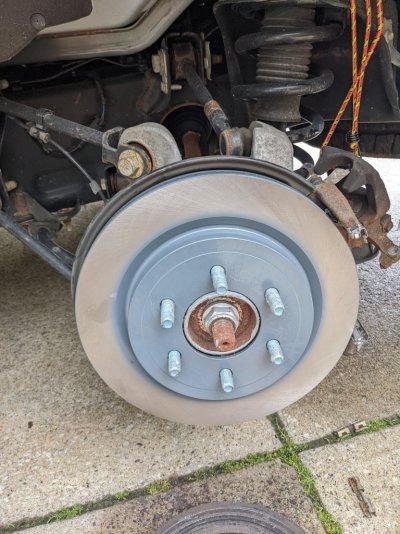
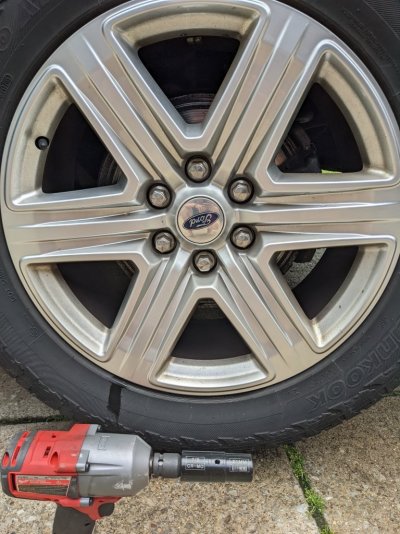
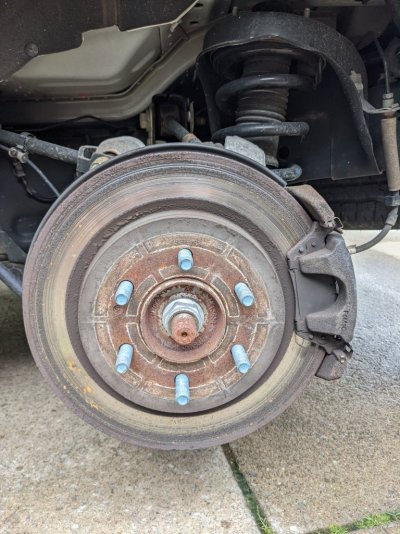
3. Remove the lugnuts (21mm) and the tire. I place the tire under the rear hitch as an additional safety while doing the work. My M18 Fuel Impact Wrench removed the lugnuts without issue.
0.jpg

3.jpg

I live in Cleveland, rust is part of life here.

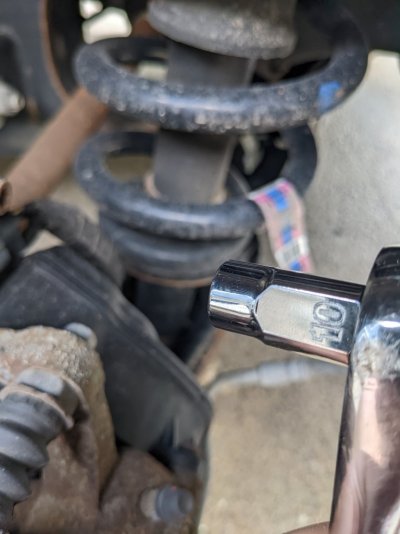
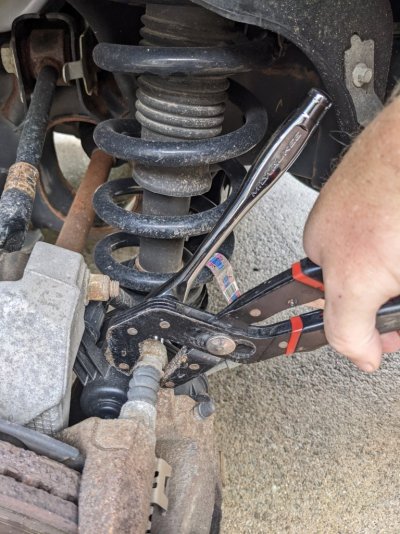
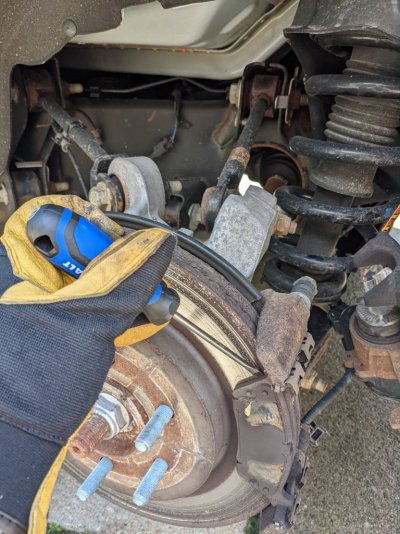
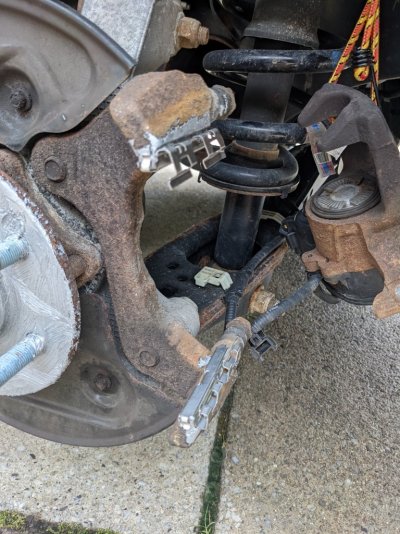
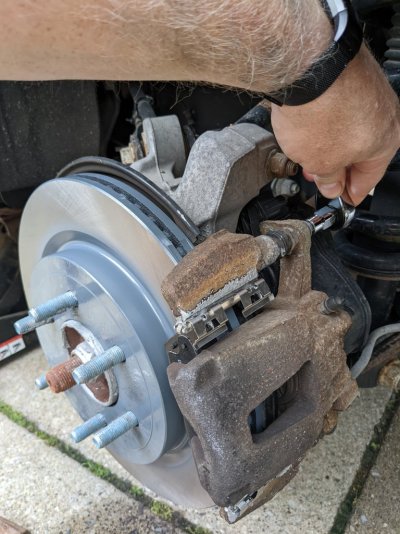
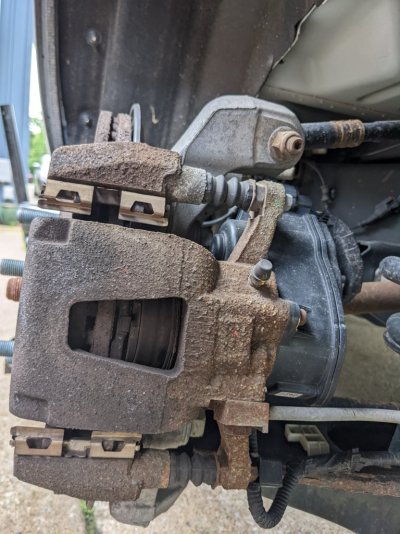
4. Now that the wheel is removed, we can see what we need to do to get the caliper off - specifically a 10mm wrench/ratchet, and a pair of pliers if you don't have thin walled wrenches to hold the caliper bolts while you are loosening.
4.jpg

continued....
 
OP
OP
O

Overtow

Well-Known Member
Joined
Jun 4, 2018
Posts
57
Reaction score
68
Location
CLEVELAND
...continued...

5.jpg

6.jpg


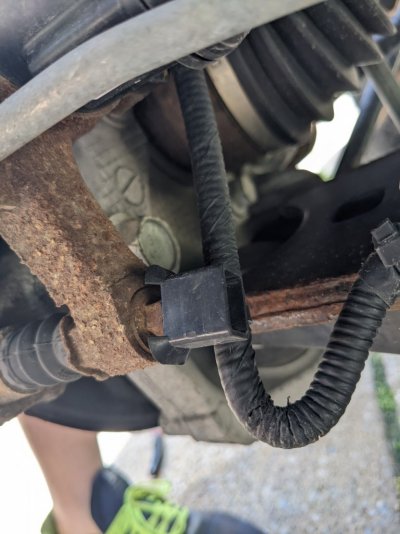
Theres a plastic boot that connects to the lower caliper bolt to hold the wiring harness in place, remove this so you can access the lower bolt.

7.jpg

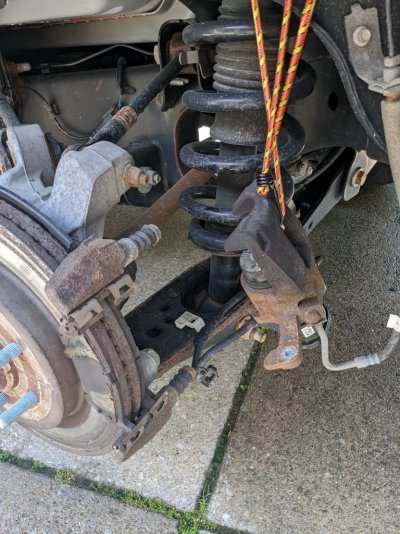
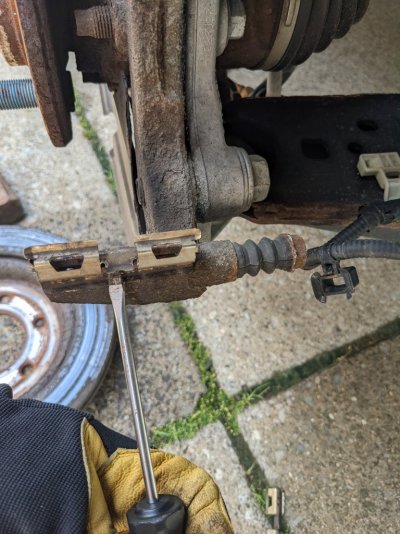
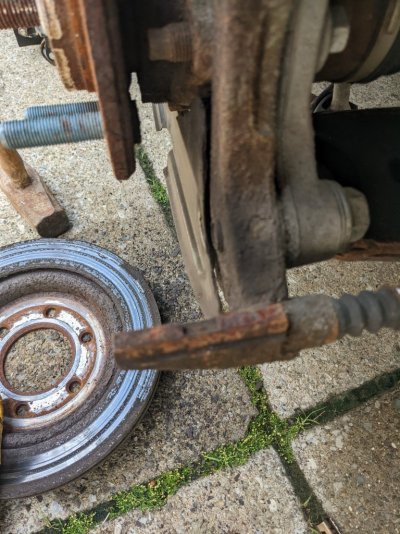
5. After removing the caliper you'll be able to remove the pads using a flat blade screw driver.

9.jpg

10.jpg

...continued...
 
OP
OP
O

Overtow

Well-Known Member
Joined
Jun 4, 2018
Posts
57
Reaction score
68
Location
CLEVELAND
continued...

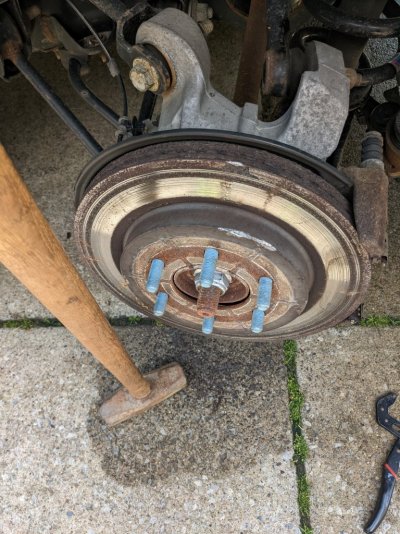
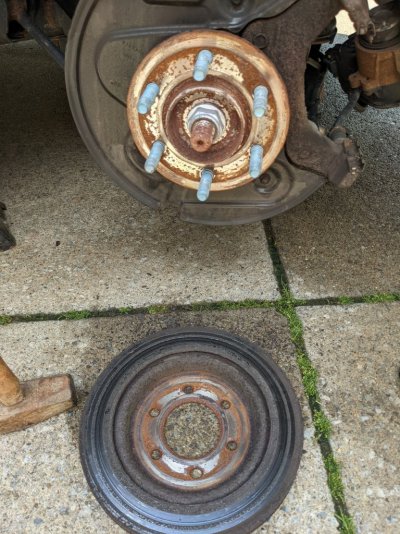
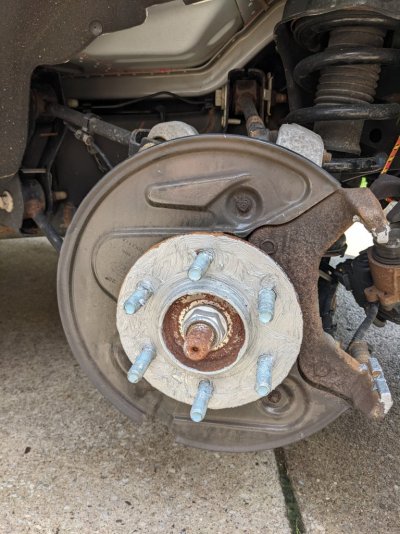
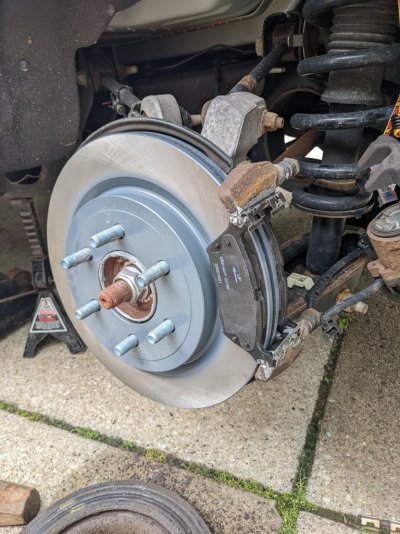
6. Now that the pads are off you should be able to remove the rotor. In my case, I could not get it to come off without seven or eight whacks with the pictured sledgehammer.

13.jpg

14.jpg

15.jpg

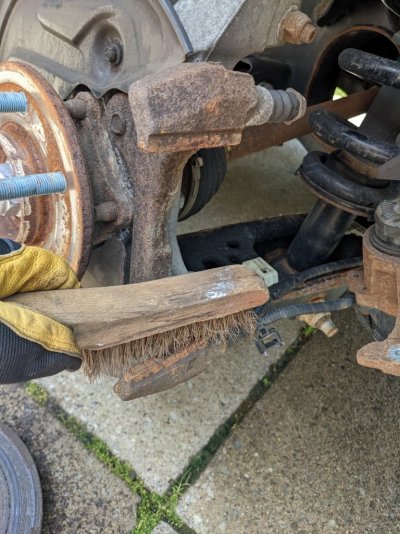
7. Once the caliper was off, I removed the brake pad mounting clips from the caliper mount.

16.jpg

17.jpg
 
OP
OP
O

Overtow

Well-Known Member
Joined
Jun 4, 2018
Posts
57
Reaction score
68
Location
CLEVELAND
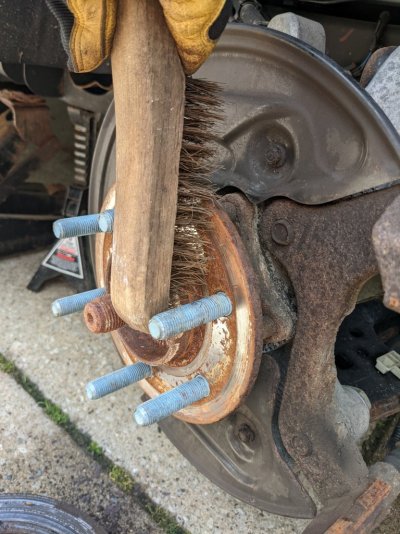
....and started scraping away the rust with the wire brush....

18.jpg

19.jpg

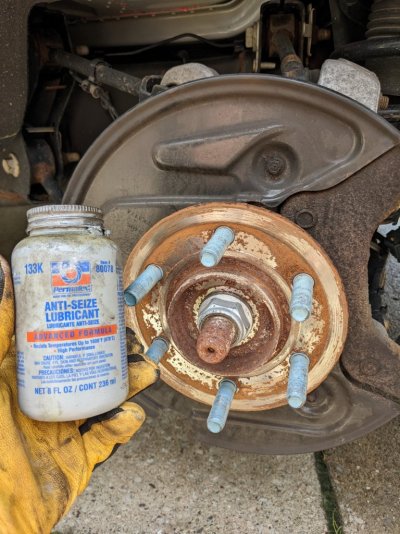
8. Again, its Cleveland and I intend to keep this truck for a while, hence anti-seize is your friend. You'll thank yourself later, just remember that antiseize has a magical ability to get on <everything>.

20.jpg

21.jpg

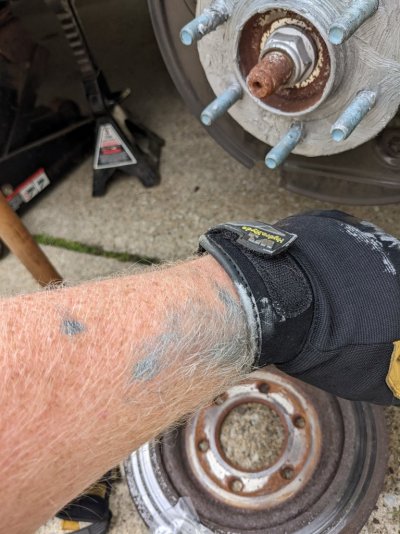
Reminder of the cardinal rule - Antiseize gets on everything!

23.jpg
 
OP
OP
O

Overtow

Well-Known Member
Joined
Jun 4, 2018
Posts
57
Reaction score
68
Location
CLEVELAND
Home stretch:

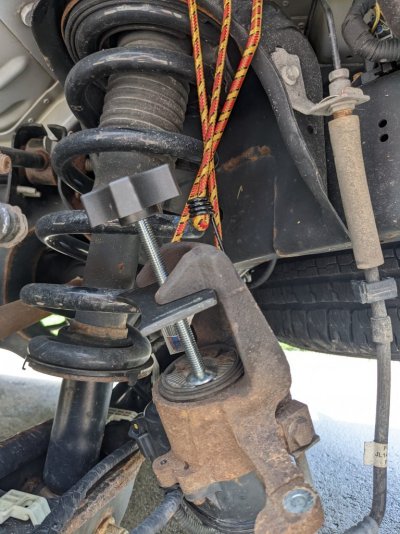
9. Presuming you've successfully entered Parking Brake Maintenance Mode, you'll be able to use a standard caliper piston compressor to push the piston back in. No special tools required here, so don't worry about renting the kit from your part store.

22.jpg


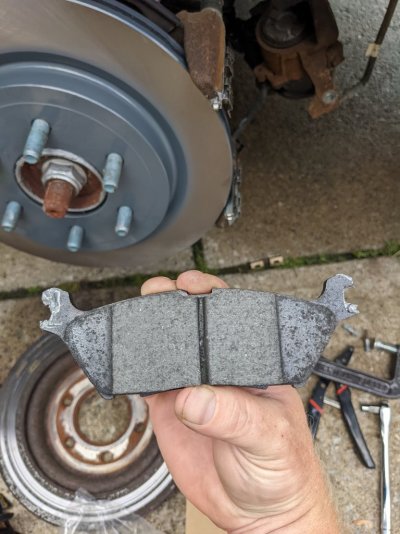
10. Now its time to start reassembling! Step one was greasing the brake hardware mounts and the ends of the brake pads with Antiseize. A word of caution: it is generally bad form to get antiseize on the face of the brake pads or the rotors. Brakes are supposed to seize. Don't get antiseize on the friction material!

24.jpg


25.jpg

26.jpg

27.jpg

Notice that I have antiseize on the ends of the pads - again, this is Cleveland...
 
OP
OP
O

Overtow

Well-Known Member
Joined
Jun 4, 2018
Posts
57
Reaction score
68
Location
CLEVELAND
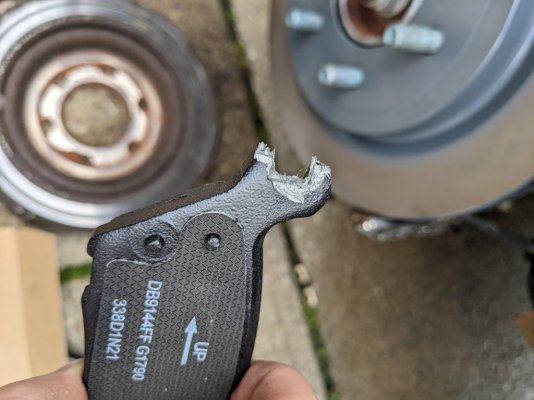
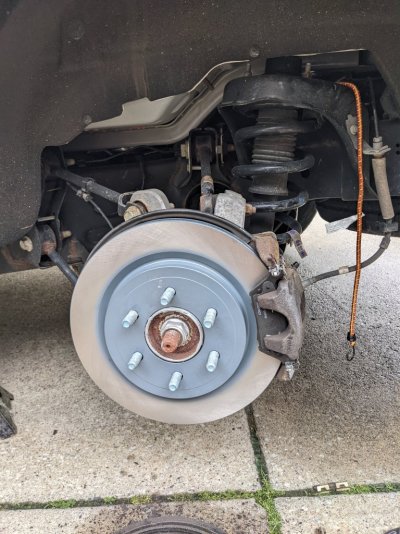
11. Now insert the pads into the mounting positions. I did the inside pad before the outside pad because it was easier to hold in place while mounting the front pad. Once the pads were on, I re-installed the (piston-compressed) caliper. Also, take note that the arrow on the pad with the word "UP". Apparently the pads are directional, but you wouldn't know it by looking at the friction material.

28.jpg


29.jpg
I was able to hold the caliper bolts with my fingers until they tightened up enough to crank down with the ratchet.

30.jpg

Finally, I reinstalled the wheel, torqued the lug nuts to 150 pounds (!!), and then reversed the procedure above to exit out of parking brake maintenance mode.

This side of the truck took me less than 45 minutes - the other side was a little over 90 minutes because I could not for the life of me get the rotor off using my small sledge - I had to upsize to the big guy.

Hopefully this helps someone. I saw a comment in another thread that this was easier than changing the oil. I could not possibly agree more!

Fronts coming soon....
 
Last edited:

X BRONCO OWNER

Active Member
Joined
Jan 17, 2019
Posts
39
Reaction score
8
Location
US
No matter how careful i am I always seem to end up covered in anti-seize lol. How do you get the ebrake in to maintenance mode?
 

Going_Going_Gone

Full Access Members
Joined
Aug 31, 2018
Posts
574
Reaction score
328
Location
Phoenix
In looking at the photos, I have not had my rear calipers off my truck so it appears in your photos that the piston is retracted into the caliper by force (a la using a C-clamp) and not being "threaded" back into the caliper like on the Edge etc. rear brakes??
 

Soliyou

Full Access Members
Joined
Jun 15, 2019
Posts
473
Reaction score
277
Location
OK
In looking at the photos, I have not had my rear calipers off my truck so it appears in your photos that the piston is retracted into the caliper by force (a la using a C-clamp) and not being "threaded" back into the caliper like on the Edge etc. rear brakes??
Yes, it is retracted using force after placing the parking brake in service mode to disengage the actuator. Service mode is a must here.

The service manual warns against using a c-clamp to push the actuator since it can crack the plastic housing of the parking brake actuator. The tool that Overtow used is the recommended one.
 

BMW2FORD

Full Access Members
Joined
Jul 18, 2021
Posts
322
Reaction score
309
Location
CT
If you loosen the master cylinder cap, the piston slides back very easy. Don’t leave the cap loose too long since brake fluid will absorb a lot of water which is not good. No turning of the piston is needed but the pistons do have the marks like other cars that this needs to be done on but most likely carried over parts.
 

TX-EXPMAX

Full Access Members
Joined
Jun 24, 2019
Posts
100
Reaction score
42
Location
Texas

Soliyou

Full Access Members
Joined
Jun 15, 2019
Posts
473
Reaction score
277
Location
OK
If you loosen the master cylinder cap, the piston slides back very easy. Don’t leave the cap loose too long since brake fluid will absorb a lot of water which is not good. No turning of the piston is needed but the pistons do have the marks like other cars that this needs to be done on but most likely carried over parts.
Ours is different due to the electronic parking brakes.. I don’t think loosening the bleeder screw or opening the cap will help. You can end up breaking the parking brake actuator.

You must put it in service mode to retract the electronic actuator all the way, then you can push the piston back. This also prevents accidental actuation of the parking brake while you are working on the brakes,, which can cause a serious injury!
 

Soliyou

Full Access Members
Joined
Jun 15, 2019
Posts
473
Reaction score
277
Location
OK
Is this the tool you used to press the piston back in? I've always used an old pad with C clamp, but sure looks like life would be easier this this...
Yes, this will work. In fact I am on my way to buy one now to do the rear brakes later this evening :)

The c-clamp will react against the plastic housing of the actuator and can crack it.
 

Soliyou

Full Access Members
Joined
Jun 15, 2019
Posts
473
Reaction score
277
Location
OK
Two more things to note just to complete this this topic.
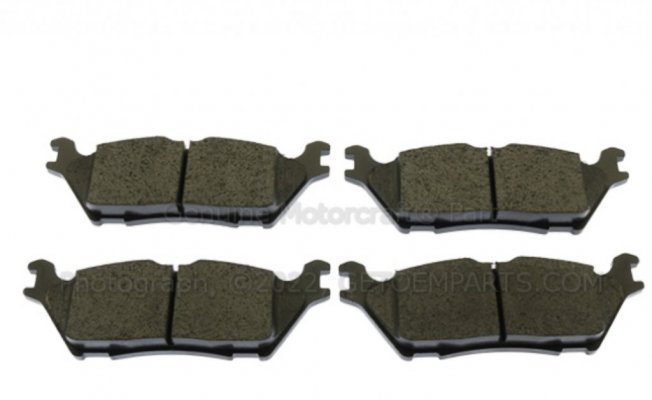
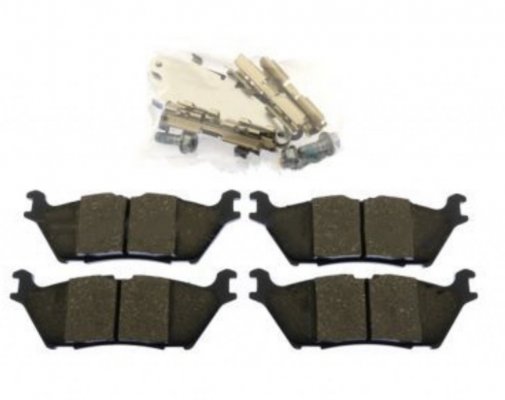
1- it seems that Ford changed the part number from JL3Z-2200-A to KL3Z-2200-C. The new pad has more surface are as seen in the two pictures below. Some aftermarket use the old design while others use the new one and some are even in between.
Original design:
3ED7A86B-5901-4EFD-B725-EA3AF8B92861.jpeg
Updated
6AF8B7E9-60BD-427F-98FA-1B730E0A7ACD.jpeg

2- The service manual requires replacing the two caliper sliding pin bolts. Ford pads come with new bolts but the lower one included in the package doesn’t have the stud for the wiring harness! Which is crazy since you can’t buy it separately from Ford. If you decide to reuse old bolts at least use some blue thread lock on them and torque to 26 ft-lb (value from service manual) or more.
 

BMW2FORD

Full Access Members
Joined
Jul 18, 2021
Posts
322
Reaction score
309
Location
CT
Ours is different due to the electronic parking brakes.. I don’t think loosening the bleeder screw or opening the cap will help. You can end up breaking the parking brake actuator.

You must put it in service mode to retract the electronic actuator all the way, then you can push the piston back. This also prevents accidental actuation of the parking brake while you are working on the brakes,, which can cause a serious injury!
Yep agree, you always have to put it in the parking brake service mode or you'll never push the pads back but if you then loosen the master cylinder cap under the hood, the piston is much easier to push back. I wouldn't loosen the bleeder since that can let in air but the cap trick works. When the car is off, all the abs valves are open so its like old school hydraulic brakes. You can even foot bleed these brakes as long at the key is off as well.
 

VBreithaupt

Full Access Members
Joined
Jan 1, 2022
Posts
158
Reaction score
97
Location
Michigan
11. Now insert the pads into the mounting positions. I did the inside pad before the outside pad because it was easier to hold in place while mounting the front pad. Once the pads were on, I re-installed the (piston-compressed) caliper. Also, take note that the arrow on the pad with the word "UP". Apparently the pads are directional, but you wouldn't know it by looking at the friction material.

View attachment 73829


View attachment 73830
I was able to hold the caliper bolts with my fingers until they tightened up enough to crank down with the ratchet.

View attachment 73831

Finally, I reinstalled the wheel, torqued the lug nuts to 150 pounds (!!), and then reversed the procedure above to exit out of parking brake maintenance mode.

This side of the truck took me less than 45 minutes - the other side was a little over 90 minutes because I could not for the life of me get the rotor off using my small sledge - I had to upsize to the big guy.

Hopefully this helps someone. I saw a comment in another thread that this was easier than changing the oil. I could not possibly agree more!

Fronts coming soon....
 

VBreithaupt

Full Access Members
Joined
Jan 1, 2022
Posts
158
Reaction score
97
Location
Michigan
Great job of talking through process and pictures. I need to replace mine and you just made it easier. Did someone say how to put in parking brake mode?
 
OP
OP
O

Overtow

Well-Known Member
Joined
Jun 4, 2018
Posts
57
Reaction score
68
Location
CLEVELAND
If you loosen the master cylinder cap, the piston slides back very easy. Don’t leave the cap loose too long since brake fluid will absorb a lot of water which is not good. No turning of the piston is needed but the pistons do have the marks like other cars that this needs to be done on but most likely carried over parts.

I didn't touch the brake fill cap, and I absolutely did not open the bleed valve - that ends badly for everyone and is unnecessary. The piston was super easy to compress - I didn't have to apply much torque on the tool at all and probably could have done it one handed if the caliper wasn't swinging all over the place.

If you don't put it into parking brake maintenance mode, something is going to brake. (no pun intended...)
 
Top