5w40 vs 5w30 for 3.5 HO?

Disclaimer: Links on this page pointing to Amazon, eBay and other sites may include affiliate code. If you click them and make a purchase, we may earn a small commission.

texman0016

Member
Joined
Sep 16, 2022
Posts
6
Reaction score
4
Location
Austin
There are some people that swear by 5w40 for the 3.5 HO's ("Raptor" engine). We have a 2022 Timberline I don't care about fuel mileage. Goal is to put the oil weight that will protect the engine better. I run Lubrication Engineers or Amsoil with a OE filter. Thanks in advance.
 

LazSlate

Full Access Members
Joined
May 7, 2022
Posts
416
Reaction score
245
Location
Arizona
I always go down this road with all my cars. Rule of thumb is use what is recommended is always the safest. But with that said its also where you live. The "W" stands for Winter and the number before is the thinnest it will be in the cold temps. The number after is how thick it will be at normal temps. So in reality the lower number is the most important since lack of lubrication at cold temps is disastrous. If you are constantly off roading and maxing out the engine temps then 5w40 could be better. IMO 5W30 is the best and if you are in really cold then 0W30. I live in AZ and run 5W/30 in my Timberline. I have a Ford Van and run 5W20 in that since its the Triton and it likes the thinner oils per Ford. Always best to run what the Engineer's who designed the engine recommend.
 

Rednecked

Full Access Members
Joined
Nov 26, 2021
Posts
204
Reaction score
145
Location
Arizona
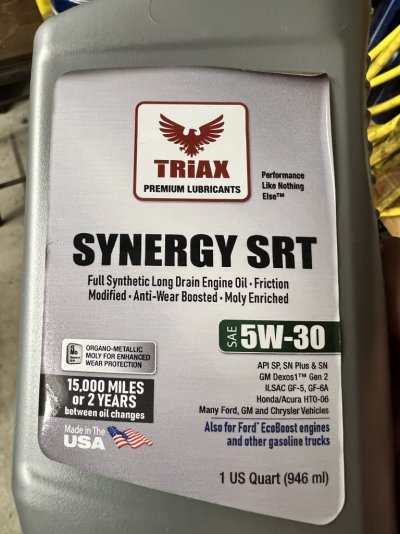
Check out https://www.triaxlubricants.com/

I run this oil in my 7.3 Powerstroke. Night and day difference. I started running it in my expedition. Their oil is specifically formulated for ecoboost engines.
 

Attachments

  • 0431786A-9D1F-44F3-A115-8AE16B60E590.jpeg
    0431786A-9D1F-44F3-A115-8AE16B60E590.jpeg
    164.9 KB · Views: 31
OP
OP
T

texman0016

Member
Joined
Sep 16, 2022
Posts
6
Reaction score
4
Location
Austin
I always go down this road with all my cars. Rule of thumb is use what is recommended is always the safest. But with that said its also where you live. The "W" stands for Winter and the number before is the thinnest it will be in the cold temps. The number after is how thick it will be at normal temps. So in reality the lower number is the most important since lack of lubrication at cold temps is disastrous. If you are constantly off roading and maxing out the engine temps then 5w40 could be better. IMO 5W30 is the best and if you are in really cold then 0W30. I live in AZ and run 5W/30 in my Timberline. I have a Ford Van and run 5W20 in that since its the Triton and it likes the thinner oils per Ford. Always best to run what the Engineer's who designed the engine recommend.
Thanks for the elaborate response! I live in Texas, and it's the wife's truck, so I was wondering if I could get a "win win" by using the same oil as I use in my 6.7 powerstroke. You're probably right about just sticking to the recommended by the engineers. I'm the guy that always wants "extra" (full dual filter intake system, upgraded crank case ventilation with oil catch can, etc.). I'll try to be a grown up this time around and just use recommended, throw in a K&N filter, and vynl wrap the chrome and silver for kicks. Maybe I just needed someone to talk me out of it, so thank you sir
 

LokiWolf

Staff member
Moderator
Joined
Apr 2, 2016
Posts
3,971
Reaction score
2,837
Location
Richmond VA
I am going to go a bit further and add to @LazSlate's post a bit.

Always best to run what the Engineer's who designed the engine recommend.

I in theory understand and can partially get behind this statement. But not in reality. The only person who would stand behind this statement is an actual engineer. Anybody who actually works on things, whether that is cars, mechanical equipment, or electronics would disagree. Let's take it a bit further.

Always best to run what the Engineer's who designed the engine recommend.

or BETTER. That would be how I would state that. What the manual and manufacturer recommends is the MINIMUM to meet the protection needs of the motor.

Now I would not use an oil specifically formulated for diesels, in my Ecoboosts, but some of those ALSO meet and exceed the specs for our motors. Do your homework.

Rule of thumb as far as conventional vs Synthetic. If it came with conventional, blended and full syn's are an upgrade, and will do great. If it came with blended, DO NOT run conventional, but Full Syn would also do great.

Ford generally uses blends in their motors, for 2 reasons, cheaper than Synthetic, and better protection than conventional under high heat and high pressure.

Currently mine are under maintenance from my dealer, so they get the recommended oil about every 5K. If I was doing in myself, they would be running Valvoline Full Syn.

Now as far as the weight. If you are in Texas, the 5W30 is fine. If you were tuning it, towing a bunch, running it hard in high heat situations, 5W40 would probably be a good thing. 0WXX would not benefit you.

 

BSarchet

Full Access Members
Joined
Mar 30, 2022
Posts
197
Reaction score
121
Location
Little Flock, AR
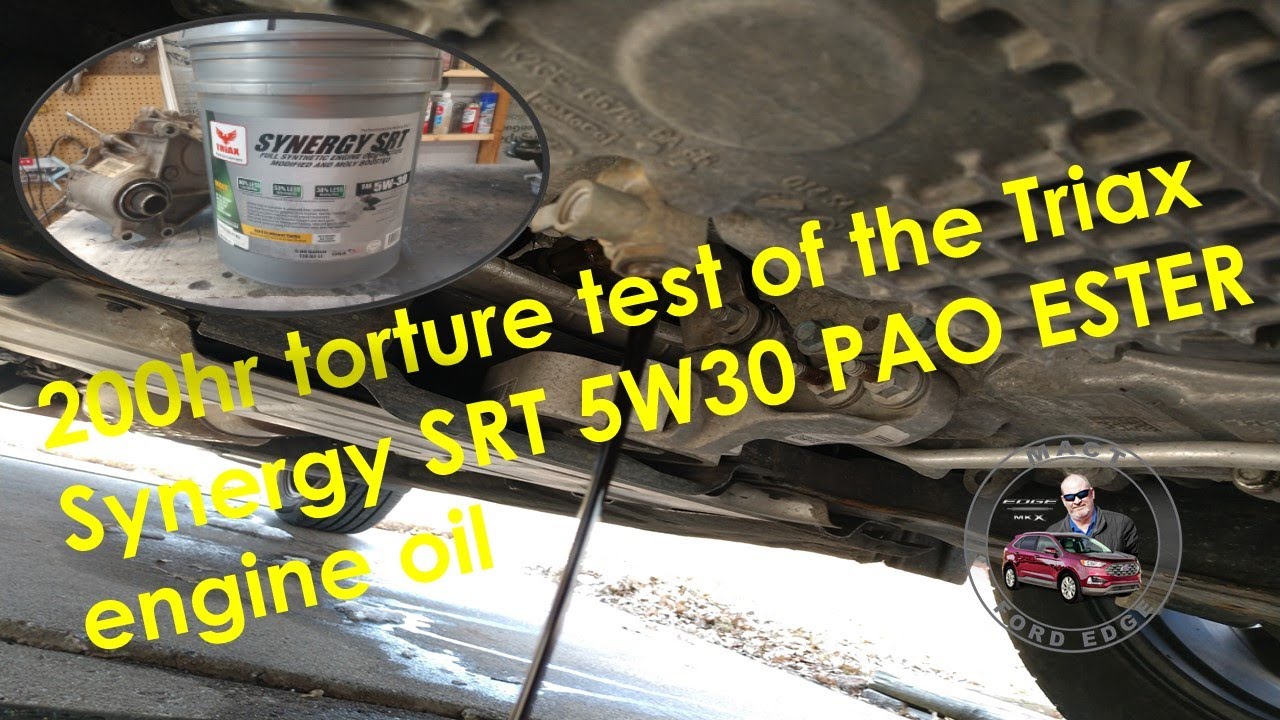
Have you seen any analysis of it? I can look, but was curious if you had come across any?
I read through some forums and watched this analysis review. It wasn’t an overly detailed research by me admittedly. I liked the idea of an oil designed for the eco boost but I would love to hear your thoughts if you look into it.


LazSlate

Full Access Members
Joined
May 7, 2022
Posts
416
Reaction score
245
Location
Arizona
I am going to go a bit further and add to @LazSlate's post a bit.


I in theory understand and can partially get behind this statement. But not in reality. The only person who would stand behind this statement is an actual engineer. Anybody who actually works on things, whether that is cars, mechanical equipment, or electronics would disagree. Let's take it a bit further.


or BETTER. That would be how I would state that. What the manual and manufacturer recommends is the MINIMUM to meet the protection needs of the motor.

Now I would not use an oil specifically formulated for diesels, in my Ecoboosts, but some of those ALSO meet and exceed the specs for our motors. Do your homework.

Rule of thumb as far as conventional vs Synthetic. If it came with conventional, blended and full syn's are an upgrade, and will do great. If it came with blended, DO NOT run conventional, but Full Syn would also do great.

Ford generally uses blends in their motors, for 2 reasons, cheaper than Synthetic, and better protection than conventional under high heat and high pressure.

Currently mine are under maintenance from my dealer, so they get the recommended oil about every 5K. If I was doing in myself, they would be running Valvoline Full Syn.

Now as far as the weight. If you are in Texas, the 5W30 is fine. If you were tuning it, towing a bunch, running it hard in high heat situations, 5W40 would probably be a good thing. 0WXX would not benefit you.


I agree with you 100%. The recommendation for brand and type (not weight) are typically based on relationships of vendors and money. So going to full synth or one with additives, etc can have benefits.
But when it comes to the actual weight, since all brands have weights of every spec, the recommended weight from the manufacturer is typically the recommended weight from the engineers. Most people assume a higher weight is better which is not the case. Engines like the Triton and BMWs typically run lighter weights by design.
IMO the rule of thumb is
- Run the weight recommended by the Manufacturer
- Run the brand & type based on what you prefer and what others recommended especially if it has a history of performance for a particular engine.
 

LokiWolf

Staff member
Moderator
Joined
Apr 2, 2016
Posts
3,971
Reaction score
2,837
Location
Richmond VA
I read through some forums and watched this analysis review. It wasn’t an overly detailed research by me admittedly. I liked the idea of an oil designed for the eco boost but I would love to hear your thoughts if you look into it.

Thanks! I will take a look! Always looking for options.
 

rd618

Full Access Members
Joined
Nov 1, 2021
Posts
745
Reaction score
389
Location
new york
I agree with you 100%. The recommendation for brand and type (not weight) are typically based on relationships of vendors and money. So going to full synth or one with additives, etc can have benefits.
But when it comes to the actual weight, since all brands have weights of every spec, the recommended weight from the manufacturer is typically the recommended weight from the engineers. Most people assume a higher weight is better which is not the case. Engines like the Triton and BMWs typically run lighter weights by design.
IMO the rule of thumb is
- Run the weight recommended by the Manufacturer
- Run the brand & type based on what you prefer and what others recommended especially if it has a history of performance for a particular engine.

The big thing people overlook is warrantee work. Your engine runs into an issue and they run a sample of your oil and figure out you’re running the wrong weights. They can easily deny a claim.
5w-30 vs 5w-40 isn’t a big deal but why change the weight? Thicker at operating temp isn’t helping flow or lubrication if the engine isn’t designed for it. I agree with sticking with the manual.
this is the same argument people who think 93 is better when the engine recommended 87 octane. Might not hurt but probably doesn’t help.
(Side note is the 3.5HO does recommend 91+ for optimal performance)
 

5280tunage

Full Access Members
Joined
Sep 17, 2019
Posts
1,875
Reaction score
1,154
Location
colorado
My .02. in both my regular street and racing vehicles, I've always faired well with two brands, mobil1 and Royal Purple. During summer months here I usually run the mfr recommended weights, but in the winter I usually run one cold weight lower. So 10 to 5 or 5 to 0. As long as the hot weight is at least as good, no one can possibly argue that a more viscous cold weight will hurt. In fact, sludge conditions are the same as cold heavy weight limiting start up flow. These motors that apparently have plastic components that fail quickly without enough startup lubrication, should only benefit from that. Not to mention, I know first hand that two identical jeeps, sitting at 10k feet elevation at below zero temps, only one started easily and quickly. The one with 0w20.

I also believe that good filtration is almost as important here. Again. I really like the same two brands which offer pure synthetic filters. I didn't like fram or even k&n.

I haven't had my oil tested in this, but previous vehicles showed that even when prolonging oil/filter life by say 10-20%, the right oil and filter combos kept everything within specs.

The only thing I haven't done here but I used to do a lot were additives. Curious in folks thoughts here. I religiously used things like BG or Lucas additives in previous vehicles and always seemed to have good results. In my hemis, I always had cleaner breathers and changes, using Lucas products. Could be a complete coincidence but used to have less build up on exhaust components even.
 

LokiWolf

Staff member
Moderator
Joined
Apr 2, 2016
Posts
3,971
Reaction score
2,837
Location
Richmond VA
The big thing people overlook is warrantee work. Your engine runs into an issue and they run a sample of your oil and figure out you’re running the wrong weights. They can easily deny a claim.
5w-30 vs 5w-40 isn’t a big deal but why change the weight? Thicker at operating temp isn’t helping flow or lubrication if the engine isn’t designed for it. I agree with sticking with the manual.
this is the same argument people who think 93 is better when the engine recommended 87 octane. Might not hurt but probably doesn’t help.
(Side note is the 3.5HO does recommend 91+ for optimal performance)
Again, 5W-40 should only be an option under extreme conditions. Heat, pressure and so forth. I am pretty sure I said that. 5W-40 and 10W-40 are typical diesel oil weights for this exact reason.

As far as the Octane...Nope, Terrible comparison. Most Turbo motors will run better with higher Octane. Less knocking and timing pulled leading to more efficient running, and more power. Remember these get there rated power and MPG at 92 Octane. Anything less than that, and you aren't getting what you paid for, PERIOD. If you have done ANY logging on these EcoBoost powered vehicles you would know that. These motors don't tune UP for higher Octane, they DETune for lower Octane. There is a distinct difference.
 

LokiWolf

Staff member
Moderator
Joined
Apr 2, 2016
Posts
3,971
Reaction score
2,837
Location
Richmond VA
My .02. in both my regular street and racing vehicles, I've always faired well with two brands, mobil1 and Royal Purple. During summer months here I usually run the mfr recommended weights, but in the winter I usually run one cold weight lower. So 10 to 5 or 5 to 0. As long as the hot weight is at least as good, no one can possibly argue that a more viscous cold weight will hurt. In fact, sludge conditions are the same as cold heavy weight limiting start up flow. These motors that apparently have plastic components that fail quickly without enough startup lubrication, should only benefit from that. Not to mention, I know first hand that two identical jeeps, sitting at 10k feet elevation at below zero temps, only one started easily and quickly. The one with 0w20.

I also believe that good filtration is almost as important here. Again. I really like the same two brands which offer pure synthetic filters. I didn't like fram or even k&n.

I haven't had my oil tested in this, but previous vehicles showed that even when prolonging oil/filter life by say 10-20%, the right oil and filter combos kept everything within specs.

The only thing I haven't done here but I used to do a lot were additives. Curious in folks thoughts here. I religiously used things like BG or Lucas additives in previous vehicles and always seemed to have good results. In my hemis, I always had cleaner breathers and changes, using Lucas products. Could be a complete coincidence but used to have less build up on exhaust components even.
Great breakdown. Good oils and good filters! Big fan of Royal Purple products. I typically use their ICE(Coolant enhancer), and Octane booster when I need it because of access to lesser fuels.

I have used Ceratec by Liqui Moly in the past. Good results on my VW TDI's when I did oil analysis. Haven't typically put it in my Fords, because of less extended intervals for change. I have been using FR3 by HotShot Secret after oil changes in my 2020 Expedition, my Previous 2020 Explorer ST, and my Current 2021 150. It is fairly cheap when broken down per oil change, and I have seen some promising analysis of it. Is it helping, well without an analysis, it is purely subjective. The Expedition seems quieter on cold startup once it is added to the oil. Again, purely subjective.

Fixed per @JohnSC's Recommendation!
 
Last edited:

JasonH

Full Access Members
Joined
Nov 12, 2018
Posts
1,557
Reaction score
895
Location
Houston, TX
Has anyone seen any persistent evidence of internal engine failures due to oiling issues? I'm sure we're all aware of the cam phaser issues, but apparently that was a design defect. I'm not aware of any other persistent issues with the Ecoboost apart from (1) cam phasers and (2) turbo manifolds.
 

LokiWolf

Staff member
Moderator
Joined
Apr 2, 2016
Posts
3,971
Reaction score
2,837
Location
Richmond VA
Has anyone seen any persistent evidence of internal engine failures due to oiling issues? I'm sure we're all aware of the cam phaser issues, but apparently that was a design defect. I'm not aware of any other persistent issues with the Ecoboost apart from (1) cam phasers and (2) turbo manifolds.
No, not that i have seen. The 3.0 sometimes have an oil consumption issue in the first 5-10K, and a oil starvation issue on hard accel(More of a pan/pickup issue). The Ecoboost raptors have had similar issues as far as the oil pan.

Now the phasers could be helped by a good oil or additive, something that stays on the phasers. One of the TSB's causes oil to flow more before the motor cranks and fires for just this reason.
 

rd618

Full Access Members
Joined
Nov 1, 2021
Posts
745
Reaction score
389
Location
new york
Again, 5W-40 should only be an option under extreme conditions. Heat, pressure and so forth. I am pretty sure I said that. 5W-40 and 10W-40 are typical diesel oil weights for this exact reason.

As far as the Octane...Nope, Terrible comparison. Most Turbo motors will run better with higher Octane. Less knocking and timing pulled leading to more efficient running, and more power. Remember these get there rated power and MPG at 92 Octane. Anything less than that, and you aren't getting what you paid for, PERIOD. If you have done ANY logging on these EcoBoost powered vehicles you would know that. These motors don't tune UP for higher Octane, they DETune for lower Octane. There is a distinct difference.
You missed the point of my post.
I’m reiterating sticking with the manufacture recommendation. I agree with the other poster’s comments.
As for people suggesting heavier oil weights, there is no evidence they help these 3.5EB more compared to the recommended weight.
Regarding the higher octane, I mentioned what you also said, these 3.5 perform better with higher octane (I run 93, but that isn’t available everywhere).
 

LokiWolf

Staff member
Moderator
Joined
Apr 2, 2016
Posts
3,971
Reaction score
2,837
Location
Richmond VA
You missed the point of my post.
I’m reiterating sticking with the manufacture recommendation. I agree with the other poster’s comments.
As for people suggesting heavier oil weights, there is no evidence they help these 3.5EB more compared to the recommended weight.
Regarding the higher octane, I mentioned what you also said, these 3.5 perform better with higher octane (I run 93, but that isn’t available everywhere).
Understood. No I got it, was just clarifying.

I am bit hyper sensitive about the Octane discussion because there is SO much bad/incorrect information out there in regards to these Ecoboost Motors. You mentioned the HO motor specifically, but ALL Ford gas motors are rated with a standard fuel that is 92 Octane. Safe to run 87(Minimum), but won't get rated power or MPG. I always like to clarify that. The fact 93 isn't available everywhere is why Ford say 91+. 91 being the lowest Octane Premium standard found in the US. Still at 91 there is a possibility of less than rated, but not likely, because the fuel used as the standard has NO additives, and even a decent additive, and little Ethanol will make up the difference. So it would have to be BAD 91.
 

Expy Gator

Full Access Members
Joined
Jan 3, 2022
Posts
120
Reaction score
140
Location
Florida
Understood. No I got it, was just clarifying.

I am bit hyper sensitive about the Octane discussion because there is SO much bad/incorrect information out there in regards to these Ecoboost Motors. You mentioned the HO motor specifically, but ALL Ford gas motors are rated with a standard fuel that is 92 Octane. Safe to run 87(Minimum), but won't get rated power or MPG. I always like to clarify that. The fact 93 isn't available everywhere is why Ford say 91+. 91 being the lowest Octane Premium standard found in the US. Still at 91 there is a possibility of less than rated, but not likely, because the fuel used as the standard has NO additives, and even a decent additive, and little Ethanol will make up the difference. So it would have to be BAD 91.
I'm sure the fuel Ford uses now as a standard has additives. It's a federal law. Back in the day not all fuel had additives.
 

LokiWolf

Staff member
Moderator
Joined
Apr 2, 2016
Posts
3,971
Reaction score
2,837
Location
Richmond VA
I'm sure the fuel Ford uses now as a standard has additives. It's a federal law. Back in the day not all fuel had additives.
You would be wrong. The fuel used to certify most vehicles nowadays is an industry standard fuel. It is basically plain 92 Octane gasoline. No additives, and no Ethanol. There I believe is something in the works to add Ethanol to that fuel, and use a fuel that is closer to the fuel available to most, namely E10.
 
Top