

Catch Can!

Disclaimer: Links on this page pointing to Amazon, eBay and other sites may include affiliate code. If you click them and make a purchase, we may earn a small commission.

Boostedbus

Full Access Members
Joined
Mar 1, 2018
Posts
747
Reaction score
465
Location
Maryland
98F6F324-8C7B-4FE1-897A-2FD012BE3B8F.jpeg
Going through this train wreck of a thread has been pretty excruciating. There is a lot of bad information here, and enough good to sort of make the read worth it. For some anyway. Couple of points:

- The PCV system has a "dirty" side and a "clean" side. The dirty side pulls the vapors out of the crankcase and introduces them into the intake tract to be burned. The clean side allows clean air to be pulled into the crankcase to provide some flow through the system. Putting a catch can on the clean side doesn't really get you anything. NONE of that has ANYTHING to do with DI, Turbos, or VVT. Although, the engineering and design work of the PCV systems on ANY boosted engine is more complicated than an NA engine.

- The 7.3L Godzilla engine is intended to replace the 6.8L V10 and the 6.2L V8's. There is no point in having TWO completely different engines for the F250 to F750 range. 6.2 was "OK" for the Super Duty 250-350, and marginal for the 450-550 trucks. Up until 2015, that was the top of the line. When Ford went back into the Medium truck market, the 6.8 went into the 650 and 750. Not cost effective. The 7.3 replaces BOTH. It was all about COST while getting economies of scale. This is ONLY about available GAS engines. NOT the 6.7 diesel.

- For the record, I have a JLT kit on my '16, and a Saleen separator on my '88 Stang with a 331 stroker. It doesn't have Di, Eco, or Boost!!! I'm going to put one on my wife's '19 Stang GT in the next couple weeks. It doesn't go out in winter!
The clean side allows clean air to be pulled into the crankcase to provide some flow through the system. Putting a catch can on the clean side doesn't really get you anything.
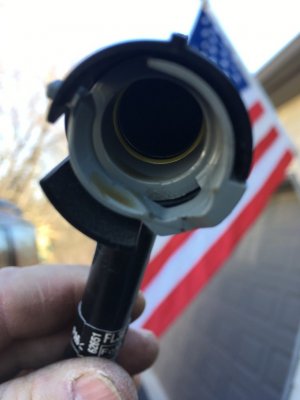
The clean side is clean when the engine is producing vacuum but when it’s not there is positive pressure (in this case it would be called blow by) and that could still let oil into the engine intake air. My system abandons the clean side port which pulled from driver’s side turbo inlet duct and now pulls air straight from a new tap in the air filter box into a new supplied oil filler cap. That also allows you to use that turbo inlet tap for the secondary vacuum for under boost conditions. My clean side hose had oil in it when I pulled it for the install with only 8,000mi. I posted a pic of that hose.98F6F324-8C7B-4FE1-897A-2FD012BE3B8F.jpeg98F6F324-8C7B-4FE1-897A-2FD012BE3B8F.jpeg So now the blow by in that hose (oil) can’t go back into and through the drivers side turbo and forced inducted into the engine via coming from the clean side. I hope this helps to put the train back up on the tracks.
 
Last edited:

OP
OP
LokiWolf

LokiWolf

Staff member
Moderator
Joined
Apr 2, 2016
Posts
3,971
Reaction score
2,837
Location
Richmond VA
Ya’ll are making this WAY too complicated. Buy a JLT for $150, and install. Empty can regularly. Done.

I have used this to clean several older 150 EB intakes for friends. It helped EVERY time. Power was restored, as was MPG.

CRC 05319 GDI IVD Intake Valve & Turbo Cleaner 11 oz https://www.amazon.com/dp/B00PHNQKR2/ref=cm_sw_r_cp_api_i_.AlXEbV32X7RT

You MUST follow the directions.


Sent from my iPhone using Tapatalk Pro
 
As an Amazon Associate we earn from qualifying purchases.

Boostedbus

Full Access Members
Joined
Mar 1, 2018
Posts
747
Reaction score
465
Location
Maryland
Ok it actually isn’t that complicated if you really see how the 3.5 EB PCV system is set up. The problem I have with the JLT can is that it does nothing for the so called clean side. As I stated above the clean side is only clean when intake manifold vacuum is present. The point I think people are missing or I’m not explaining properly is that the factory set up allows the drivers side turbo to reverse the direction of the air flow in the clean side hose. When you lose engine vacuum under boost the clean side is no longer letting clean air in, it is actually pulling dirty air (crankcase) out only several inches from the driver side turbo into the turbo inlet duct. It then passes through the turbo and into the intercooler then straight through the throttle body headed for the valves. I think it’s pretty obvious that this is how the intercoolers get oil/water logged also. I also wonder if it helps to kill the throttle bodies? So my RXP system not only eliminates that clean side hose tapped right in front of the turbo, but it also uses that turbo along with a optional tap in the passenger side turbo inlet duct (which I did also) to create the secondary source of vacuum. So when intake vacuum isn’t present you have turbo vacuum running to the catch can and no dirty air being pulled back through the drivers side turbo headed to contaminate all the duct work, intercooler, throttle body, and of course the valves. Just my take on it.
 

1970Maverick

Full Access Members
Joined
Aug 11, 2019
Posts
254
Reaction score
114
Location
orlando, fl
Ya’ll are making this WAY too complicated. Buy a JLT for $150, and install. Empty can regularly. Done.

I have used this to clean several older 150 EB intakes for friends. It helped EVERY time. Power was restored, as was MPG.

CRC 05319 GDI IVD Intake Valve & Turbo Cleaner 11 oz https://www.amazon.com/dp/B00PHNQKR2/ref=cm_sw_r_cp_api_i_.AlXEbV32X7RT

You MUST follow the directions.


Sent from my iPhone using Tapatalk Pro

question about using CRC 05319 GDI IVD Intake Valve & Turbo Cleaner.
I have an electrical eng degree and worked on a variety of electronic/electrical products for 45 years but I always had a service manual for reference however, my 2017 Expy is the first vehicle I've owned with so much electronics (and no service manual)so I need some clarification on terminology. The instructions for the CRC GDI intake cleaner says to spray past the MAF sensor. Is the MAF the same as MAP sensor because I couldn't find an info on a MAF for 2017 EB. There is a MAP sensor on top of the intake plenum so would I remove the MAP and spray into the mounting hole or where did you spray it?
 
As an Amazon Associate we earn from qualifying purchases.

Langer

Full Access Members
Joined
Mar 27, 2019
Posts
458
Reaction score
197
Location
Chicago
question about using CRC 05319 GDI IVD Intake Valve & Turbo Cleaner.
I have an electrical eng degree and worked on a variety of electronic/electrical products for 45 years but I always had a service manual for reference however, my 2017 Expy is the first vehicle I've owned with so much electronics (and no service manual)so I need some clarification on terminology. The instructions for the CRC GDI intake cleaner says to spray past the MAF sensor. Is the MAF the same as MAP sensor because I couldn't find an info on a MAF for 2017 EB. There is a MAP sensor on top of the intake plenum so would I remove the MAP and spray into the mounting hole or where did you spray it?

Same question here. @LokiWolf is maverick on the right page here?
 

1970Maverick

Full Access Members
Joined
Aug 11, 2019
Posts
254
Reaction score
114
Location
orlando, fl
Ok it actually isn’t that complicated if you really see how the 3.5 EB PCV system is set up. The problem I have with the JLT can is that it does nothing for the so called clean side. As I stated above the clean side is only clean when intake manifold vacuum is present. The point I think people are missing or I’m not explaining properly is that the factory set up allows the drivers side turbo to reverse the direction of the air flow in the clean side hose. When you lose engine vacuum under boost the clean side is no longer letting clean air in, it is actually pulling dirty air (crankcase) out only several inches from the driver side turbo into the turbo inlet duct. It then passes through the turbo and into the intercooler then straight through the throttle body headed for the valves. I think it’s pretty obvious that this is how the intercoolers get oil/water logged also. I also wonder if it helps to kill the throttle bodies? So my RXP system not only eliminates that clean side hose tapped right in front of the turbo, but it also uses that turbo along with a optional tap in the passenger side turbo inlet duct (which I did also) to create the secondary source of vacuum. So when intake vacuum isn’t present you have turbo vacuum running to the catch can and no dirty air being pulled back through the drivers side turbo headed to contaminate all the duct work, intercooler, throttle body, and of course the valves. Just my take on it.

Question 1, is the vacuum at the intake side of the turbo the same as the intake plenum when there is no boost? Question 2, During boost is the vacuum still present at the intake side of the turbo and the intake plenum is pressurized? If the answer to both these questions is yes then why not just use the intake side of the turbo to pull dirty air through the catch can so you only need to use one vacuum source. If the answer to my 2 questions isn't yes then please explain.
 
OP
OP
LokiWolf

LokiWolf

Staff member
Moderator
Joined
Apr 2, 2016
Posts
3,971
Reaction score
2,837
Location
Richmond VA
MAP/MAF basically the same thing...

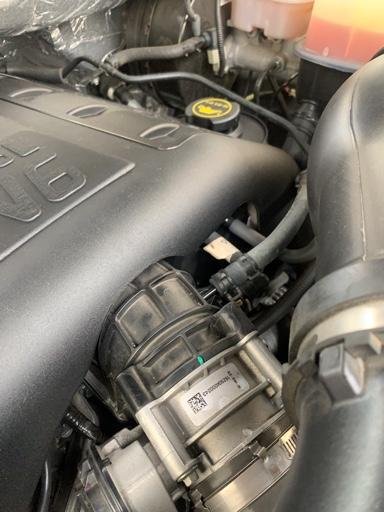
Here is where you spray. Hose to the right behind the throttle body.

528fab2480b015d09663424265bb26cb.jpg


Sent from my iPhone using Tapatalk Pro
 

Boostedbus

Full Access Members
Joined
Mar 1, 2018
Posts
747
Reaction score
465
Location
Maryland
Question 1, is the vacuum at the intake side of the turbo the same as the intake plenum when there is no boost? Question 2, During boost is the vacuum still present at the intake side of the turbo and the intake plenum is pressurized? If the answer to both these questions is yes then why not just use the intake side of the turbo to pull dirty air through the catch can so you only need to use one vacuum source. If the answer to my 2 questions isn't yes then please explain.
The secondary vacuum that runs the can is tapped into the intake ducts (not the output ducts on the other side of the turbos)on both turbos. In order to create a vacuum in those tapped hoses the turbos must be spooling to create a vacuum or siphon affect on the hoses. This is the secondary source because you loose intake manifold vacuum (the primary source of vacuum) under boost conditions. So in a nutshell the secondary source only works when the primary source doesn’t and visa /versa making the catch can work regardless of any throttle positions....idle, part throttle, boost, it should always be vacuuming out and filtering crankcase vapors.
 

1970Maverick

Full Access Members
Joined
Aug 11, 2019
Posts
254
Reaction score
114
Location
orlando, fl
Yes but only, not “still” present during boost.
I don't understand your sentence.
Let me ask a different way.....If the turbo is running at boost wouldn't the vacuum be greater on the intake side of the turbo than when the turbo is running below boost?
 

Boostedbus

Full Access Members
Joined
Mar 1, 2018
Posts
747
Reaction score
465
Location
Maryland
I don't understand your sentence.
Let me ask a different way.....If the turbo is running at boost wouldn't the vacuum be greater on the intake side of the turbo than when the turbo is running below boost?
Yes when the turbo is spooling (boost) it is creating the vacuum needed on the intake side of the turbo duct work (which is where the secondary source is tapped) to pull a vacuum on the catch can so it can still vacuum and filter crankcase vapors. When it’s not spooling (not creating vacuum) then the catch can relies on its primary source of vacuum which is direct intake manifold ported vacuum, to operate the catch can filtration system. Once again the engine looses intake ported vacuum under boost conditions, therefore relying on the turbo vacuum to take over the task of running the can system. Once the boost drops the can relies back to the ported intake manifold vacuum to run the show.I should ad that both vacuum source lines running to the can have one way check valves inline so they never fight against one and other.
 
Last edited:

07navi

Full Access Members
Joined
Feb 3, 2020
Posts
2,535
Reaction score
598
Location
Mt.Shasta California
I'm wondering why they don't do that at the factory. Ever since they came out with direct injection it's caused a problem with the intake valves and nobody seems to know how to correct it.
 

Boostedbus

Full Access Members
Joined
Mar 1, 2018
Posts
747
Reaction score
465
Location
Maryland
I'm wondering why they don't do that at the factory. Ever since they came out with direct injection it's caused a problem with the intake valves and nobody seems to know how to correct it.
They did kind of fix the valve coking problem by adding port injection to cool and wash the intake valves. They advertise it’s for added performance, fuel mileage, etc.... and they really aren’t lying because all of that suffers when the intake valves get all coked up with burnt oil deposits. The only thing they haven’t solved to my knowledge is the intercoolers getting oil/water logged because of the pcv system. They may have added a factory screw in drain plug now but but haven’t heard.
 

Boostedbus

Full Access Members
Joined
Mar 1, 2018
Posts
747
Reaction score
465
Location
Maryland
But the eco-tec doesn't have that so when buying a used one I guess you will get crusty valves with it.
You could have an induction flush done to clean up the valves on the ecotec I think. Ford at first didn’t recommend induction flushes on the ecoboost because it would hurt the turbos. But now I think sea foam has a product now that you can use that’s turbo safe. I don’t know how good or how much it costs, but I chose to try and prevent it from happening at all with a catch can.
 

07navi

Full Access Members
Joined
Feb 3, 2020
Posts
2,535
Reaction score
598
Location
Mt.Shasta California
You could have an induction flush done to clean up the valves on the ecotec I think. Ford at first didn’t recommend induction flushes on the ecoboost because it would hurt the turbos. But now I think sea foam has a product now that you can use that’s turbo safe. I don’t know how good or how much it costs, but I chose to try and prevent it from happening at all with a catch can.

That's fine if you bought it new I guess.
 
Top