Thanks to all for your response. I'm still researching this topic but have been focused on some other things life is throwing my way.
Beginning to think this topic could be a Masters Thesis! Please remember my research is as a lay person and not someone who is an expert on the subject. Also, car fires are not new and I found no evidence the Expy is anymore dangerous than any other vehicle. If you are really worried you can install a fire suppression system in your car. That is an entirely different post!
In thinking about
@Deadman post about dangers of using a fire extinguisher in a confined space I started thinking about what conditions you might be forced to use a fire extinguisher. That had me thinking about pilots in a small plane. What do they use? Reading more I found the recommended agent for planes is Halon, Halotron 1, Halotron BrX, and FM-200. Note: there are other agents but not that I have found in portable fire extinguishers.
Halon was restricted in the 1990's because it proved to be damaging to the ozone layer, but it is still available. Halotron 1 was the first agent created to replace Halon. Negative side to Halotron is it requires approximately twice as much agent to accomplish the same purpose as Halon. Both types of extinguishers are non-conductive, non-corrosive, and leaves behind no residue. That is a good thing inside airplanes and our expensive vehicles. FM-200 looks to be close to twice the cost of Halon/Halotron. Halotron BrX is supposed to be the update to Halotron 1. Still learning more....
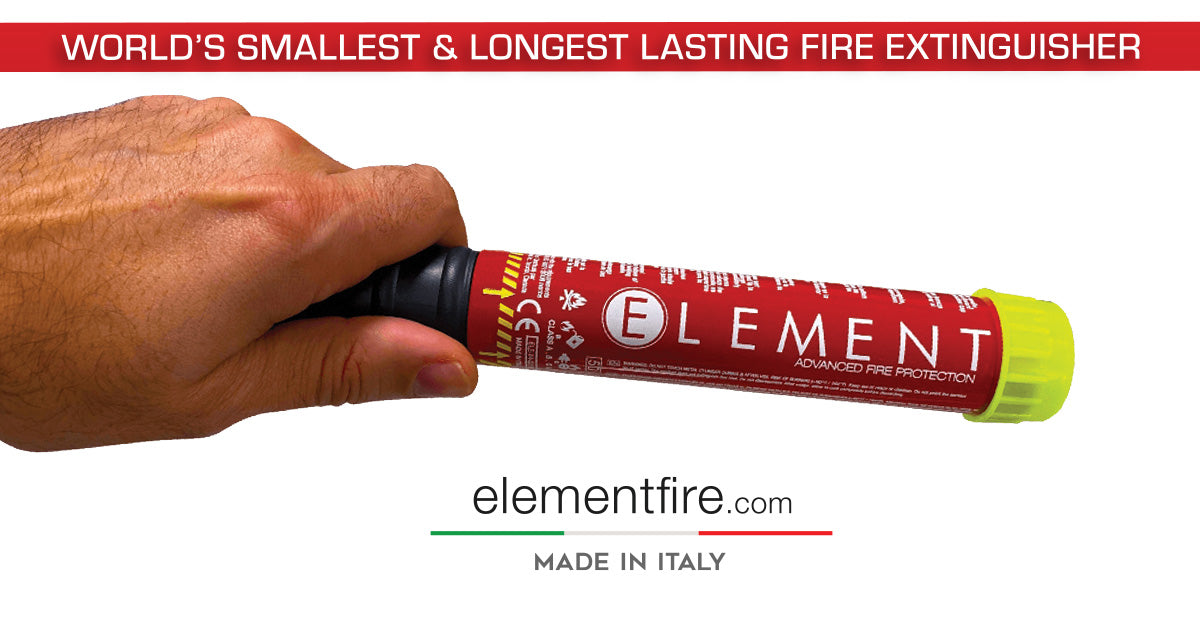
Of course, the other option is a dry agent fire extinguisher, this is the type typically purchased and the type I have scattered around my house.
One thing that has become clear is that dry agent fire extinguishers can be downright nasty on you and anything it comes into contact with. These dry agent fire extinguishers are almost all corrosive in nature. Puts out the fire but leaves a big time clean up. I read where they are particularly a problem with aluminum. Reports are you can't just wipe clean, you have to pop rivets to get to all the metal and then re-rivet. Jeez, and I have these all over my house. Point is, as I understand it is, you'll put out the fire but most likely ruin anything you use it on. So much for protecting my electronics (think all audio/video equipment) let alone cook tops and such.
More to come, but clearly the Halon/Halotron group is the least likely to harm electronic equipment or metal. It is not great for your body but better than burning up in a fire! It is also more considerably more expensive. The dry agent is bad on metal and electronics AND your body. Of course they are the least expensive type of fire extinguisher.
Preliminary guess is I'll be looking at installing a Halon group fire extinguisher in my Expy, location unknown at this time. Then I'll be looking at replacing several of my home dry agent fire extinguisher with a Halon group extinguisher.
More information is readily available on the internet. One site that sales Halon Group type extinguishers is
https://www.h3raviation.com/ . Sorry I ran on so long....