Just because you looked for a nail, does not mean there is not one in the tire. Small finishing nails are impossible to see. Two times, I was positive I had a rim leak. One time it was a tiny nail, that the mechanic could barely see. He had to dunk it in water, to see bubbles. A second time was a leaky valve stem. I run my tires at 37psi. Get a good digital gauge. Air your tires cold and recheck after a week. Check your spare tire. I owned a Hummer H3 that had a sensor in the spare. I doubt your sensor batteries are going.


You are using an out of date browser. It may not display this or other websites correctly.
You should upgrade or use an alternative browser.
You should upgrade or use an alternative browser.
Tire Warning
- Thread starter Dawgbyt
- Start date
Disclaimer: Links on this page pointing to Amazon, eBay and other sites may include affiliate code. If you click them and make a purchase, we may earn a small commission.
perhaps I missed it, air or nitrogen filled?
hope you figure it out.
Same difference
"Air" is essentially undistilled nitrogen.
And, if, as according to nitrogen proponents, the OTHER components of air slowly leak out of a tire, then a tire filled with "old air" will BECOME a nitrogen fill all by itself lol
chuck s
Full Access Members
- Joined
- Dec 20, 2006
- Posts
- 1,990
- Reaction score
- 753

Last edited:
Nitrogen was used in aircraft tires, before race cars. The advantage is the pressure is consistent, regarding tire temp. At 37,000ft it is below zero. A 737 tire rapidly heats up, when landing. Nitrogen molecules are larger and tire leak down is reduced. There is supposedly less blow outs and less stopping to add air. Nascar tires are super heated, running at 200mph. Race teams use nitrogen for precision handling and avoiding blow outs. Passenger tires, drop air as it get colder. Running at highways speeds heats them up. That is why some tire shops fill with nitrogen
Nitrogen was used in aircraft tires, before race cars. The advantage is the pressure is consistent, regarding tire temp. At 37,000ft it is below zero. A 737 tire rapidly heats up, when landing. Nitrogen molecules are larger and tire leak down is reduced. There is supposedly less blow outs and less stopping to add air. Nascar tires are super heated, running at 200mph. Race teams use nitrogen for precision handling and avoiding blow outs. Passenger tires, drop air as it get colder. Running at highways speeds heats them up. That is why some tire shops fill with nitrogen
Cant drive to 37,000 ft, though... can't hit 200 mph either, not in a truck, not unless you nosedive off a verrry steep cliff....and even then who knows
He everyone we got Jerry Seinfeld on the forum.Cant drive to 37,000 ft, though... can't hit 200 mph either, not in a truck, not unless you nosedive off a verrry steep cliff....and even then who knows

OP
OP
Dawgbyt
Member
Hi there! So I took readings of the tires this a.m. and this was the result...
L front - 48.50
L rear - 48.50
R front - 48.00
R rear - 49.00
Interestingly enough, the tire warning hasnt come on the last couple days. If /when it does, I will check the tire pressure at that point on all 4 tires.
I have Timberland A/T by Radar (Tubless) LT275/70R18 tires on there that were put on by the Truck Dealership a year ago this month. I tried to reach them to ask about the tires and get more info, but havent gotten a call back. I seriously doubt that they will give me any info on the tires / sensors / etc at this point as its a used truck dealership.
In reading the info on the tires today, I couldnt find anything as far as recommended PSI. The only info they had on there was 80PSI for towing loads (cold.) So I am not even sure what PSI I should have them at to be honest. I live at 7000' elevation in cold weather, but often drive down the mountain through Needles to CA and back. I also tow my fishing boat behind it often.
Any advice would be greatly appreciated!
L front - 48.50
L rear - 48.50
R front - 48.00
R rear - 49.00
Interestingly enough, the tire warning hasnt come on the last couple days. If /when it does, I will check the tire pressure at that point on all 4 tires.
I have Timberland A/T by Radar (Tubless) LT275/70R18 tires on there that were put on by the Truck Dealership a year ago this month. I tried to reach them to ask about the tires and get more info, but havent gotten a call back. I seriously doubt that they will give me any info on the tires / sensors / etc at this point as its a used truck dealership.
In reading the info on the tires today, I couldnt find anything as far as recommended PSI. The only info they had on there was 80PSI for towing loads (cold.) So I am not even sure what PSI I should have them at to be honest. I live at 7000' elevation in cold weather, but often drive down the mountain through Needles to CA and back. I also tow my fishing boat behind it often.
Any advice would be greatly appreciated!
Sticker on driver side door jam, has recommended PSI. Those LT tires are different than factory and probably ride like a tank. You TP sensors have 28-36 lb range. I would contact place that put them on. Tell them you want the correct P275/70/18.Hi there! So I took readings of the tires this a.m. and this was the result...
L front - 48.50
L rear - 48.50
R front - 48.00
R rear - 49.00
Interestingly enough, the tire warning hasnt come on the last couple days. If /when it does, I will check the tire pressure at that point on all 4 tires.
I have Timberland A/T by Radar (Tubless) LT275/70R18 tires on there that were put on by the Truck Dealership a year ago this month. I tried to reach them to ask about the tires and get more info, but havent gotten a call back. I seriously doubt that they will give me any info on the tires / sensors / etc at this point as its a used truck dealership.
In reading the info on the tires today, I couldnt find anything as far as recommended PSI. The only info they had on there was 80PSI for towing loads (cold.) So I am not even sure what PSI I should have them at to be honest. I live at 7000' elevation in cold weather, but often drive down the mountain through Needles to CA and back. I also tow my fishing boat behind it often.
Any advice would be greatly appreciated!
Hi there! So I took readings of the tires this a.m. and this was the result...
L front - 48.50
L rear - 48.50
R front - 48.00
R rear - 49.00
Interestingly enough, the tire warning hasnt come on the last couple days. If /when it does, I will check the tire pressure at that point on all 4 tires.
I have Timberland A/T by Radar (Tubless) LT275/70R18 tires on there that were put on by the Truck Dealership a year ago this month. I tried to reach them to ask about the tires and get more info, but havent gotten a call back. I seriously doubt that they will give me any info on the tires / sensors / etc at this point as its a used truck dealership.
In reading the info on the tires today, I couldnt find anything as far as recommended PSI. The only info they had on there was 80PSI for towing loads (cold.) So I am not even sure what PSI I should have them at to be honest. I live at 7000' elevation in cold weather, but often drive down the mountain through Needles to CA and back. I also tow my fishing boat behind it often.
Any advice would be greatly appreciated!
Your sensors are probably calibrated to 33 or 35 w/ passenger tires in mind, and start ringing when it hits either +50% or +15psi over calibrated value when they heat up from driving.
ExpeditionAndy
Full Access Members
LT tires are different than standard tires. The max tire pressure on the side of the tire should be used when you have a fully loaded vehicle. I tried to look up your tires and I couldn't find much in the way of specs on them.Hi there! So I took readings of the tires this a.m. and this was the result...
L front - 48.50
L rear - 48.50
R front - 48.00
R rear - 49.00
Interestingly enough, the tire warning hasnt come on the last couple days. If /when it does, I will check the tire pressure at that point on all 4 tires.
I have Timberland A/T by Radar (Tubless) LT275/70R18 tires on there that were put on by the Truck Dealership a year ago this month. I tried to reach them to ask about the tires and get more info, but havent gotten a call back. I seriously doubt that they will give me any info on the tires / sensors / etc at this point as its a used truck dealership.
In reading the info on the tires today, I couldnt find anything as far as recommended PSI. The only info they had on there was 80PSI for towing loads (cold.) So I am not even sure what PSI I should have them at to be honest. I live at 7000' elevation in cold weather, but often drive down the mountain through Needles to CA and back. I also tow my fishing boat behind it often.
Any advice would be greatly appreciated!
This article explains how inflation on LT tires differs from standard tires. http://www.toyota-4runner.org/engin...s/110299-lt-tires-need-more-air-pressure.html
My opinion, and it is only my opinion is that your tires are way over inflated. I would probably set them all at 40 lbs which is what I ran in my Cooper Tires. Even if you keep them where they are, you should at least make them all the same. Set them all at 48 lbs when cold and they should all rise in temperature at the same rate and shouldn't set off your tire pressure sensor. The older tire pressure sensors work off differential pressure. They report the pressure and the computer just checks to make sure the pressure difference is within range. They really don't care how much air your put in the tire as long as they are all close in pressure. The newer vehicles with the sophisticated modules can tell if your tires are over inflated and throw a warning but the older ones didn't do that.
That's my nickel's worth.
AllBoostNoEco
Full Access Members
The best way to figure out the correct pressure for an LT tire versus a passenger car tire is by doing the math.
For instance, a factory P265/70R18 tire is rated for a max load of 2679 at 44 PSI. Divide max load by PSI to get pounds/PSI (60.89). Multiply that by the factory tire pressure (i.e., 35 PSI) to determine the factory expected load (in this case 2131.15 pounds per tire).
Do the same math for the LT tire (a LT275/70R18 rated at 3640 pounds at 80 PSI; which is 45.5 pounds per PSI).
Divide the factory expected load by the LT tire’s pounds per PSI (2131.15 / 45.5), and you get your new pressure (in this case 46.8 PSI).
Now you have a pretty good idea of what a ‘correct’ pressure is for LT tires. I run 50 in my LT tires on my 15 with TPMS warning at 45.
For instance, a factory P265/70R18 tire is rated for a max load of 2679 at 44 PSI. Divide max load by PSI to get pounds/PSI (60.89). Multiply that by the factory tire pressure (i.e., 35 PSI) to determine the factory expected load (in this case 2131.15 pounds per tire).
Do the same math for the LT tire (a LT275/70R18 rated at 3640 pounds at 80 PSI; which is 45.5 pounds per PSI).
Divide the factory expected load by the LT tire’s pounds per PSI (2131.15 / 45.5), and you get your new pressure (in this case 46.8 PSI).
Now you have a pretty good idea of what a ‘correct’ pressure is for LT tires. I run 50 in my LT tires on my 15 with TPMS warning at 45.
chuck s
Full Access Members
- Joined
- Dec 20, 2006
- Posts
- 1,990
- Reaction score
- 753
Load capacity of tires certainly varies with tire pressure but it's not linear. There is good data available to show the weight carrying capacity of the tire at different pressures.
Per Excel: (Hard to format but it's readable).
Pressure Rating lb/PSI
35 2070 59
40 2270 57
45 2470 55
50 2680 54
55 2840 52
60 3020 50
65 3195 49
70 3360 48
75 3530 47
80 3640 46
Axle capacity (Gross Axle Weight Rating) is seldom limited by the tires.
-- Chuck
LT275/70R18 and LT285/60R20
PSI RATING
35 2070
40 2270
45 2470
50 2680
55 2840
60 3020
65 3195
70 3360
75 3530
80 3640
Source and other industry standard sizes. Scroll way down, LT's start on page 22.
https://toyotires2-1524598101.netdna...s_20151020.pdf
Per Excel: (Hard to format but it's readable).
Pressure Rating lb/PSI
35 2070 59
40 2270 57
45 2470 55
50 2680 54
55 2840 52
60 3020 50
65 3195 49
70 3360 48
75 3530 47
80 3640 46
Axle capacity (Gross Axle Weight Rating) is seldom limited by the tires.
-- Chuck
JExpedition07
That One Member
My truck started getting that intermittent message, it was a dying sensor. I had them all replaced a bit ago. Go to rockauto and buy the Airtex wells they are $12 per piece and are OEM stamped FoMoCo right on them.
cullinan18
Full Access Members
Pardon me if this is a stupid question, but don't all tires have a load capacity and max inflation right on the tire? For example (made up numbers here) if the tire says max load of 2500 pounds and also max pressure of 65 psi, why would anyone say the tires are overloaded if they are filled to 60 psi unloaded? I always thought anything under the max inflation was fine, just a stiffer ride. Then you should max inflate for heavy loads (towing or hauling).
The ride and handling will be adversely affected with that much air. A LT tire does not belong on a SUV. They are for vehicles with duals, small box trucks ,shuttles and work vehicles.Pardon me if this is a stupid question, but don't all tires have a load capacity and max inflation right on the tire? For example (made up numbers here) if the tire says max load of 2500 pounds and also max pressure of 65 psi, why would anyone say the tires are overloaded if they are filled to 60 psi unloaded? I always thought anything under the max inflation was fine, just a stiffer ride. Then you should max inflate for heavy loads (towing or hauling).
Frank Wilson
Full Access Members
The best way to figure out the correct pressure for an LT tire versus a passenger car tire is by doing the math.
For instance, a factory P265/70R18 tire is rated for a max load of 2679 at 44 PSI. Divide max load by PSI to get pounds/PSI (60.89). Multiply that by the factory tire pressure (i.e., 35 PSI) to determine the factory expected load (in this case 2131.15 pounds per tire).
Do the same math for the LT tire (a LT275/70R18 rated at 3640 pounds at 80 PSI; which is 45.5 pounds per PSI).
Divide the factory expected load by the LT tire’s pounds per PSI (2131.15 / 45.5), and you get your new pressure (in this case 46.8 PSI).
Now you have a pretty good idea of what a ‘correct’ pressure is for LT tires. I run 50 in my LT tires on my 15 with TPMS warning at 45.
Using this calculation, I should be running my bfg 315 load D,s at 30 psi. ?
Seems pretty low, I thought I should have been running them higher than the door placard.
chuck s
Full Access Members
- Joined
- Dec 20, 2006
- Posts
- 1,990
- Reaction score
- 753
There's no reason to deviate from the placard on the vehicle. You'll overload the suspension long before the tires that are fitted to our vehicles.
The tires on my '17 are rated at 2756 pounds (each) @ 51psi. Door jam sticker notes they should be inflated to 35psi, not 51. Over inflating them to 51psi doesn't increase the GAWR, it's still 3550 front/4300 rear at 35 psi. That's 7850 pounds. The tires will support 11,024 pounds! I guess if you deliberately overload the vehicle it's prudent to boost the tire pressure.
Over inflation decreases the tire's contact patch on the road and will cause adverse handling (perhaps) to a dangerous level especially if the fronts are over inflated.
The only tires I can think of that are normally inflated to maximum pressure are special trailer (ST) tires. These tires just follow along. These tires are typically matched to trailer weights and don't have excess capacity like automobile tires where handling and ride comfort are important.
-- Chuck
The tires on my '17 are rated at 2756 pounds (each) @ 51psi. Door jam sticker notes they should be inflated to 35psi, not 51. Over inflating them to 51psi doesn't increase the GAWR, it's still 3550 front/4300 rear at 35 psi. That's 7850 pounds. The tires will support 11,024 pounds! I guess if you deliberately overload the vehicle it's prudent to boost the tire pressure.
Over inflation decreases the tire's contact patch on the road and will cause adverse handling (perhaps) to a dangerous level especially if the fronts are over inflated.
The only tires I can think of that are normally inflated to maximum pressure are special trailer (ST) tires. These tires just follow along. These tires are typically matched to trailer weights and don't have excess capacity like automobile tires where handling and ride comfort are important.
-- Chuck
OP
OP
Dawgbyt
Member
Great info, thanks everyone!
So these tires are not meant for an Expedition 4x4? I cant picture these tires on a shuttle, small truck, or work vehicle, they are quite big and heavy duty. My plan was to downsize the tires after these need changing, as the dealer wouldnt downsize them for me when they were brand new (it pissed them off when I asked them to go back to the standard tires as we were dealing on the car) and the tire places offered me a super low ball price for them when they had less than 6 hrs on them.
I apologize, but I am still unsure and little confused about what PSI I should have them at (cold). Maybe these pics will help? The tires are at 48 currently (cold.) The weather is in the low 50s (day) 20s -30s (night) right now with snow in the forecast. Some say go by the door plate (which is quite a bit lower), others say that because LT tires are different than the standard, to have a higher PSI. I have been keeping them around 45 - 50 depending on where I am (Flagstaff, AZ or Orange County, CA and if I will be driving through Needles in the immediate future), what I am doing (towing or not), and if its Monsoon Season with very heavy rain or snowing. I want to be sure I have them where they are supposed to be. Appreciate it.

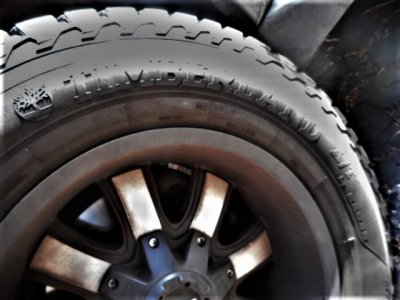
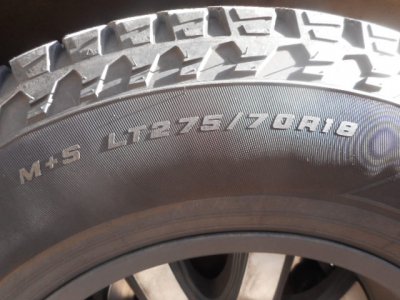
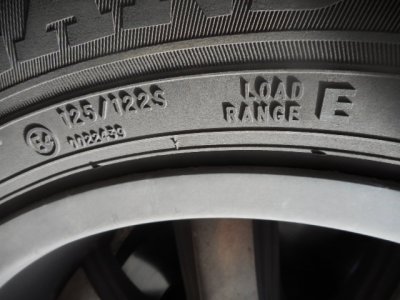
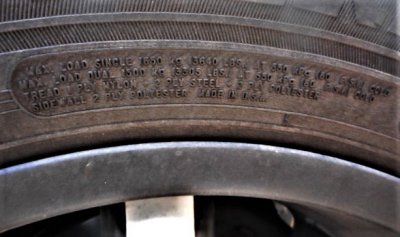
So these tires are not meant for an Expedition 4x4? I cant picture these tires on a shuttle, small truck, or work vehicle, they are quite big and heavy duty. My plan was to downsize the tires after these need changing, as the dealer wouldnt downsize them for me when they were brand new (it pissed them off when I asked them to go back to the standard tires as we were dealing on the car) and the tire places offered me a super low ball price for them when they had less than 6 hrs on them.
I apologize, but I am still unsure and little confused about what PSI I should have them at (cold). Maybe these pics will help? The tires are at 48 currently (cold.) The weather is in the low 50s (day) 20s -30s (night) right now with snow in the forecast. Some say go by the door plate (which is quite a bit lower), others say that because LT tires are different than the standard, to have a higher PSI. I have been keeping them around 45 - 50 depending on where I am (Flagstaff, AZ or Orange County, CA and if I will be driving through Needles in the immediate future), what I am doing (towing or not), and if its Monsoon Season with very heavy rain or snowing. I want to be sure I have them where they are supposed to be. Appreciate it.
OP
OP
Dawgbyt
Member
I also am on dirt roads a LOT, if that makes any difference?
Similar threads

- Replies
- 17
- Views
- 2K

- Replies
- 23
- Views
- 4K


- Replies
- 10
- Views
- 2K


- Replies
- 9
- Views
- 3K

