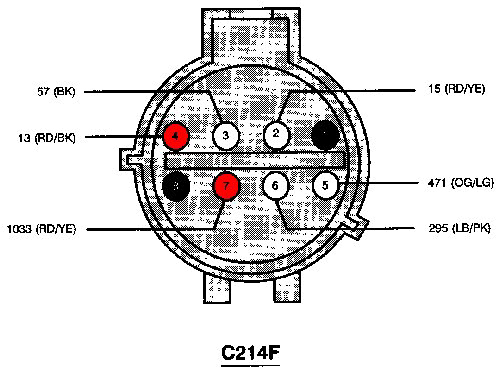
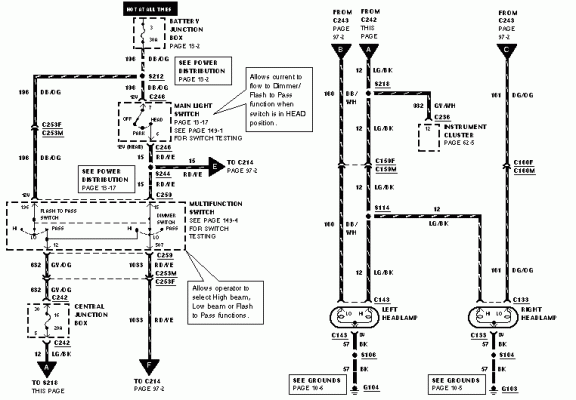
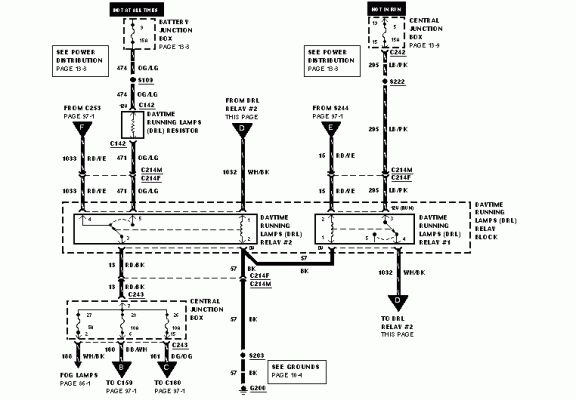
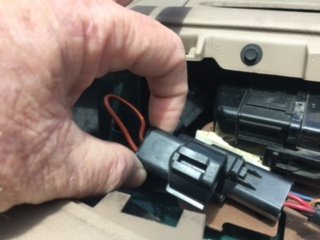
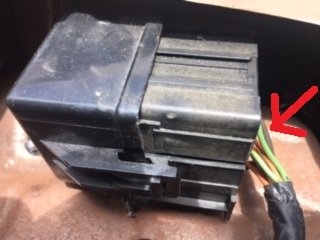
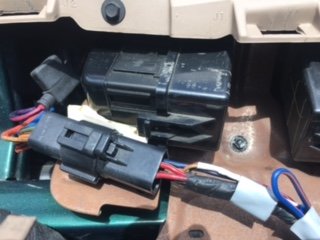
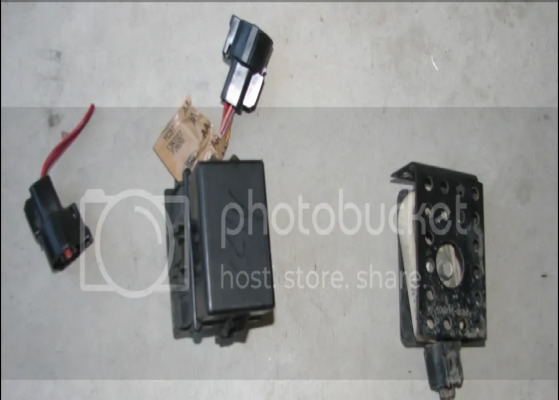
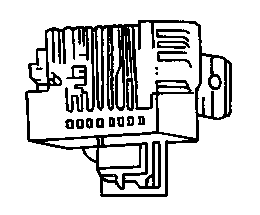
The components can no longer be bought anywhere, except for the very large power resistor component (that cuts 12V down to 8V at high amperage) that is used on the 1st gen DRL circuit. (It was only available on (and was required, standard equipment on) the Canadian sold Expeditions.) Nearly all US Models also lack *some* of the wiring harness elements needed to do 100% full factory DRL (per the Canadian Model implementation). The wiring harness is split into zones, and the engine compartment zone wiring harness on US models (mine is a 1999) actually depopulate the wires that carry some of the DRL-only signals. (Some signals are common to other purposes, and those are still needed for the other things and thus there. But the DRL-only wires in the ENGINE harness are absent on US models.
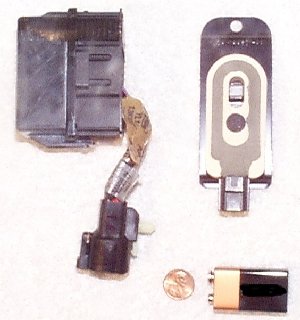
That said, if you really, really, really want to- you can obtain most the needed components from junkers, and BUILD the required relay box and connector to factory specifications to allow *near*-factory DRL lighting. The factory-assembled relay box can no longer be purchased anywhere, was only available in Canada, and is long ago discontinued in production. The only hope is find a random Canadian dealer with one on its shelf- who will ship to the USA (most will NOT.)
This URL:
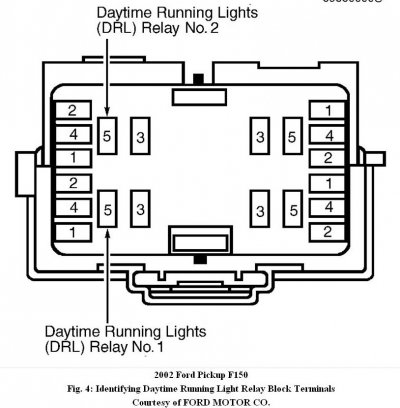
https://www.f150forumz.com/threads/headlight-relay.206/ provides a diagram of the physical components, and the wiring diagram if you want to build one yourself.
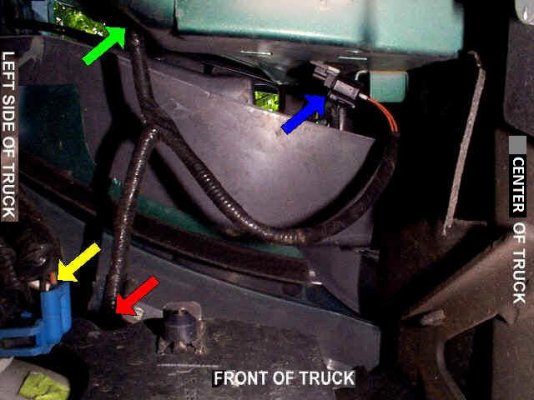
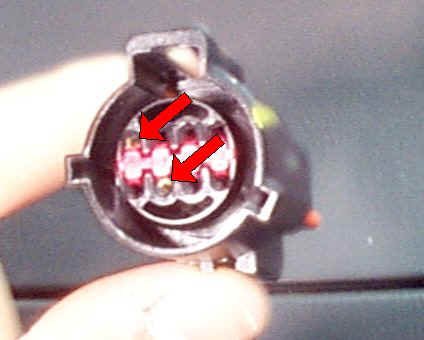
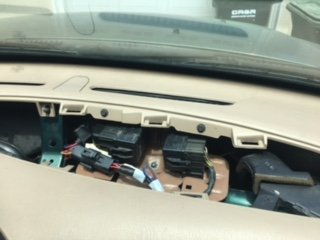
In addition, you must splice in "one" wire from nearby in your dashboard (this is all under the plastic oval cover on the dash, so access is mercifully easy, the only thing that is.) The one wire splice is to bring in the proper 12V power, from the proper circuit to the round connector "supply" side (truck side) that goes to the existing (USA, no DRL) dummy plug in your vehicle. The big picture is: You add in the one car side wire that is missing, and then you unplug the dummy plug (which has one orange loop back wire on it for USA models) and you plug in your constructed relay box into that connector, and then you have DRL. In this construction, your DRL runs at 12V instead of 8V. (Which if you are using LED lighting, is required anyway. If you are using original halogen lighting, and plan to continue to use it, I don't recommend this approach.)
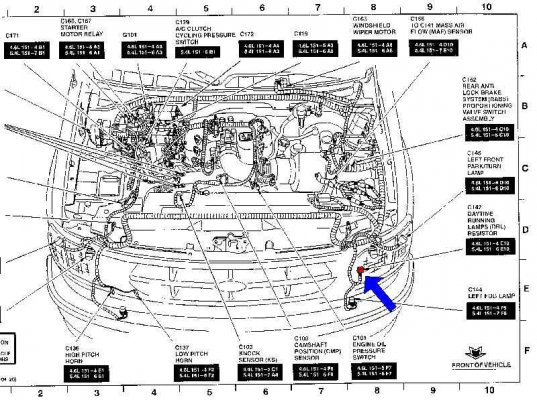
If you are going to use original halogen incandescent lighting (bulbs), I don't recommend ANY of the DRL solutions (this one), or ANY other after market solution. The reason is that Ford's DRL Canada design was crafted to run the halogen's at low power (8V instead of 12V). Because they ran them at lower 3/4 voltage they were dimmer (so Ford didn't have to worry about headlamp bulbs failing under warranty) they used less power than when the headlights are on by the headlight switch (which runs them at 12V). Ford took advantage of that fact in their design, and DID NOT include in the design, the triggering of the "high load" signal to the vehicle alternator . The alternator has a two speed clutch, and generates more power when told to, at the price of higher load on the serpentine belt (and thus engine), costing some gas mileage. The DRL circuit does not kick in the "high load" also known as the "your lights are on" signal to the alternator. That was OK in the Canadian cars, because that circuit cut the power from 12V to 8V with a low loss resistor. That resistor can still be bought, but the wires to/from it in the engine compartment are absent in USA engine compartment harnesses.
The one wire splice replaces that 8V power circuit, with its original source 12V circuit (the same circuit, just before the giant resistor), but since the DRL relay and circuit design does NOT tell the alternator to run on "high", if you use the full 12V of the splice circuit (OR ANY OTHER aftermarket DRL design that all work pretty much the same way, at 12V, no "high load" signal to the alternator), well, then with halogen lights, you are likely to run your battery down. The alternator will be running, but it will be running on its "low" setting, not the high power alternator setting used for lights on in either HI or Lo beam headlights on conditions. The "solution" to this problem is to use LED headlights, which consume far less power, and while operating at 12V, will operate within the "low power" alternator output range that the original 8V (3/4 power) halogen design worked at, but at full 12V. Adding in the full resistor and missing engine harness wires is not practical, as the signals go into one of the 3 main firewall harness connectors (I've traced all this stuff), and you don't want to mess with that connector.
So, if you really want to do it (not easier than buying a kit), and you are willing to put one splice into your existing wire harness to do so (to feed a proxy for the missing Canadian power circuit), then it is possible to build a Relay box, and install it in the normal location, and get DRL close-to-factory lighting. I don't really recommend it..... The original DRL design just powers the main headlight wires, so all you get is the main lights on. (This is what I do, but most people think that is boring.)
Most people want some auxillary LED "ring", or "stripe" DRL for that "coolness" factor. (I just want the DRL to be seen, so I like the mains being the DRL source, as my use for them is to be seen in traffic, while speeding.... on my long commute.) Their are only two "advantages" to the factory DRL solution (or the near-factory one). The first is just DRL, the lights are on, and you don't have to do anything. (That is also a curse sometimes, like if your battery is near its end...) The second is that the you can have lights on during the day, without turning the headlamp control switch, and THAT allows the factory radio LED display to run at the bright "daytime" setting during the day, and still work at the lower "night-time, lights on" setting for evening driving. If you don't care about the "dimmer radio setting", or you no longer have a factory radio, there is almost no advantage to the factory DRL design. In fact, you can just cut the radio high/lo light signals at the radio plug, and it will run in "bright mode" all the time. Then just turn on your lights after you start the vehicle. DRL with full control, on when you want them on, off when you turn them off.....
To build the relay box: Get an "empty" relay box out of a junker. You cannot find the DRL box (it is not in any USA vehicle),, but if you pull the oval plastic cover of the dash of a junker, then you will see an identical (in plastic) relay box in every truck that holds the parking lights relay, and one other relay. Remove that box from junker. The release is a total pain in the ****, on the underside of the box, you release it by sliding in a thin blade (or putting knife), and pushing forward or aft. I pretty much recommend just breaking one our, looking at it, and then find another truck, and get the second one out clean, in the yard.) Then these fortunately all use the same smaller Ford Relay's themselves. So harvest those from one or two boxes.
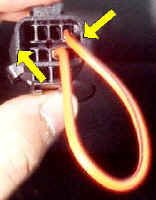
Also, while at the yard, you need to get the male side (the dummy plug side) spare connector, and here is the AWFUL part... and then go around and remove the loop back wire from the dummy plug in the yard (or buy a lot of dummy plugs) such that you collect 4 dummy plug orange loop back wires, and their pings. The pins release from the plug by removing the red stopper plastic lock piece, and then using an Exacto knife to push/pry the metal release tab on the brass pins. Then you can pull the pins out of the plug connector. (They are actually made so you can do this on purpose). Now you can plug the wires into the dummy plug you will purchase, so that al of the pin positions are filled.) When you get home, you will cut the loops in the middle, and now you have an 8 pin (I think its eight,memory is rough here) male plug, with 8 orange wires. Strip those, put on heat-shrink, and then soldier them to your Relay sockets per the wiring diagram.
On the Relay sockets, you have to remove the sockets from the plastic holder box. The box can be disassembled, and the sockets just pop out with some force. Then remove the pins from the sockets with Exacto knife, by releasing the red lock piece (pull it out), and then releasing the brass splinter locks on each pin. You need to collect extra wires in the YARD in this fashion (for example from the 1st box you ripped out un-politely). Then consult the wiring diagram, and re-wire the two sockets per the wiring diagram, and the pin table of the Relay, and the relay diagram shown at the URL above. Soldier everything well (High power here, I don't recommend using wire nuts) and heat shrink slipped on before, then reposition over the soldier, and heat to shrink. Now you have a Box, with two relay sockets in it (they can take 4 relays, DRL only uses two) wired to a the round 8-pin plug.
You need to supply 12V from the blue with orange stripe that can be found at the absolute far right of the oval plastic dash opening, going into the existing relay box. It is a very thick blue/with orange strip wire. You can tap slice there, or trace it back and tap splice anywhere back up to about 1.5 feet back to the middle of the car. You feed that into the female round connector.
Pictures would help I'm sure, but I'm not really up for it. It can be done, 'cause I did it. Was it worth it? No. Does it work, yes. I honestly just recommend buying one of the after-market DRL light kits instead. You get more tap splices in those kits (usually about 6-8 splices), but then you also get options like making the LED strips "flash" with your blinkers, get color options sometimes (yellow lights to match parking lights, or white), you can control leaving the strip or ring lights "on" when the lights are on (or not), etc. with the kits. With the factory or near-factory DRL, you get the mains on, all the time, at 12V, with the alternator in "low power low clutch" mode. So I guess, pick your poison.
But there is no way to "buy" that DRL relay box. The ONLY way two ways are: Find one in a Canadian truck in a junk yard (if you live in Canada, or very near the border), or build one. And building one is a total pain in the ***.