1st Gen Expy Were DRL Stock?

Disclaimer: Links on this page pointing to Amazon, eBay and other sites may include affiliate code. If you click them and make a purchase, we may earn a small commission.

OP
OP
tinkering

tinkering

Full Access Members
Joined
Jul 19, 2016
Posts
251
Reaction score
28
Location
Alberta Canada
I can't find a thread on 1st Gen DRLs.
Here is a bit I found on a 1997 F350. If it is similar to the F150 it probably applies, "Information to all: I did find the Daytime running light module up under the left front fender at the fromt of the wheelwell attached to the outside of the frame. Replaced the module, all is well. Many thanks to all who responded and the previous notes and thoughts.
****."
I can at least start by looking there. I heard there is a resistor up near the driver's side headlight, and relay/s in the power distribution fuse box under the hood, driver's side near firewall. There is some talj of something behind the glove box.
Can anybody shed any light on this?
 

MesaGuy

Well-Known Member
Joined
Jun 2, 2014
Posts
53
Reaction score
34
Location
Costa Mesa, CA
The components can no longer be bought anywhere, except for the very large power resistor component (that cuts 12V down to 8V at high amperage) that is used on the 1st gen DRL circuit. (It was only available on (and was required, standard equipment on) the Canadian sold Expeditions.) Nearly all US Models also lack *some* of the wiring harness elements needed to do 100% full factory DRL (per the Canadian Model implementation). The wiring harness is split into zones, and the engine compartment zone wiring harness on US models (mine is a 1999) actually depopulate the wires that carry some of the DRL-only signals. (Some signals are common to other purposes, and those are still needed for the other things and thus there. But the DRL-only wires in the ENGINE harness are absent on US models.

That said, if you really, really, really want to- you can obtain most the needed components from junkers, and BUILD the required relay box and connector to factory specifications to allow *near*-factory DRL lighting. The factory-assembled relay box can no longer be purchased anywhere, was only available in Canada, and is long ago discontinued in production. The only hope is find a random Canadian dealer with one on its shelf- who will ship to the USA (most will NOT.)

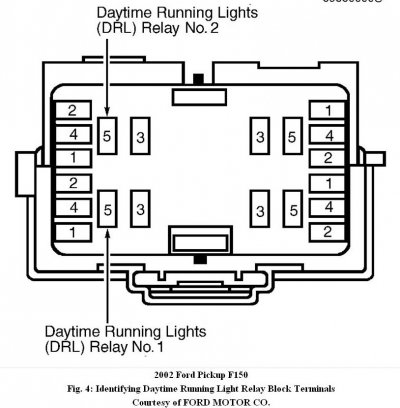
This URL: https://www.f150forumz.com/threads/headlight-relay.206/ provides a diagram of the physical components, and the wiring diagram if you want to build one yourself.

In addition, you must splice in "one" wire from nearby in your dashboard (this is all under the plastic oval cover on the dash, so access is mercifully easy, the only thing that is.) The one wire splice is to bring in the proper 12V power, from the proper circuit to the round connector "supply" side (truck side) that goes to the existing (USA, no DRL) dummy plug in your vehicle. The big picture is: You add in the one car side wire that is missing, and then you unplug the dummy plug (which has one orange loop back wire on it for USA models) and you plug in your constructed relay box into that connector, and then you have DRL. In this construction, your DRL runs at 12V instead of 8V. (Which if you are using LED lighting, is required anyway. If you are using original halogen lighting, and plan to continue to use it, I don't recommend this approach.)

If you are going to use original halogen incandescent lighting (bulbs), I don't recommend ANY of the DRL solutions (this one), or ANY other after market solution. The reason is that Ford's DRL Canada design was crafted to run the halogen's at low power (8V instead of 12V). Because they ran them at lower 3/4 voltage they were dimmer (so Ford didn't have to worry about headlamp bulbs failing under warranty) they used less power than when the headlights are on by the headlight switch (which runs them at 12V). Ford took advantage of that fact in their design, and DID NOT include in the design, the triggering of the "high load" signal to the vehicle alternator . The alternator has a two speed clutch, and generates more power when told to, at the price of higher load on the serpentine belt (and thus engine), costing some gas mileage. The DRL circuit does not kick in the "high load" also known as the "your lights are on" signal to the alternator. That was OK in the Canadian cars, because that circuit cut the power from 12V to 8V with a low loss resistor. That resistor can still be bought, but the wires to/from it in the engine compartment are absent in USA engine compartment harnesses.

The one wire splice replaces that 8V power circuit, with its original source 12V circuit (the same circuit, just before the giant resistor), but since the DRL relay and circuit design does NOT tell the alternator to run on "high", if you use the full 12V of the splice circuit (OR ANY OTHER aftermarket DRL design that all work pretty much the same way, at 12V, no "high load" signal to the alternator), well, then with halogen lights, you are likely to run your battery down. The alternator will be running, but it will be running on its "low" setting, not the high power alternator setting used for lights on in either HI or Lo beam headlights on conditions. The "solution" to this problem is to use LED headlights, which consume far less power, and while operating at 12V, will operate within the "low power" alternator output range that the original 8V (3/4 power) halogen design worked at, but at full 12V. Adding in the full resistor and missing engine harness wires is not practical, as the signals go into one of the 3 main firewall harness connectors (I've traced all this stuff), and you don't want to mess with that connector.

So, if you really want to do it (not easier than buying a kit), and you are willing to put one splice into your existing wire harness to do so (to feed a proxy for the missing Canadian power circuit), then it is possible to build a Relay box, and install it in the normal location, and get DRL close-to-factory lighting. I don't really recommend it..... The original DRL design just powers the main headlight wires, so all you get is the main lights on. (This is what I do, but most people think that is boring.)

Most people want some auxillary LED "ring", or "stripe" DRL for that "coolness" factor. (I just want the DRL to be seen, so I like the mains being the DRL source, as my use for them is to be seen in traffic, while speeding.... on my long commute.) Their are only two "advantages" to the factory DRL solution (or the near-factory one). The first is just DRL, the lights are on, and you don't have to do anything. (That is also a curse sometimes, like if your battery is near its end...) The second is that the you can have lights on during the day, without turning the headlamp control switch, and THAT allows the factory radio LED display to run at the bright "daytime" setting during the day, and still work at the lower "night-time, lights on" setting for evening driving. If you don't care about the "dimmer radio setting", or you no longer have a factory radio, there is almost no advantage to the factory DRL design. In fact, you can just cut the radio high/lo light signals at the radio plug, and it will run in "bright mode" all the time. Then just turn on your lights after you start the vehicle. DRL with full control, on when you want them on, off when you turn them off.....

To build the relay box: Get an "empty" relay box out of a junker. You cannot find the DRL box (it is not in any USA vehicle),, but if you pull the oval plastic cover of the dash of a junker, then you will see an identical (in plastic) relay box in every truck that holds the parking lights relay, and one other relay. Remove that box from junker. The release is a total pain in the ****, on the underside of the box, you release it by sliding in a thin blade (or putting knife), and pushing forward or aft. I pretty much recommend just breaking one our, looking at it, and then find another truck, and get the second one out clean, in the yard.) Then these fortunately all use the same smaller Ford Relay's themselves. So harvest those from one or two boxes.

Also, while at the yard, you need to get the male side (the dummy plug side) spare connector, and here is the AWFUL part... and then go around and remove the loop back wire from the dummy plug in the yard (or buy a lot of dummy plugs) such that you collect 4 dummy plug orange loop back wires, and their pings. The pins release from the plug by removing the red stopper plastic lock piece, and then using an Exacto knife to push/pry the metal release tab on the brass pins. Then you can pull the pins out of the plug connector. (They are actually made so you can do this on purpose). Now you can plug the wires into the dummy plug you will purchase, so that al of the pin positions are filled.) When you get home, you will cut the loops in the middle, and now you have an 8 pin (I think its eight,memory is rough here) male plug, with 8 orange wires. Strip those, put on heat-shrink, and then soldier them to your Relay sockets per the wiring diagram.

On the Relay sockets, you have to remove the sockets from the plastic holder box. The box can be disassembled, and the sockets just pop out with some force. Then remove the pins from the sockets with Exacto knife, by releasing the red lock piece (pull it out), and then releasing the brass splinter locks on each pin. You need to collect extra wires in the YARD in this fashion (for example from the 1st box you ripped out un-politely). Then consult the wiring diagram, and re-wire the two sockets per the wiring diagram, and the pin table of the Relay, and the relay diagram shown at the URL above. Soldier everything well (High power here, I don't recommend using wire nuts) and heat shrink slipped on before, then reposition over the soldier, and heat to shrink. Now you have a Box, with two relay sockets in it (they can take 4 relays, DRL only uses two) wired to a the round 8-pin plug.

You need to supply 12V from the blue with orange stripe that can be found at the absolute far right of the oval plastic dash opening, going into the existing relay box. It is a very thick blue/with orange strip wire. You can tap slice there, or trace it back and tap splice anywhere back up to about 1.5 feet back to the middle of the car. You feed that into the female round connector.

Pictures would help I'm sure, but I'm not really up for it. It can be done, 'cause I did it. Was it worth it? No. Does it work, yes. I honestly just recommend buying one of the after-market DRL light kits instead. You get more tap splices in those kits (usually about 6-8 splices), but then you also get options like making the LED strips "flash" with your blinkers, get color options sometimes (yellow lights to match parking lights, or white), you can control leaving the strip or ring lights "on" when the lights are on (or not), etc. with the kits. With the factory or near-factory DRL, you get the mains on, all the time, at 12V, with the alternator in "low power low clutch" mode. So I guess, pick your poison.

But there is no way to "buy" that DRL relay box. The ONLY way two ways are: Find one in a Canadian truck in a junk yard (if you live in Canada, or very near the border), or build one. And building one is a total pain in the ***.

 

MesaGuy

Well-Known Member
Joined
Jun 2, 2014
Posts
53
Reaction score
34
Location
Costa Mesa, CA
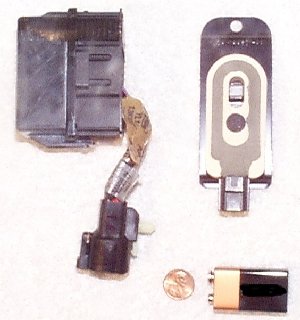
Here are the two original components:
DRL_relayresistor_and_relay_block.jpeg

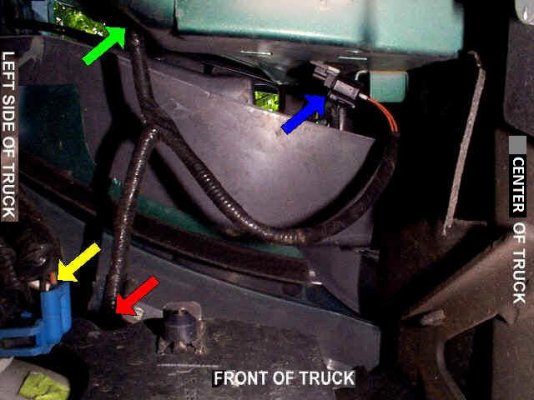
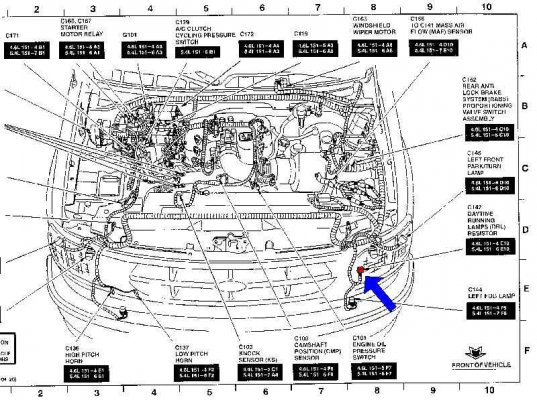
You need to build the box and plug on the left. The part on the upper right is the giant resistor. (On Canadian models, this plugs into the wire-harness in front of the driver's side front tire, behind the bumper, accessed from below (e.g. the wheel well) and mounts there, and plugs in there. On USA models, the engine compartment harness lacks these wires, and lacks the plug for this resistor.

DRL_resistorpicture_REVERSED_CORRECTED.jpg

On the models that are so equipped, the resistor plugs in at the BLUE arrow. The green is the feed from the engine compartment, and the RED is the main headlight, and the YELLOW is the fog lamp if so equipped.

The above pictures correspond to the wiring diagram location chart as so:
DRL_resistor_location.jpg

Again, only Canadian Models have these things. (It is possible that perhaps early 1997 and 1998 models in the USA may have also had these wires on some vehicles, but most do not. None seem to 1999 and after.
 

MesaGuy

Well-Known Member
Joined
Jun 2, 2014
Posts
53
Reaction score
34
Location
Costa Mesa, CA
If you want to build your own Relay Box:
Then this is what it looks like:
DRL_Relayblock_In_Vehicle_Relay_Positions.jpg

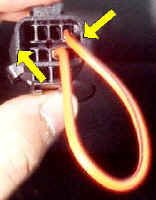
The loopback plug looks like this from the backside:
DRL_loopbackwiresthumb.jpg

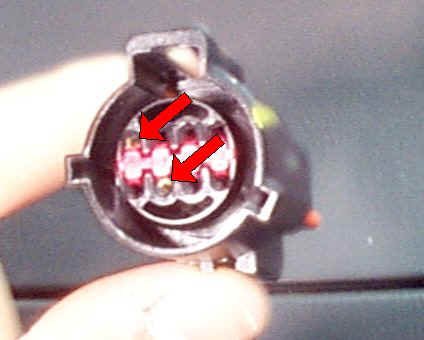
and when unplugged, looks like this from the front side:
DRL_loopbackplug.jpg

To release the pins, you pry out that red plastic piece with an Exacto, then you can pull out the orange wires from the back.

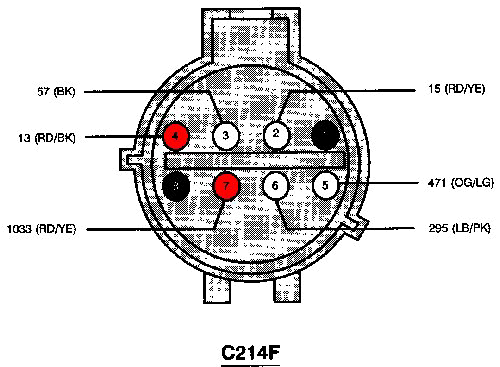
The connector pinnout is this:
DRL_C214F_C2003F_loopback_connector_colors.gif

The loopback plug side is the FEMALE (I had that backwards in the earlier post), and the vehcile side is the male.
The dummy plug only has the two pins in it in USA vehicles, but you can harvest more loopback plugs (you need two more ) fill in the 6 signals overall. But I recommend keeping your original, buying one more full plug, and 2 extra loopback wires. Then you cut all the loopback wires in the middel of the loop, and you get 6 pins, with 6 wires, on which to attach your relay socket.
 

MesaGuy

Well-Known Member
Joined
Jun 2, 2014
Posts
53
Reaction score
34
Location
Costa Mesa, CA
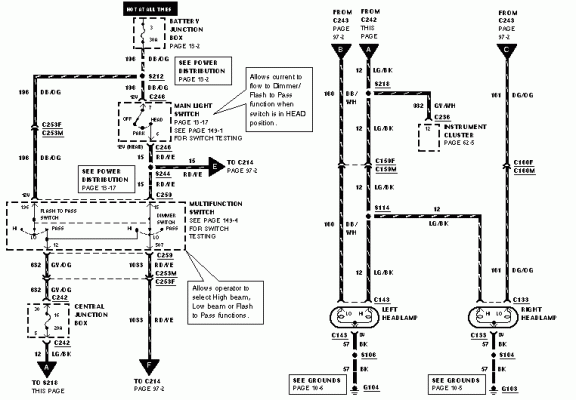
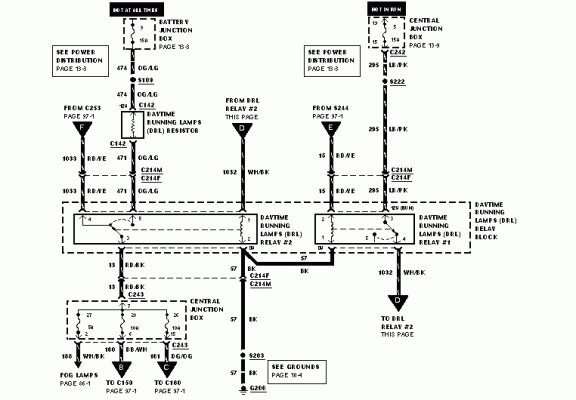
The wiring diagram for building your relay socket is shown in these two sheets from the Ford Wiring Diagram book:

The first sheet shows the input sources in the vehicle, that eventually go to the plug, and the relay box.

DRL_wiringdiagram1.gif

And this second sheet shows the actual Relay Box circuit, which is in the "dotted box" part of the diagram:
DRL_wiringdiagram2.gif

NOTE That Relay #2 is on the left in the diagram, and Relay #1 is on the right.

In the diagram, on the LEFT side, you see C142 which is the connector built into the DRL Resistor and engine compartment wiring harness that is missing on nearly all USA vehicles . As a result, the Orange/Light Green Stripe (OR/LG) wire that goes into the vehicle side ROUND PLUG and which would normally carry 8V DC (12V dropped to 8V by the resistor) is dead at the round plug connector in the dash in pretty much all USA vehicles. To compensate, you splice into the BLUE/Orange Stripe wires at the far right hand side of the vehicle (looking at the oval dash opening from the passenger seat), and splice that to the RELAY#2 Pin 5 input, which is the Round Plug (C 214 Male, vehicle side) pin 5. (The FEMALE is shown above, but the connector is keyed with the plug standout). Pin 5 on the male side is a mirror reflection, and is also the only pin with the Orange/LightGreen Strip wire into/out of it on the vehicle side (Male) connector of C214M. Splice the Blue/Orange to the Orange/Green wire, and you are good to go. To be super-safe, you can put in a 15A inline fuse if you wish. If that fuse blows, it only effects DRL operation, not main headlight operation. You can also omit the fuse, as all the circuits are already appropriately fused in the main internal and engine compartment fuse boxes.

Good luck if you do it. But as I said, I actually think it is easier to use one of the after-market solutions these days. They typically have wiring diagrams provided, and allow auxillary LED "rings", or "LED stripes, or "U's, or "L's, and have separate controls for allowing the LED's to flash with your turn signals, or turn other colors, etc. The Ford 1990's era designed factory DRL requires you to build the relay box ('cause you can't buy it anymore, or find one outside of Canada) and just gives you plan headlights, and the headlight power is delivered on the SAME wire as the power comes from when the headlight is on via the switch, thus you cannot use this design to drive your fancy Auxillary LED stripes. Just buy the kits.
 

MesaGuy

Well-Known Member
Joined
Jun 2, 2014
Posts
53
Reaction score
34
Location
Costa Mesa, CA
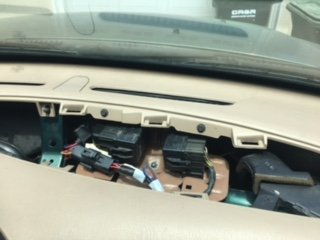
@tinkering - To answer your original questions. The DRL relay box is located inside the dash, at the top, accessed from the plastic removal oval on the passenger side dash top. On Canadian models, you will see the DRL box located more central vs. other relay boxes in the area (e.g. on the left side when sitting in the passenger seat) and it plugs into the wire harness at Connector 214M/F. A nearly identical (from the outside) Relay box is also present in the area, located nearest the firewal, and to the right (when sitting in passenger seat) that is the Parking Brake relay box.

There is no light sensor in the DRL design. The "Autolamps" feature used a light sensor, and was also located in this same general area under the plastic oval. In Autolamps equipped vehicles, the plastic oval cover on the dash has a plastic insert cover for the light sensor, and also has 3 air slots to allow heat from the autolamps module to be vented out of the dash.

The two separate features can interact, but a completely seperate technically. The DRL does not use/nor-need the light sensor from the Autolamps. The Autolamps feature in 1st GEN is quite extensively different in terms of the under-dash wire harness. You cannot obtain the Autolamps relay and controller box and plug it into a non-Autolamps wire-harness vehicle.

The Under dash wire-harness DOES appear to have all of the DRL signals required on USA models, but one of the signals in that harness goes out to the engine compartment (one signal, actually two wires, and IN, and an OUT vis-a-vis the firewall connectors), and on the engine compartment wire harness, the USA vehicles omit the needed wires, and the extra connector that connects with the DRL resistor that is located just behind the front bumper, driver's side. USA vehicle harnesses do not have that connector, nor the wires that lead to it. (This was a cost savings for Ford, as the USA did not require DRL (still does not, and so Ford omitted it on the (far greater) production of US vehicles.)

If you have a Canadian vehicle, you need two parts. The DRL resistor, which plugs into the engine compartment harness below the driver's side front bumper, near the fog lamps, AND the DRL relay box must be plugged in under the dash, instead of the dummy loop-back (single wire) plug that takes its place in USA vehicles. That relay box is impossible to come by in the USA, and extremely difficult to find in Canada. (Dealers didn't stock the box with sockets and plug, it never failed. Only the relay's themselves (which are just standard automotive Ford mini-relays). Dealers DID stock the resistor, as these failed from use, and because of their location (in the weather and water, near the front tire, behind the bumper.) The resistor can still be purchased in Canada, and some US dealers still have them in the Buffalo, NY area. But no one every stocked the box. And after production ended, so did all production of that box. The only place to find one is in a Canadian junk yard truck. There are not any in ANY junk yard in CA, AZ, NV, UT, OR. I did not search WA (maybe), or the east coast. But the part never fails (its a two socket part, in a four socket plastic box, with wires... to a plug, nothing to fail), so no one stocked it. You cannot get them.

Either find an old one in a junk yard, and unplug it, fortunately easy enough to do, and get at, or build one (not easy at all).

Here are pictures if where to find the relay box in the car, in this picture, the DRL is the black box on the left (with connector 214M/F) below it), the Parking relay box in the black box on the right, with brown rusty steel below it.)
DRL_RelayBox_General_Location.jpg

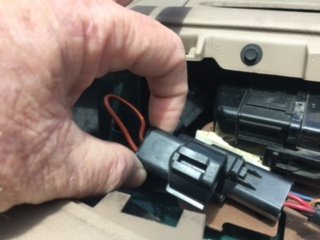
Only Canadian models have the DRL box. On US models, instead of the box plugged hooked to connector 214M, they just have a loop-back wire (one wire, two connections), that looks like this, in place of the box. I'm just holding my original dummy plug here, and the box behind would not be there.
DRL_dummy_plug_instead_of_Relay_Box.jpg

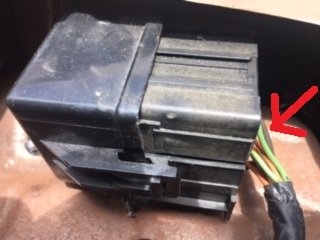
In order to handle the missing 8V supply power and DRL resistor, I source the appropriate 12V properly fused circuit from close by the target location of the 214M connector. That source happens to be the Parking Relay Box right next to the the C214M connector and the DRL relay box location. I show that Parking box here, and the red arrow points at the (barely visible Blue wire, with Orange Stripe BU/OR, that is seen below here:
DRL_Parking_Break_Relay_Box_with_Arrow.jpg

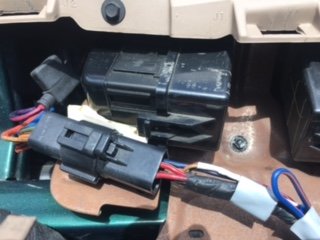
And then that wire is tapped, and supplied to the C214M connector, in place of the OR/LG wire (which is present, but dead, on USA models). That is shown here:

DRL_Home_Made_Relay_With_Power_Substitute_of_12V.jpg

I taped into, and supplied a splice of Blue/Orange-Stripe from the parking box relay box show earlier, and put it into place on the Pin 5 of the C214M connector. In this shot (if you **** it up), you can see two things. The original OR/LG wire has been removed from the connector, and is folded back and electrical taped (to preserve the original harness if I wanted), and the blue/orange-stripe tap splice had extra length, so its folded a few times, and you can see that loop there. That was feed into a 15A inline fuse (I was just being careful), and then is soldier to a "donor" male pin that I took out of the same junker I got the "empty" DRL box from, but taking apart its C214M connector (pull the red lock piece out, then just remove the wires.) That was inserted in the Pin 5 location on my C214M (connected to the blue/orange-strip 12V headlight supply wire, and inline fuse) to provide a "working" vehicle side C214M. Then I had to build the relay box, and the C214M connector side assembly, from the wiring diagram shown in the earlier post.

If you can find one in a junker, do that for sure, but they are ONLY in Canadian vehicles, so hard to find. You cannot order it. The vehicle 10 year required part stock is long past, and the dealer's never had them on shelves anyway, cause the box part never failed, only the relays themselves.

The source materials for the box can be found in any donor vehicle (not your target vehicle) by stealing the Parking Relay box. It is the same physical box, but the sockets are wired differently. You rewire it, and connect it to donor C214F connector (donor vehicle dummy plug, plus two more vehicles donor orange loop-back wires), some fiddling, some soldier, some heat shrink, and voila, you have the missing DRL relay socket..... that USA trucks lack, wired to 12V instead of 8V for the DRL "on" power voltage. In this setup, you do not need the DRL resistor.

You could in fact put it inline (with the fuse), and drop the 12V to 8V, but the dash is a bad place to put the resistor, as it gets VERY hot. That thermal issue is why Ford placed it behind the bumper, and had wires that went to/from it through the engine compartment harness to the fire-wall connectors, to the dash harness. But USA vehicles lack those engine harness wires, so 12V is good enough for me. (You can even use it with a halogen, they will burn out faster (not a big deal, bulbs are cheap, be brighter, OK), but the problem is you will get a run-down battery over time. The Alternator in "low" mode is not putting out enough current to handle the headlights in DRL mode without the resistor dropping the Wattage pull. You can just "live with it", and expect to need to put a charger on your car once a month, or you can switch to LED headlights (what I did) that use far less power. Those are within the alternator's "low" mode power output (as was the 8V supplied halogens), and then everything works fine.

Best of luck finding a Canadian DRL relay box (you will need it), or you can try and build your own if need to. You Canadians must have DRL to get your vehicle certification sticker.... This is just purely optional for USA based folks.
 

99WhiteC5Coupe

Full Access Members
Joined
Jun 3, 2015
Posts
3,413
Reaction score
1,993
Location
USA
When I ordered my 2015 Expedition Limited 4x4, I was not permitted to specify the daytime running lamp (DRL) feature unless the order was a fleet-order (it wasn't).

I have had vehicles for years with the DRL feature and wanted it - but couldn’t get it.

I simply turn on my low beam headlamps and fog lamps each time I start the truck to substitute for the lack of the DRL feature.
 
OP
OP
tinkering

tinkering

Full Access Members
Joined
Jul 19, 2016
Posts
251
Reaction score
28
Location
Alberta Canada
Wow! That is a fantastic bunch of info! Thanks
What I need to do is check my VIN to see if this Expy was indeed build in Canada. If so, I might try some parts salvaging at the wreckers... but if it is a USA unit I will use the lights manually off of the headlight switch.
Thanks everybody.
I will try to let you all know the findings.
 

Robert Wagner

Active Member
Joined
Apr 18, 2021
Posts
28
Reaction score
10
Location
Central Texas
Question.... does the Expy have to be built in Canada or just DESTINED for the Canadian market at time of manufacture?
 
OP
OP
tinkering

tinkering

Full Access Members
Joined
Jul 19, 2016
Posts
251
Reaction score
28
Location
Alberta Canada
Question.... does the Expy have to be built in Canada or just DESTINED for the Canadian market at time of manufacture?
Built in or destined for, it would have to meet the standards and regulations of the Cananadian Communist Rooles.

If it was imported privately maybe it could slip by without the DRLs, not sure. Highly likely it is a Canadian market unit.
I will check out the above info to see what the DRL system components look like, and where to find them. Hello wreckers!
 
Last edited:

MesaGuy

Well-Known Member
Joined
Jun 2, 2014
Posts
53
Reaction score
34
Location
Costa Mesa, CA
On the 2015 Expedition, you can use the Forscan application (free) to turn on the DRL function (or turn it off if you dislike that it is on). In that program's forum, there are spreadsheets available with the ROM locations that need to be changed, and how to do it. The application is free, but the hardware device (available on Amazon) costs about 40 bucks. The https://forscan.org/ allows you to download the Forscan application, and has links to the various hardware devices. (I recommend what Forscan's authors recommend, which is the OBD EX (usb), and/or the OBD MX+ (wireless). The USB device is more reliable, and faster- but the wireless device is sometimes more convenient. The EX is designed to be used with a Windows Laptop. The MX+ is designed to be used with an Apple IOS phone, or an Android phone. Forscan can not only provide DRL control on a 2015 model, but also allow you to control if you use headlights, foglights, or parking lights as your DRL's. (In CA, where I live, parking light DRL's are actually illegal, but that doesn't seem to stop people from doing it. We have no certifications here in this state anymore.) But a 2015 is a bit off-topic in the 1st Generation forum, which was 1997-2002, with 2 valves (2V) per cylinder 4.6 or 5.4L engines. In the newer vehicles, with Sync, everything is a computer option. DIY'ers can do that with Forscan for $40 in cost (and a fair amount of time for the learning curve.) The dealer can also do it, but most will not.... In some cases, things people want are illegal where the dealer is located, and then they definitely will not do it. (Like turn OFF the DRL setting in Canada, can't do that, or set DRL parking lights in California, that's a no, no also.) If you really want DRL, $40, and I would estimate about 5 hours of time reading and testing basic forscan functionalilty, and then you can change your settings per the spreadsheet, and viola, you have DRL.
 

MesaGuy

Well-Known Member
Joined
Jun 2, 2014
Posts
53
Reaction score
34
Location
Costa Mesa, CA
@

@Robert Wagner

Code:
Question.... does the Expy have to be built in Canada or just DESTINED for the Canadian market at time of manufacture?

Any Expedition that was destined for delivery in Canada, no matter whether built in Canada or USA, was equipped with the DRL feature, it was required by law at the time in Canada. (So you question was relevant, I was cavalier in my language before.)

But not a lot of the Canadian delivered (destined for) units end up back in the USA, the rare occasional ones do, usually near the border.

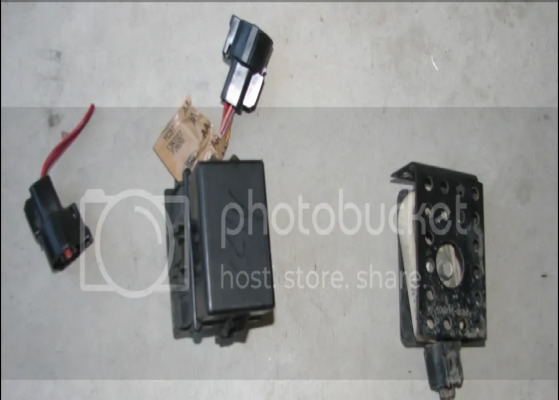
I found this picture all three parts (2 sort-of) DRL_Resistor_Mount_Relay_and_LoopbackPlug.png

It shows, at left: The dummy loopback plug that is present on USA models at C214 under the oval dash plastic, instead of the DRL relay box, that Canadian models have (middle). The right hand side piece is the DRL resistor (the white part, and the black connector at, plugged into the connector harness (from the engine wiring harness), all encased in the DRL resistor mounting bracket. The DRL resistor mounting bracket is ALSO missing on USA models. But on Canadian models that bracket is mount behind the front bumper, in front of the driver's side front tire (on the other side of the wheel well liner plastic than the tire is on, on the truck-colored painted frame "wall" opposite the bumper, and mounted. In the earlier post on this thread, the picture with the BLUE ARROW shows the location on the frame wall opposite the bumper, as you stare up at it from below. (That is how you get at it also, from below). The white part (the resistor) is ceramic, with a black plastic male (or female, opposite whatever the wiring harness is) connector embedded in it. The wire harness plugs onto that. The resiter sits in the retaining bracket. The retaining bracket is ******* into that frame wall at that location. Not sure how the resistor stays in the bracket (may just rest there, held be spring tension, there may be a retension bolt). My USA version does not have the bracket, the wire-harness connection, or the resistor itself. The Relay box cannot be had in the USA. But I think they are quite common in Canadian yards, because all Canadian delivered trucks had to have them by law at the time, from 1997-2002.

This picture is also useful because it shows on the left side of the DRL relay box, how the click-in box mounts to the steel mount point inside of the dash. Right near the circle water-mark, there is a black plastic tab. (This box is essentially show on its side, but normally that face is oriented "down"). If I remember correctly (not sure I do), the unit is release by sliding a real small *****-driver or thin knife (like a table knife) in, between that tab on the bottom, and the STEEL mount, then you push the box away from the knife to slide it off the metal tab that mates with that plastic tab. I do remember it is a pain the first time, and one has a tendency to snap off that plastic tab. So either go to a yard with more than one Expy, or be careful when prying that tab away from the steel bracket mount. Just pry enough to get it to release as you push away, and not even a little more...
 

MesaGuy

Well-Known Member
Joined
Jun 2, 2014
Posts
53
Reaction score
34
Location
Costa Mesa, CA
@

@Robert Wagner

Code:
Question.... does the Expy have to be built in Canada or just DESTINED for the Canadian market at time of manufacture?

Any Expedition that was destined for delivery in Canada, no matter whether built in Canada or USA, was equipped with the DRL feature, it was required by law at the time in Canada.
 
OP
OP
tinkering

tinkering

Full Access Members
Joined
Jul 19, 2016
Posts
251
Reaction score
28
Location
Alberta Canada
I found this information about 1997 and 1998 models.
1998 and older:

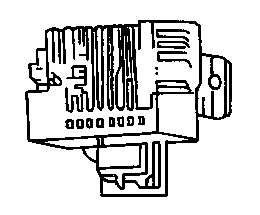
drlrelayblock.gif

DRL Module
- Ford Part Number F65Z-15A272-AA

1998 and older:
(Sorry people... very limited information on this one)
From the manual: The DRL system is designed to turn the high beam headlamps on at a reduced output without illuminating the high beam indicator. The system is activated when the ignition switch is in the ON position, the headlamp switch is in the OFF position, and the parking brake is released.
What it means: The DRL "Module" does everything. It does not use a resistor but instead uses switches to provide lower voltage to the High beams. Not sure about to much more like wiring, etc. All I know is that it's not compatible with the 1999 and newer layout. I do however have the part number for the module: F65Z-15A272-AA. It's location is around the same area as the resistor on the 1999 and newer trucks.

This is what I have in my 1997 Expedition. According to this, there is but one unit, 'the module' that does everything in this system.
Are they prone to burn out?
How many fuses and fusebox relays are there?
How do I trouble shoot the system?
I will try to find one at the wreckers.
 

Plati

Well-Known Member
Joined
May 4, 2016
Posts
2,781
Reaction score
1,367
Location
.
Legendary thread and set of Forum posts .... truly awesome.
 

Members online

Forum statistics

Threads
57,017
Posts
535,900
Members
54,714
Latest member
Budman55
Top