carymccarr
Full Access Members
due to frequent starts with no oil.
Yeah but that’s not how it works.
Sent from my iPhone using Tapatalk


Disclaimer: Links on this page pointing to Amazon, eBay and other sites may include affiliate code. If you click them and make a purchase, we may earn a small commission.
due to frequent starts with no oil.
Not sure what you mean. That IS how it works on my vehicle. My choice. You can use it however you want to.Yeah but that’s not how it works.
Sent from my iPhone using Tapatalk
Not sure what you mean. That IS how it works on my vehicle. My choice. You can use it however you want to.

makes the point that engineers are smart and have designed the engines to deal with the increased stress of repeated starts.
 or an even better design was the old Mercury Sable with the lighted front grill, my Father in law had a bulb burn out in it, would have had to pull the rad to change it! Not disagreeing with your whole point, but I've met a lot of really stupid "smart" people in my life!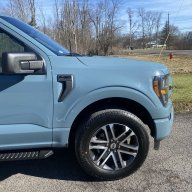

The only other thing I’ll add is Ford does not use Auto/Start Stop on the Super Duty line where maximum reliability is their chief priority. I think they would have used it if it did not compromise anything, but because F-250 is not effected by the cafe standards it is not used. I’d argue this start stop is cafe standard driven. Anyway I will stop hammering on this technology now and don’t wish to derail the thread.


I do not think this is a thread derail...it’s directly related to as/s benefits - and drawbacks.The only other thing I’ll add is Ford does not use Auto/Start Stop on the Super Duty line where maximum reliability is their chief priority. I think they would have used it if it did not compromise anything, but because F-250 is not effected by the cafe standards it is not used. I’d argue this start stop is cafe standard driven. Anyway I will stop hammering on this technology now and don’t wish to derail the thread.
The ASS doesn’t start the engine when it’s cold or when it ‘has no oil’. The engine is barely depressurized in most ASS starts and if the temp drops it starts up again.
Beyond that bearings are of a stronger material than they used to be as is the starter...not to mention higher tolerances and oil with higher levels of lubricants.
Unless you altered your expy that is how it works.
“Barely depressurized” = depressurized = no oil. Is it as bad as it cold start? Of course not. Is it not pressurized for some period of time after it was shut down? Of course. Is this damaging to the engine? There is no evidence pro or con, and I choose not to take the risk. If I am wrong, I spent a few bucks more on gas. If I am right, I avoid a starter replacement and/or an engine problem. And by the way, the engine bearings are the same, only the starter bearings have been beefed up.The ASS doesn’t start the engine when it’s cold or when it ‘has no oil’. The engine is barely depressurized in most ASS starts and if the temp drops it starts up again.
Beyond that bearings are of a stronger material than they used to be as is the starter...not to mention higher tolerances and oil with higher levels of lubricants.
Unless you altered your expy that is how it works.
“Barely depressurized” = depressurized = no oil.
I would let this go, but your ignorance is confusing people. When an engine is shut off the oil pump stops. Oil drains back into the pan, pressure drops to zero. Some residual oil is left on the lubricating surfaces, and diminishes over time. Even a few seconds reduces the oil film protecting these areas. When started again it takes a certain amount of time, perhaps 1-2 seconds, for oil to be pumped back to all surfaces, and pressure returns to normal. This WILL cause extra wear. How much more is the debate. I hope this helps clear things up.Again. No. Incorrect.
I would let this go, but your ignorance is confusing people. When an engine is shut off the oil pump stops. Oil drains back into the pan, pressure drops to zero. Some residual oil is left on the lubricating surfaces, and diminishes over time. Even a few seconds reduces the oil film protecting these areas. When started again it takes a certain amount of time, perhaps 1-2 seconds, for oil to be pumped back to all surfaces, and pressure returns to normal. This WILL cause extra wear. How much more is the debate. I hope this helps clear things up.
The reality is the most concentrated and quickly compounded engine wear is on cold and warm starts and remains to be so on AS/S vehicles. Oil companies and engine rebuilders have spent millions on research and have good reads available, they know their stuff and tear these engines down. Something these AS/S advocates don’t generally do, now I’m not saying as/s has no benefit fleet wide it does save fuel but it also increases wear. As the oil pump supplies and the crankshaft spins the oil fills the space between the journals and bearings, it floats in the oil film and doesn’t directly contact the bearings, this is hydrodynamic lubrication. Stopping the engine halts this process and the film the crank is floating in thins out and conforms to the roughness in the metallic part. This is boundary lubrication and at this point the peaks in the surface make contact with the bearings increasing wear to them when the crank begins to spin again on start up. Some manufacturers have a coating on the bearings to try and alleviate this but, but I don’t find any evidence Ford uses this coating on their cranks like the high performance imports do.
If one chooses to inform themselves on the wear portion from sources that aren’t in the business of lubrication or engine rebuilding (which relate to this increased wear) they are misinformed. Again AS/S does save fuel and has many benefits for fleets I’m not arguing that. Not to mention environmental benefits. But it also has many disadvantages when in use. Don’t blindly put faith in the engineers who couldn’t fit an oil pump rated for the job in mod motors or design a variable timing system that doesn’t break down fast. I’m just saying to think critically about the issue.
Good lord I hope I'm not still driving this same car in 200k miles. I mean, I love it but yikes that's a long time.Anyone that thinks these systems are looking out for us is wrong. They are just trying to meet EPA numbers and they could care less if the crank bearings fail on us at 200K!


