Rear wheels off center?

Disclaimer: Links on this page pointing to Amazon, eBay and other sites may include affiliate code. If you click them and make a purchase, we may earn a small commission.

J Ski

3.5plati
Joined
Apr 4, 2017
Posts
1,019
Reaction score
485
Location
VA
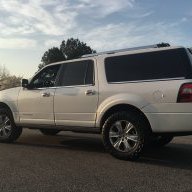
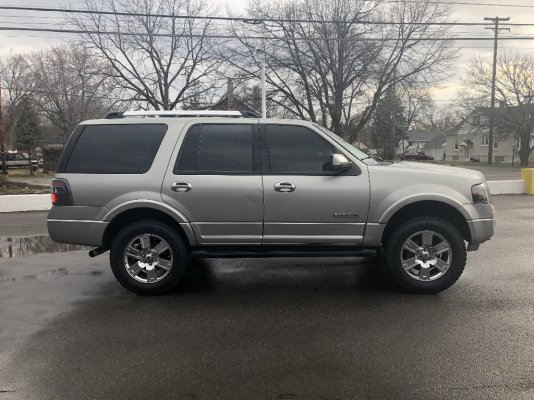
anyone running a 3/2 kit that noticed the rear wheels sit off centered inside the wheel well viewing vehicle from the side post installation? Just curious as to what might cause this
 

Rigpig

Active Member
Joined
Jun 23, 2017
Posts
44
Reaction score
9
Location
SW KS
It also pushes the front wheels rearward, just the geometry of the suspension. Once you put bigger tires and offset wheels on it, it isn't as noticeable. Every leveling kit on every vehicle with independent suspension does this, BTW.
 
Last edited:
OP
OP
J Ski

J Ski

3.5plati
Joined
Apr 4, 2017
Posts
1,019
Reaction score
485
Location
VA
It also pushes the front wheels rearward, just the geometry of the suspension. Once you put bigger tires and offset wheels on it, it isn't as noticeable. Every leveling kit on every vehicle with independent suspension does this, BTW.
Thanks! I'll be running stock wheels and 275/55/20s until I need new tires but will be looking for either 295/60/20 or 295/65/20 sometime later this year
 

crector080862

Full Access Members
Joined
Dec 27, 2017
Posts
125
Reaction score
36
Location
US
So I have a question is there a fix for this can you get longer trailing arms

Sent from my SM-G892A using Tapatalk
 

briandye

Full Access Members
Joined
Feb 27, 2018
Posts
72
Reaction score
11
Location
Michigan
I have the 3/2 lift, 35" Nitto's on factory 20's. The front to my eye looks almost perfectly centered in the wheel well, but the back sits a stupid amount forward. It drives me nuts. I noticed right off the bat, but after one friend pointed it out, its eating at me. Id love to see someone come up with some modification to move them back.

2rtwcqX.jpg
 

Adieu

Full Access Members
Joined
Dec 22, 2016
Posts
3,717
Reaction score
798
Location
SoCal
Rear suspension is at an angle

Lift kits push wheels out of the center of the wheel well
 

AllBoostNoEco

Full Access Members
Joined
May 2, 2017
Posts
328
Reaction score
196
Location
GA
The way the suspension is designed, the rear wheels move in an arc from a pivot just in front of the wheels. As they move up, they also go forward, and as they compress, they move backward. If you modified the control arms to re-center the wheels in the wheel wells at lifted height, the geometry would be all wrong, therefore causing them to hit the back of the wheel well when the suspension compressed over bumps or when carrying weight.
You’d have to redo the entire suspension and lower the pivot points in order to prevent that from happening.
 

sjwelds

Full Access Members
Joined
Feb 19, 2016
Posts
838
Reaction score
383
Location
Kansas
And this is the biggest reason why I don't like the looks of these trucks lifted. This and the fact that I like my wheel well gap to be the same front to rear. Personal opinion, don't flame me.
 

Adieu

Full Access Members
Joined
Dec 22, 2016
Posts
3,717
Reaction score
798
Location
SoCal
And this is the biggest reason why I don't like the looks of these trucks lifted. This and the fact that I like my wheel well gap to be the same front to rear. Personal opinion, don't flame me.

Boys and girls, we have ourselves a heretic hiding in our midst
 

LRNAD90

Full Access Members
Joined
May 29, 2018
Posts
100
Reaction score
45
Location
Maryland
The way the suspension is designed, the rear wheels move in an arc from a pivot just in front of the wheels. As they move up, they also go forward, and as they compress, they move backward. If you modified the control arms to re-center the wheels in the wheel wells at lifted height, the geometry would be all wrong, therefore causing them to hit the back of the wheel well when the suspension compressed over bumps or when carrying weight.

You’d have to redo the entire suspension and lower the pivot points in order to prevent that from happening.

Yup. There are solutions to everything, but just like the original design, they have compromises. The rear axle has an upper and lower trailing link, and as they swing down (suspension droops), the axle assembly moves forward, and as the swing up (suspension compression) the Axle moves rearward. For this not to happen, and the axle to stay in the same place front to rear would require these links to vary in length throughout the suspension travel, not very practical.

You could compensate for the static position after lift by fitting longer trailing arms, but as AllBoostNoEco mentions, then you run the risk of the tire contacting the rear of the wheel opening or other hard parts on severe compression. Of course, when you use a spacer lift like are most commonly available, your fully compressed position is two inches lower than it was from the factory. Without working numbers its impossible to tell, but I’d venture a guess that you could run longer and/or adjustable length arms to center the wheel at static load, and *probably* not run into interference on compression, since compression is reduced anyway.

So why don’t longer arms exist? Maybe my ‘back of a napkin’/’in my head’ calculations are wrong, and there become interference issues.. Maybe there is just not demand enough of a market for it to be profitable? I dunno, you decide..
 
Last edited:

LRNAD90

Full Access Members
Joined
May 29, 2018
Posts
100
Reaction score
45
Location
Maryland
Yup. There are solutions to everything, but just like the original design, they have compromises. The rear axle has an upper and lower trailing link, and as they swing down (suspension droops), the axle assembly moves forward, and as the swing up (suspension compression) the Axle moves rearward. For this not to happen, and the axle to stay in the same place front to rear would require these links to vary in length throughout the suspension travel, not very practical.

You could compensate for the static position after lift by fitting longer trailing arms, but as AllBoostNoEco mentions, then you run the risk of the tire contacting the rear of the wheel opening or other hard parts on severe compression. Of course, when you use a spacer lift like are most commonly available, your fully compressed position is two inches lower than it was from the factory. Without working numbers its impossible to tell, but I’d venture a guess that you could run longer and/or adjustable length arms to center the wheel at static load, and *probably* not run into interference on compression, since Compression is reduced anyway.

So why don’t longer arms exist? Maybe my ‘back of a napkin’/’in my head’ calculations are wrong, and there become interference issues.. Maybe there is just not deemed enough of a market for it to be profitable? I dunno, you decide..

 

Adieu

Full Access Members
Joined
Dec 22, 2016
Posts
3,717
Reaction score
798
Location
SoCal
Probably because screwing too much with suspension geometry could inadvertently cause safety issues and unnecessary liability for the manufacturer
 
Top